

If You Can't Find Mirin Rice Wine, Try This Wine As A Substitute
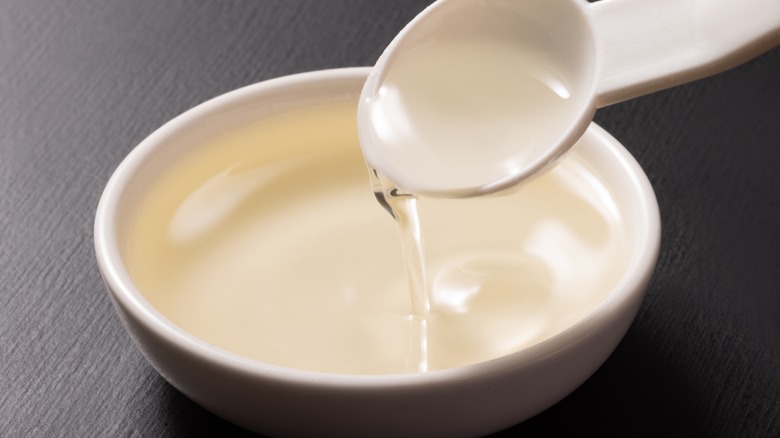
If we were to take a deep dive into Japanese cuisine, one particular ingredient shines, and you probably have no idea that it's the culprit behind why teriyaki, udon, and even chashu taste so good. The secret? Mirin rice wine. A quick dip into a small serving will immediately give a distinct savory-meets-sweet alliance, making flavors shine without overpowering them — as long as you don't use a copious amount. However, the challenge comes with finding a bottle, as it isn't widely available in America. That's why home cooks who want to recreate the flavors of East Asia might have to rely on a substitute. Luckily, Jonathan Fox, chef and co-owner at Boca Raton's Kasumi (@kasumiboca on Instagram), is here to help. "I would recommend using another rice wine alternative, such as Huangjiu, a Chinese semi-sweet yellow wine," Fox tells Chowhound exclusively.
Fox further advises that European-style wine could also work (sparkling wine can even go well with fried food), saying, "I have used a mature riesling as a substitute for mirin when I did not have access to mirin itself. You might sacrifice a bit of the savory elements that you would get from mirin, however, it does add a similar smooth sweet background and texture." However, consider whether the wine's flavor profile and function make it a suitable stand-in. Otherwise, you can add a few ingredients to sort of capture its undertones — acid to balance out the sweetness, and sugar to make up for the lack of sweetness.
The importance of mirin (and its counterparts) in dishes

We've already established that mirin rice wine is a powerful ingredient, but why is it so important? For one, it elevates a wide array of dishes like no other, adding depth and flavor, all without drawing too much attention away from the existing notes. From a comforting sukiyaki meal to an unbeatable grilled fish, there's no limit to the uses of the complex — and versatile — ingredient. Beyond the flavor it imparts, it also adds aesthetic value to the dish. "I also like how when using mirin, the finished product has an elegant shine or luster, most notable when used in sauces," Jonathan Fox mentions. It also makes the meat more tender, which is why it's used during the marinating process. At times, it can even help boost the aromatic profile of the food.
Mirin rice wine also has a place beyond the colorful world of Japanese cuisine. You can try adding a dash of it to your salad to liven it up and even squeeze in a place for it on desserts. You can even add mirin to your scrambled eggs for a touch of sweetness or make your fried rice unforgettable with this one extra ingredient. If you're looking to spice up your same ol' kitchen routine, it might be time to add a splash of mirin and taste the wonders it can bring.