

The No-Roast Method For Quickly Peeling Peppers That Actually Works
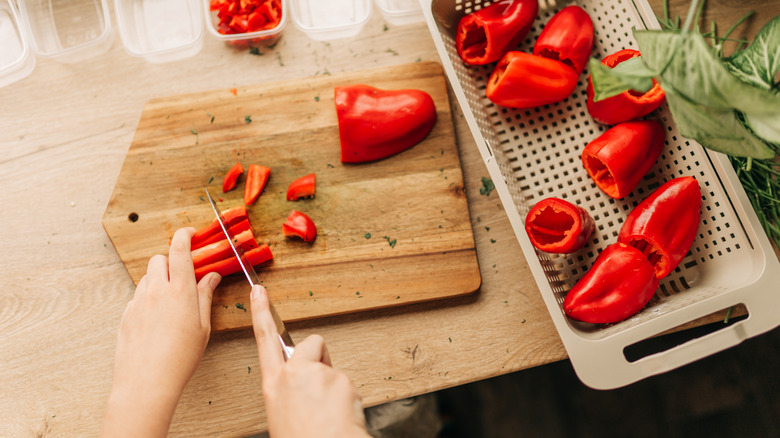
Bell peppers are one of those delicious, versatile superfoods that often receive supporting actor status when they could easily take center stage. In addition to being packed full of flavor — especially taking into account the nuances among the colors — bell peppers are also rich in vitamins and antioxidants that can help improve immunity, protect our eyesight, and prevent heart disease. They're also fairly easy to grow and can be harvested and enjoyed at every stage of ripeness: green, to yellow, to orange, to — most people's favorite — red.
Despite these benefits, some people avoid bell peppers because they're finicky to process. From roasting them to loosen the tough, fibrous skin to de-seeding, it may take longer to prep your peppers than to make the recipe they're for. Fortunately, there are a few simple hacks that can cut prep time down dramatically so you feel motivated to enjoy these nutritious veggies more often.
The first is an easy hack to cut bell peppers by popping the seeds out before you even slice them. The second is to use a veggie peeler to remove the tough skin from your bell peppers without having to roast them first. This method is not only less messy, much faster, and safer than charring them over high heat, it's the approved method of chef Jacques Pépin. The veggie peeler removes 90% of the skin in seconds, leaving you silky smooth bell peppers that are perfect for elevating store-bought salsa, enjoying in salad, or sprinkling into tacos.
Ins and outs of peeling a peck of (un)pickled peppers
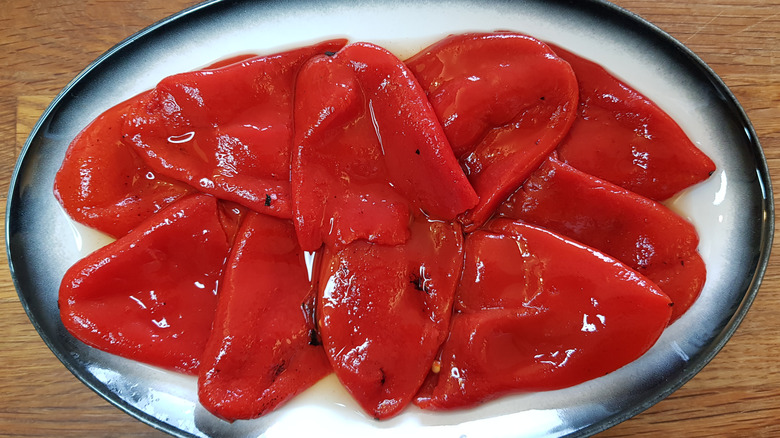
Though this method for peeling peppers is pretty straightforward, there are a few tips and tricks that help the process go even more smoothly. For instance, keeping the pepper whole while you peel it instead of removing the core first ensures it's sturdy enough to withstand the pressure of the peeler without collapsing — which could cause the peeler to slip and cut you. Additionally, you should always wash your peppers before peeling them to avoid contaminants from the peels being transferred to the flesh beneath.
When first trying this hack, you may notice the flat peeler isn't able to reach the skin in the pepper's dips and curves. Chef Jacques Pépin resolves this by slicing the pepper into four sections using the dips as a guide, and peeling the rest of the pepper after it's cut. However, this is a matter of preference; leaving a little of the peel doesn't affect flavor or texture too much once the pepper is diced into small pieces or roasted.
Something else to consider before peeling your peppers is how you use them. If you're making walnut and barley stuffed peppers, for instance, you may want to leave the skins intact so the peppers don't collapse after baking them. However, if you're grilling or roasting them for creamy veggie bisque, pepper relish, or to enjoy on sandwiches, peeling them first gives them a deliciously tender, velvety texture.