

8 Foods That Were Once Seen As Cheap But Now Cost A Small Fortune
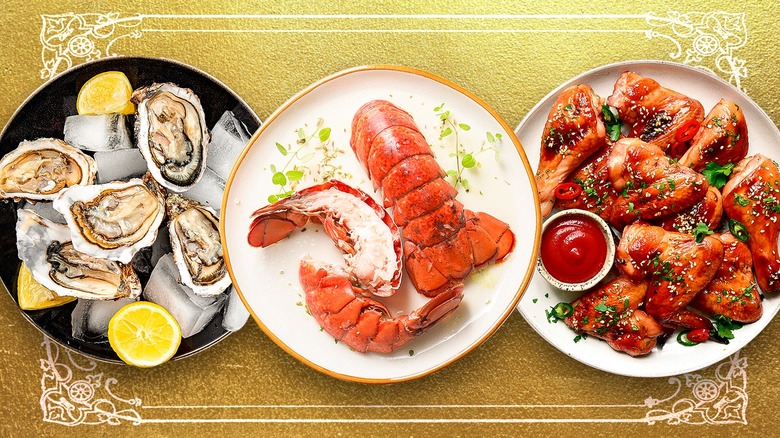
The increase in grocery prices over the past few years has made people much more conscious of how prices on previously cheap items have crept up. But this isn't the first time that prices on food have soared, and while inflationary periods sometimes cool off while incomes catch up and supplies stabilize, that's not always a given. Some foods soar in price and then stay there, especially when those foods' supply chains and reputations change.
When supplies of a food dwindle, or when demand for a food skyrockets thanks to a new fad, the price is usually going to go up even if that food was once one of the most abundant and cheapest items around. Sometimes these changes have become so well-established that finding out a luxury food once used to be cheap is a surprise. Other times, however, the increase in prices is recent and an unfortunate shock for anyone who remembers how inexpensive and affordable the food used to be. These foods in particular stand out for once being cheap, but now costing a small fortune.
1. Lobster
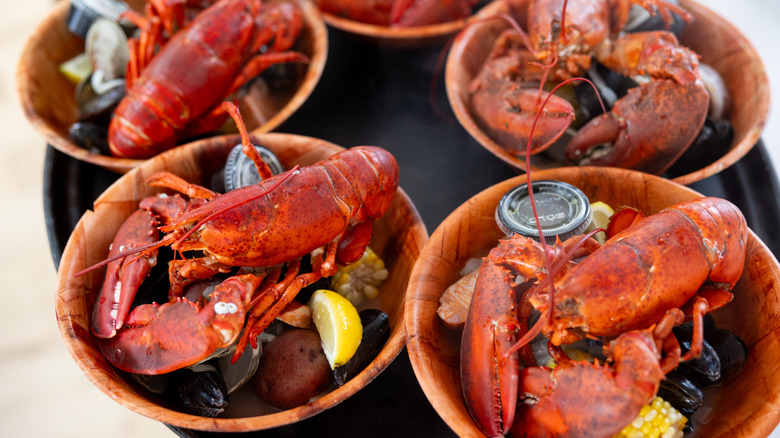
Lobsters were once so plentiful that they were dismissed as junk. It wasn't hard to find lobsters, their strange appearance turned a lot of people off eating them, and they were bottom-feeders (meaning they ate a lot of undesirable material). That all made them seem less than desirable. However, lobster was nutritious, so people ate it if they couldn't afford more socially acceptable protein sources.
But that was an East Coast perception. In the 1800s, train companies started serving lobster in order to save money, and West Coasters and inland-U.S. travelers didn't realize it was supposed to be a cheap food. They adored the taste and wanted more. Cheap and un-rationed lobster kept people fed during the Great Depression and World War II, which meant that more people discovered they loved the taste. After the war ended, lobster turned into a dish meant for celebrations, giving this former food of shame a fancy reputation. Retail prices can cost anywhere from $16 to an eye-twitching $120 per pound.
Amazingly, that all hinged on reputation and the supply at restaurants and markets. Actual stocks in the ocean haven't been that scarce; 2016's Maine lobster harvest topped a whopping 132 million pounds. That doesn't mean that there hasn't been trouble, of course. New York and Connecticut lobster stocks collapsed in the late 1990s after a combination of an amoeba infestation, possible exposure to pesticide runoff, and a tropical storm system wiped them out. Maine lobstermen are monitoring their stocks closely.
2. Caviar
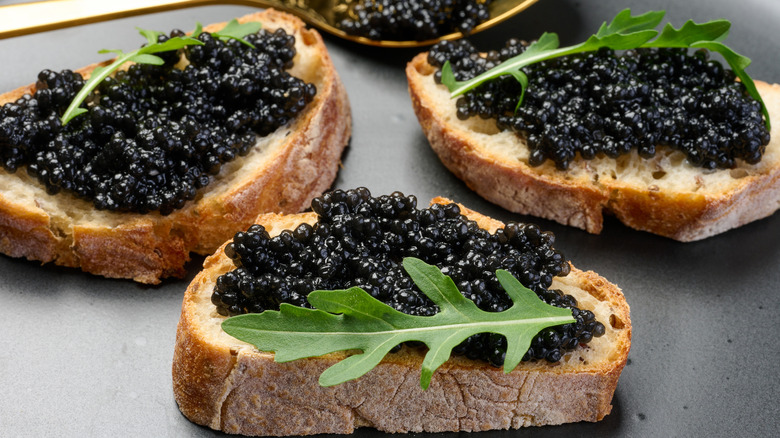
Caviar used to be cheap. So cheap that bartenders in the 1880s in New York would try to give it away. It wasn't that caviar was considered trashy food; it was in demand, especially in Europe. But there was so much of it that prices were low. The Delaware River in New Jersey had so many sturgeon (caviar is the mass of eggs from sturgeon) that a German immigrant decided to start a pickling business, in which he'd export pickled American sturgeon back to Europe. Along with all that sturgeon came caviar, and the industry grew so big that a town named Caviar formed around it (that town no longer exists). Literal tons of caviar could be produced and shipped across the country from this one little section of the U.S.
You've probably guessed that at some point, overfishing came into play. You're right; sturgeon were overfished to the point that by the early 1900s, fishermen had a hard time catching even one sturgeon, let alone the full nets that they used to drag out of rivers in the previous century. Sturgeon fishing is now highly controlled; for example, white sturgeon is considered catch-and-release only, and you can't actually harvest them. Restrictions on sturgeon fishing plus the fish's long growth process mean that very little caviar can be produced now. That plus the intense production process and luxury branding have sent prices soaring.
3. Brisket, skirt steak, and short ribs
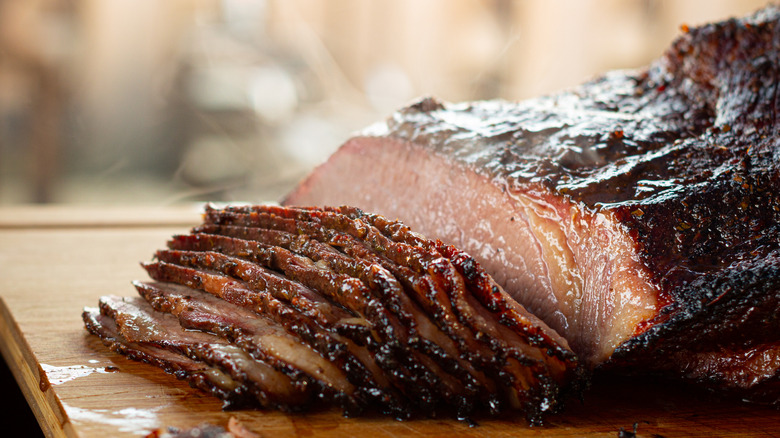
Meat as a whole has gotten more expensive, but certain meat cuts have made an astounding leap. Brisket, skirt steak, and short ribs in particular have gone from tough, cheaper cuts to high-demand items. These were once only part of cuisines that used techniques for making the meat tender, but demand has increased substantially as more people have become interested in cooking with and eating the cuts. The current prices might not seem that bad compared to some other "expensive" foods, but when you've relied on these cuts to feed your family on a budget, the increases of the past few years can be devastating.
Brisket, for example, was originally affordable because it was so difficult to cook well. But the cut has grown in popularity as more restaurants have started offering barbecued brisket and more people at home have tried making recipes with the meat. Prices went from under $2.50 per pound in the mid-2010s to over $6 per pound in the early 2020s. Skirt steak is commonly used in Mexican cooking, and that cut has also become expensive due to increased interest. Short ribs have also gone from being a cheaper cut to one of the more expensive, going from around $2.50 per pound in the early 1990s to over $4.60 per pound by 2011. In September 2025, the USDA reported that short ribs were selling for as much as $10.99 per pound in some areas of the country.
4. A lot of fast food
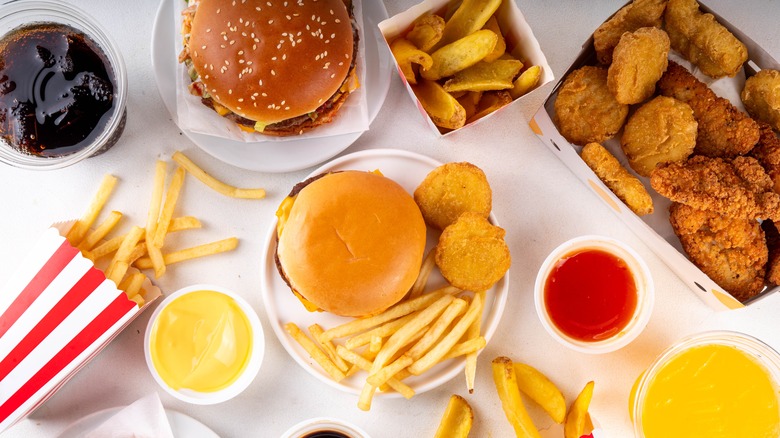
Next on the list is fast food, of all things. Fast food used to be cheap. You'd go to a restaurant when you had a couple of bucks and get something off the value menu. Regardless of whether or not the food was healthy, it was at least something to eat that was filling enough and within even tight budgets. That's not the case anymore. In 2024, a LendingTree survey showed that 78% of those polled called fast food a "luxury," with 62% saying they'd cut back on eating fast food due to the higher prices. The LendingTree survey also found that people were being asked to tip at fast food restaurants, adding to the price.
But the prices aren't just a matter of perception. In 2025, FinanceBuzz reviewed prices from 2014 to 2024 and found that McDonald's prices had risen 100%, Popeyes had risen by 86%, and Taco Bell had risen by 81%. Only Subway and Starbucks had price increases under 50%. But you don't have to rely on memory or surveys to see how prices have changed. Go back through social media to find the ever-present photos of In-N-Out menu boards, and you'll see what's happened. In 2004, a Double-Double cost $2.60; in 2012, it was $3.20, which isn't a huge jump. But by 2024, the price was $5.90, and in 2025, the price had gone up to $6.10. A Double-Double meal had gone from under $5 in 2004 to $10.75 in 2025.
5. Chicken wings
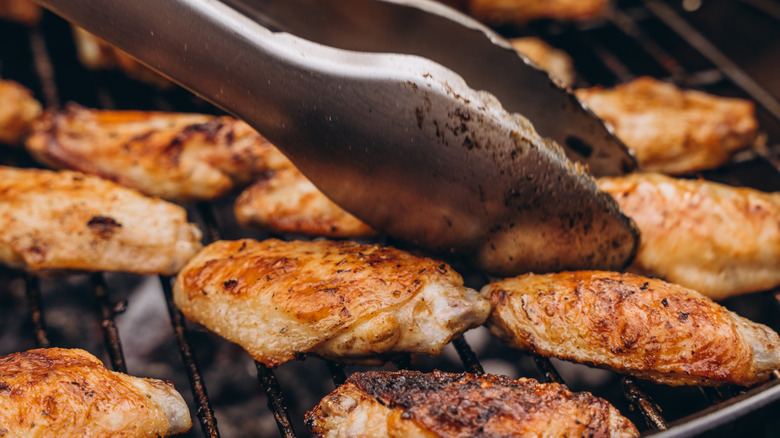
You don't have to go back that far to find chicken wings treated as an incredibly cheap cut. No one really wanted them, and prices for wings (if butchers weren't already throwing them in with your other chicken parts for free) were under $0.50 per pound in the 1990s. You can find anecdotes online of people paying as little as $0.18 per pound in the 1970s. In 1975, $0.18 is the equivalent of just over $1 today. Others will tell you of the days when you could pay a few cents per wing at a bar in the 1990s and 2000s.
But then wings soared in price, becoming one of the most expensive chicken cuts in the mid-2010s. A pound of wings doesn't cost $1 today. By the early 2020s, in fact, wings sold for around $2.50 to $3.90 per pound. That doesn't sound very expensive, but it's still two to three times the price you'd expect to pay based on historical data. Once wings became a bar food and a beloved football-watching snack, the cheaper prices were gone.
6. Oysters
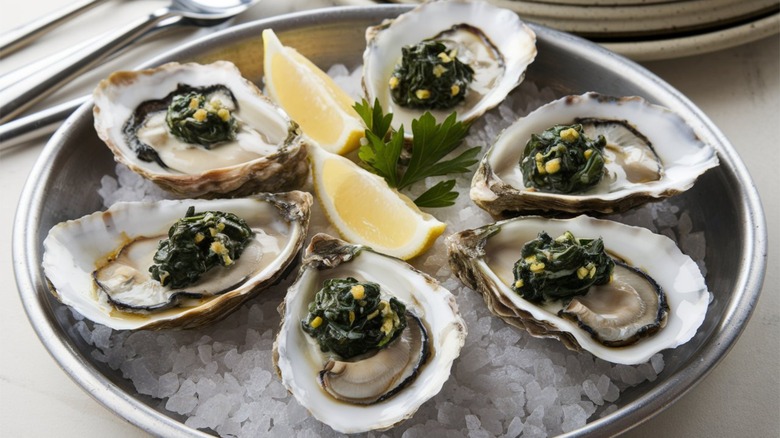
Oysters in Europe started as a common food but were essentially overfished by the 1600s, becoming a luxury for the rich. But when the English were setting up colonies along the mid-Atlantic coast, they noticed that oysters were everywhere. Native North Americans had eaten the oysters for centuries, and North American oysters became a major industry in the 1700s, with farming becoming so common by the 1800s that the food was very, very cheap and easy to find. Oyster farms in New York state alone grew hundreds of millions of oysters in the 1870s and 1880s, providing a major source of employment, as well. The oyster retained its image as a traditional start to a fancy dinner, but you could also eat oysters for cheap protein if you had little money. Cookbooks from the 1800s featured an enormous number of oyster-based recipes. You could get them as cheap bar food to go with your beer. Oysters were even a substitute for more expensive foraged mushrooms.
But between the 1850s and 1910s, oyster farms were the source of a number of serious outbreaks of diseases. The water that the oysters were grown in was heavily polluted, often with human waste. Fatal typhoid outbreaks in 1916 and 1924 led to oyster bans, and the industry was decimated. Oysters are obviously still available and grown in much cleaner water, but not on the same scale as the industry of the 1800s. As a result, oysters are now once again an expensive luxury.
7. Beef marrow bones
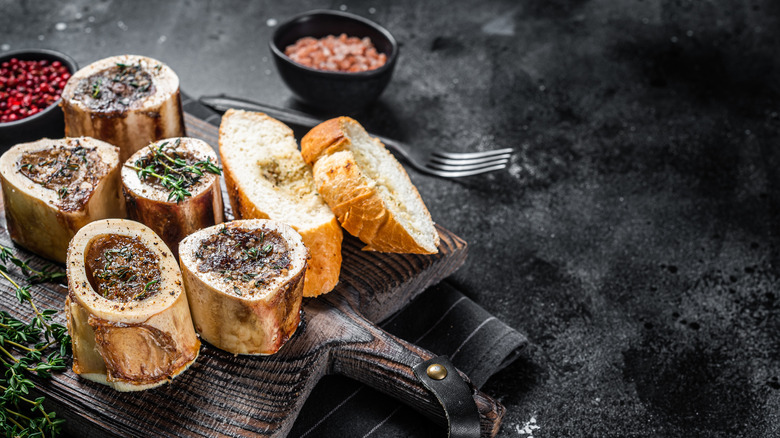
Marrow bones used to be just another by-product of butchering meat. People did eat the marrow for centuries, and in the 1800s, hospitals used the bones to produce broth. But the bones themselves weren't considered a must-have product. They were pretty much garbage, and farmers who sent meat to butchers to be cut up sometimes didn't even bother asking for the bones along with the meat.
All that changed drastically in the mid-2010s. By 2017, marrow bones were a necessity for people on diets that pushed bone broth or who just wanted the nutrition that the marrow provided. Restaurants started treating bone marrow as a delicacy. The price jumped, and by the late 2010s, marrow bones were going for about $4 per pound. Sellers were taken by surprise, noticing that the bones they used to rarely sell were suddenly in high demand. Nowadays, you can find meat companies selling them for upwards of $11 per pound or even $25 to $26 for one large bone, and prices show no sign of dropping.
8. Vanilla
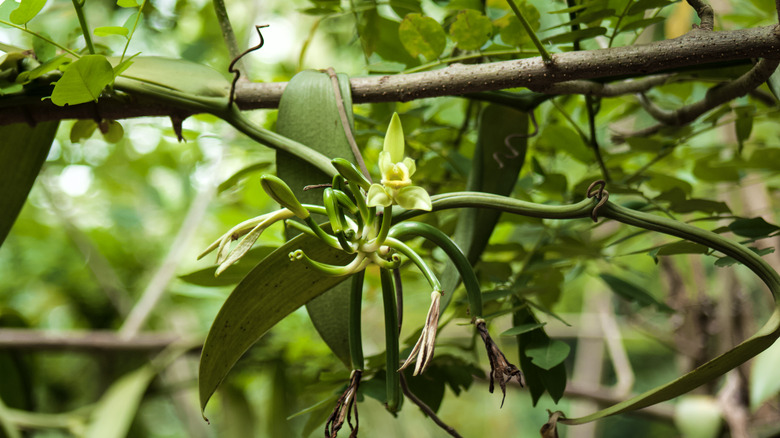
Vanilla was never really "cheap" to begin with, but its supply used to be more stable and reliable. When you have no doubt that you can get something whenever you want it, even if it's a tad on the expensive side, the price tends to be stable, as well. Vanilla was originally produced only in Mexico, and its availability depended heavily on the weather and the presence of the tiny vanilla bee to pollinate the orchid Vanilla planifolia. Vanilla was costly and rare, even after people figured out hand pollination. As more vanilla plantations in countries around the world opened up in the late 1800s, however, the supply became more reliable because if Mexico couldn't produce enough to satisfy demand, there were alternative sources.
In the early 2000s, 1 kilogram of vanilla beans cost about $20. In the mid-2010s, vanilla was considered such a relatively cheap crop that a number of farmers had actually given up growing vanilla. But now, the majority of the world's vanilla is from Madagascar. And if anything happens to that crop, the price skyrockets. In the early 2000s, one shortage took the 1-kilogram price up to $500, although it fell back down soon after. In more recent years, shortages due to weather have brought the price back up above $600 per kilogram before it fell to $250 per kilogram. Commercial prices remained rather high, with one person online commenting that they paid between $17 and $29 for an 8-ounce bottle between 2021 and 2023.