

The Genius Bulk Food Storage Spot Hiding In Plain Sight
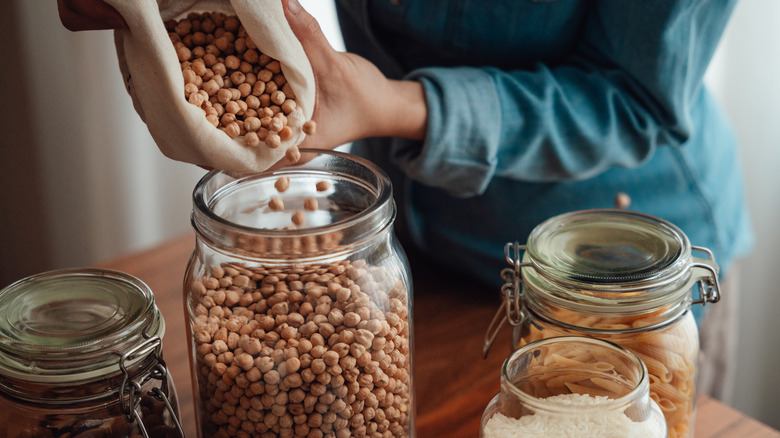
Kitchens are multifunctional spaces with a unique blend of utilitarian and decorative value. Many of us spend a great deal of time in our kitchens making food to nourish ourselves, which is necessary to remain healthy. We also tend to linger in the kitchen over meals with loved ones, early morning coffee with a good book, or a relaxing nightcap before bed. This means the kitchen must be simultaneously functional and efficient while also feeling cozy and welcoming, which can be a complex balance to strike, especially if you're strapped for storage.
While some can maximize their kitchen storage with elegant cubbies or a remodel, others have no choice but to work with what they have. That often means counters cluttered with boxes of cereal, bags of chips, and any number of containers filled with pulses, grains, and flours. There are lots of ways to make these items look tidy, and even aesthetic, but it does cut into the functional counter space in your kitchen, which is why it may be time to stop ignoring one of the best spots in your kitchen to add storage — above your cabinets.
Many kitchens feature pre-built cabinets, which are made in standard sizes to fit in the widest range of spaces. This means most kitchens have extra space between the cabinets and the ceiling just waiting to be filled with shelf stable bulk food items, including big boxes of oatmeal, canned goods, bulk bags of nuts, and much more.
Eliminate wasted space, but with style
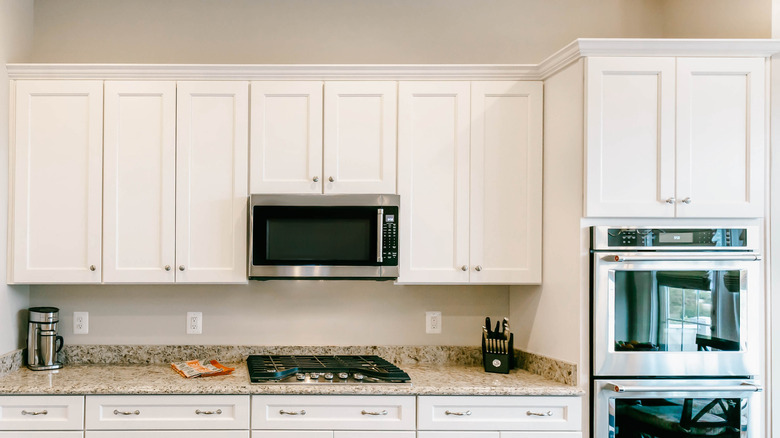
While it's absolutely acceptable to neatly place your bulk items as they are above your kitchen cabinets as an affordable way to extend your kitchen storage, it may be easier and more aesthetically pleasing to decant everything into baskets, jars, and other containers. For instance, you could store several 5-pound bags of walnuts or cashews in a wicker basket or pretty wooden box. Bulk dried pasta, beans, and grains could go into gallon-sized Mason jars, while big boxes of individually packaged oatmeal or snack bars can go behind embossed tea tins or glass bottles of vinegar until they're needed.
Of course, it's also important to consider accessibility. You shouldn't store things in this area that you use daily — this is only for items that will remain sealed until you need to refresh your pantry. It's also wise to consider how heavy items are before stowing them near the ceiling. They might be easy enough to shove up there, but getting them down could be unsafe, especially since you'll likely need a step ladder to retrieve them.
Something else to think about is long-term viability. Decanting items into airtight containers looks nice while also protecting your food from dust, bugs, and rodents. Consider placing big bags of flour and sugar into colorful plastic tubs to keep them fresh and safe. Additionally, tidy labels on all of your containers help locate items easily and remind you of what's available in your secondary pantry tucked away above the kitchen cabinets.