

The Absolute Worst Mistake You Can Make When Cooking Salmon
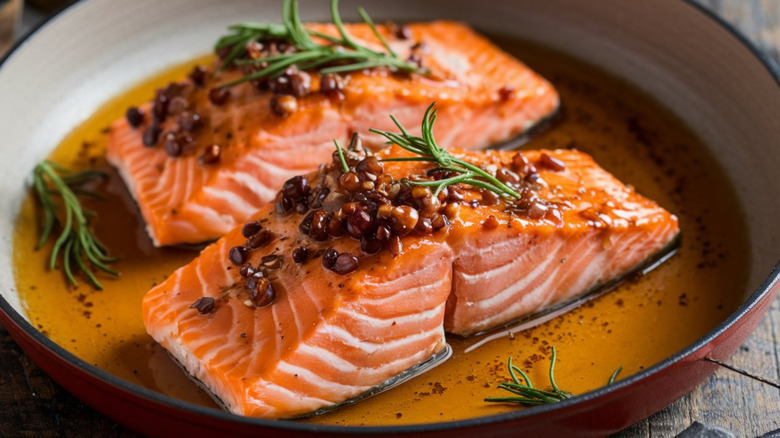
You have carefully chosen your salmon fillets and are ready to make a nourishing meal full of the protein and omega-3 fatty acids that salmon brings so well. But have you thought about how it should be cooked? Most of us default to pan-frying, baking, or grilling, but there is one critical factor to take into consideration that could make or break your salmon dinner: Whether your fillet comes from a farm or the wild.
Your gorgeous pink salmon fillets can go from perfectly tender and flaky to dry and chalky in seconds if they aren't cooked properly, and the best way to do this depends on whether you are preparing farmed or wild salmon. Since farmed salmon are raised in open pens, they have a more sedentary lifestyle than their free roaming counterparts. They also have a supply of feed that is specifically designed to fatten them up for human consumption. Because of the extra fat in farmed salmon, up to three times more than in wild-caught, it requires a higher temperature to cook it to perfection. While farmed salmon may be fine grilled alongside your burgers and chicken, wild salmon doesn't fare as well because it's leaner and firmer. Instead, it really shines when it's cooked gently at a low heat.
Best ways to cook wild and farmed salmon

Grilling is a perfect way to cook farmed salmon because the high fat content ensures your salmon stays moist and tender despite the heat. On the other hand, wild salmon likely turns out dry if grilled due to its leaner texture. When grilling farmed salmon, oil your fish with a neutral-flavored oil with a high smoke point and cook it to a slightly charred outer edge and tender center. Make sure to avoid a common salmon cooking mistake by always leaving the skin on when grilling salmon, and place your fillet skin-side down first to protect the flesh from the grates as the fish cooks.
Similarly, pan-searing is best for cooking farmed salmon due to the high heat while wild salmon is best cooked by poaching. This ensures a slow, gentle cooking process at low heat, maintaining the fillet's moisture and flavor. Roasting works for both farmed and wild salmon as long as you adjust the temperature accordingly. Fattier farmed salmon can be cooked at 450 degrees Farenheit — and a quick broil gets you deliciously crispy tops and edges while preserving the juiciness inside. Wild salmon is best baked at a low heat (between 275 and 300 degress Farenheit) for a longer time for optimal results.