

How Long Should You Steam Your Veggies (Without Turning Them Soggy)?

It can be tough to time steamed veggies perfectly — let them cook a minute too long, and you're left with a pile of mush that inevitably ends up serving as a decoration on plates until it gets dumped into the trash can. Thankfully, there are a few simple tips and tricks you can put into practice to create steamed veggies that hit the perfect level of softness without becoming soggy. Cookbook author and recipe blogger Stephanie Loaiza of Six Sisters' Stuff spoke exclusively with Chowhound to share how to create steamed vegetables that won't get left behind on otherwise empty plates.
When it comes to steaming time, not all vegetables are created equal — and Loaiza says that it's key to consider what types of veggies you're working with before you begin the steaming process. "Firmer veggies such as root vegetables (e.g., potatoes, carrots, radishes) will need more time to steam," Loaiza says. "Veggies with stalks and stems (e.g., broccoli, cauliflower, green beans) will take anywhere from 4-7 minutes. Leafy greens and softer veggies (e.g., spinach, peas) are the quickest and only take about 2-3 minutes to steam, while sturdier (or heartier) leaves like kale or bok choy can take 8-10 minutes." It's also important to consider how you're cutting your veggies — the larger the cut, the more time they'll take to soften up during the steaming process.
Pro tips to avoid soggy steamed vegetables
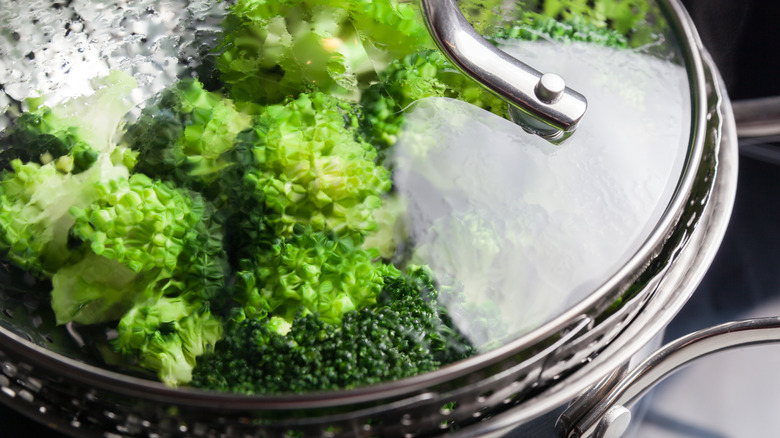
Overcooking is the top culprit when it comes to waterlogged steamed vegetables, and simply paying attention during the steaming process can help you make sure your veggies become slightly soft while still retaining a bit of a bite. "You'll want to make sure you are checking your vegetables at regular intervals to make sure they aren't overcooked," says Stephanie Loaiza. While cooking your veggies for too long can certainly cause mushiness, it's not the only reason that steamed veggies get soggy. Be sure that you don't overcrowd your steamer basket — Loaiza says that doing so can make it difficult for the steam to circulate around the veggies, which can result in uneven cooking (meaning some vegetables will end up mushy, while others might be undercooked).
If you're steaming different types of vegetables in the same pot or steamer, be sure to stay cognizant of appropriate cooking times. "Softer vegetables will steam in less time and should be added toward the end of the steaming process," Loraiza says. Add firm vegetables first, and toss in softer vegetables — like leafy greens — shortly before you remove the pot or steamer from heat. Understanding when to season veggies is also important. If you decide to steam different types of veggies separately, season sturdy vegetables (like root and cruciferous veggies) before the steaming process begins, but wait to season delicate vegetables until after the steaming process is complete to preserve texture and maintain appropriate moisture levels.
Accidentally steamed your veggies too long? Try an ice bath to bring them back

Sometimes, it's all too easy to get distracted in the kitchen and over-steam your veggies. If your vegetables are just barely overcooked — as in, they're not falling-apart mushy, but are a little too done for your liking — Stephanie Loaiza says that you might be able to bring them back. "You can try throwing the vegetables in an ice bath to prevent any residual cooking," she says.
If you find that your veggies are too far gone for even an ice bath to help them come back to your desired texture, you're better off finding a way to repurpose overdone vegetables. "Once a vegetable has been steamed to a certain point, it has broken down at a cellular level and won't be able to be salvaged." Loaiza recommends using overly steamed vegetables as a base for another ingredient (like soup), or adding them to a casserole.