

Does Salting The Water Make A Difference When Steaming Vegetables?
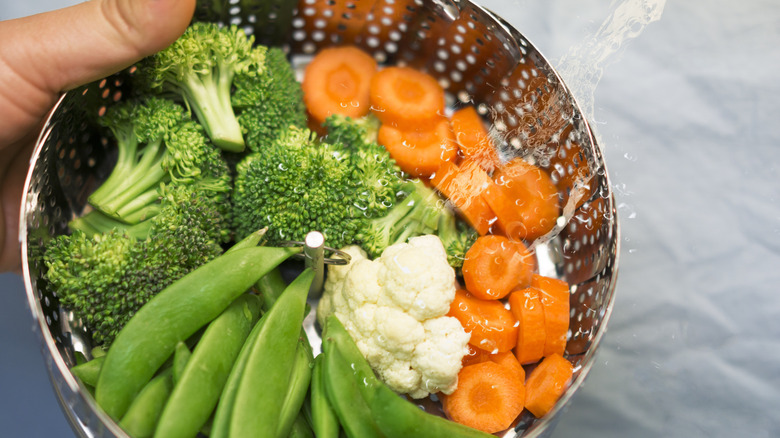
Salt is a staple when it comes to one's arsenal of seasonings, and justifiably so. It acts as a flavor amplifier by enhancing umami notes and even sweetness at low amounts. (Adding salt to watermelon is actually a hack to make the fruit taste sweeter.) The minuscule but mighty specs also help to tone down bitter flavors, which is why a dash of salt can save a bitter cup of coffee. Given the importance of salt to flavor: if you're making a serving of steamed vegetables, should you salt the water to make your veggies taste better? To answer this question, Chowhound spoke to Stephanie Loaiza from the team behind Six Sisters' Stuff, which creates recipes for everything from soups and stews to easy side dishes, and the answer makes complete sense when you think about the underlying science.
"Adding salt to the water when steaming vegetables won't impact the flavor or texture of vegetables," she tells us, and this is because steamed vegetables are cooked by the evaporated water. The salt doesn't evaporate, and as a result, its flavor-enhancing properties never meet the vegetables being cooked. Adding salt to water for steaming vegetables will, however, increase the water's boiling point, which could delay the cooking process. So, as Loaiza advises, "We recommend adding any salt or flavoring after steaming to get the full effects of flavor enhancement."
When does salting matter when cooking vegetables?
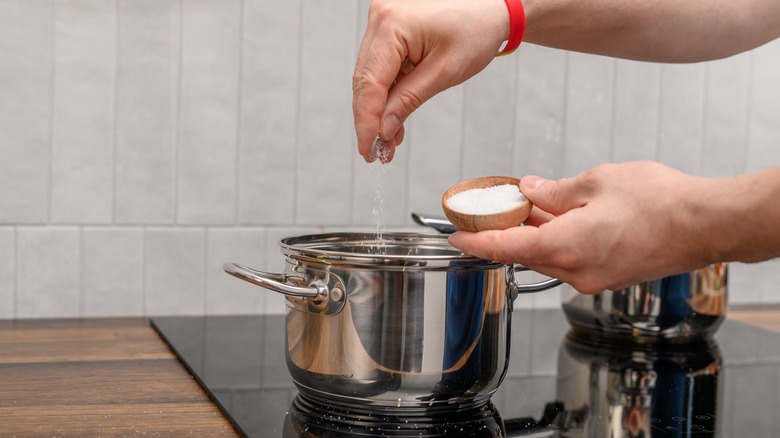
Though steamed vegetables aren't the best use for salt's multifaceted talents, its flavor-boosting potential works its magic if you choose to boil your veggies. As Stephanie Loaiza tells us, "When boiling vegetables, the salt is absorbed into [them] because they are being cooked directly in the salted water." Because the salt is actually absorbed into the vegetables, unlike in the case of steamed veggies, you're in for a more flavorful experience than if you had boiled them in unsalted water. According to Loaiza, "The best rule of thumb for salt to make an impact on flavor and texture: if you're boiling veggies, add the salt to the water, and if you're steaming veggies, add the salt after."
Keep in mind that not all salt is created equally. You may have heard of conventional table salt, sea salt, kosher salt, and even Himalayan pink salt, prized for its eye-catching hue and pleasant flavor. The diversity in the "saltiverse" is incredible, and each type has its place in the culinary world. That said, Kosher salt appears to be the salt of choice for salting water, be it for boiling vegetables or cooking pasta. The larger, coarser grains are easier to handle, so you can control the amount you add. While Himalayan pink salt also checks those boxes, Kosher salt is usually less expensive. The general recommendation for boiling veggies is about 1 teaspoon of salt per 3 cups of cooking water. A quick blanch for two to three minutes followed by a cold plunge in an ice bath ought to do the trick for cooked veggies with the optimum bite and touch of flavor.