

Are Your Tomato Plants Covered In White Hair? Here's What's Happening
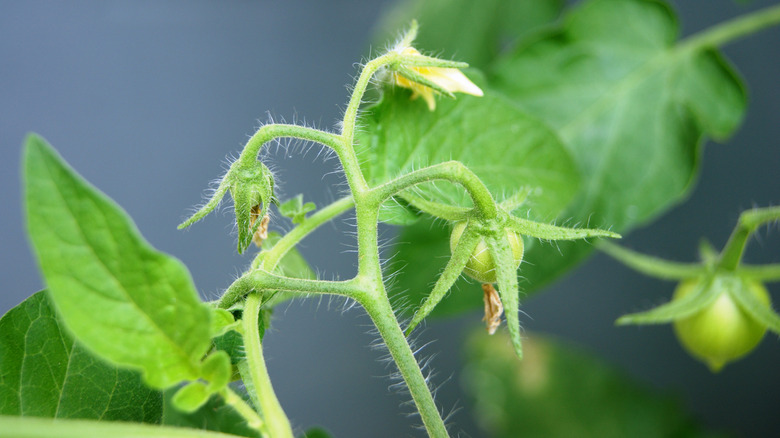
Tomatoes are one of the most common vegetables found in home gardens, and part of the reason why is that they are pretty easy to grow. Gardening beginners may be thrilled to see their plants begin to flower and then confused by the little white hairs that appear all over the stems and flowers of the plant. These are actually called trichomes, and they are an incredible adaptation of not only tomato plants but many others to protect themselves from environmental threats to their survival. If you have ever unwittingly handled stinging nettles without gloves then you have experienced firsthand the prickly power of trichomes. Other plants that have them include potatoes, hot peppers, and cucumbers.
There are several hacks for getting rid of pests in your vegetable garden, but luckily with tomato plants, their trichomes do much of the work for you. Tomato trichomes are either glandular or non glandular, with the glandular variety being activated when something (or someone) brushes up against them. These trichomes then release aromatic oils that are toxic to many pests. They are also the reason your hands will turn yellow when pruning tomato plants for bigger healthier fruit, as the oils are released onto your fingers.
The non glandular trichomes regulate temperature and act as a barrier to the world, helping to stop evaporation and maintain hydration. They also act as a sunscreen, protecting the plant from harmful UV-A rays. That's why some tomato plants that have adapted to survive in extra hot climates will be extra hairy.
These white hairs are not roots

It is a common misconception that these little white hairs are adventitious roots (roots that grow from parts of the plant other than the root system). This is actually not true at all, but what is true is that the stems of tomato plants are able to grow roots if they are buried deep enough, and this is not because of the trichomes, but rather the specialized cells that make up the stem, parenchyma cells.
Just like trichomes, these cells are an incredible example of nature adapting to their environment for survival. Parenchyma cells will modify their functions depending on the plant's needs in the moment. For example, they can be used for photosynthesis, for storing nutrients and water, or to grow roots. Once buried under the soil, the parenchyma cells will recognize that they need to grow roots, and then act accordingly.