

The Official State Donut Of Louisiana Isn't Technically A Donut
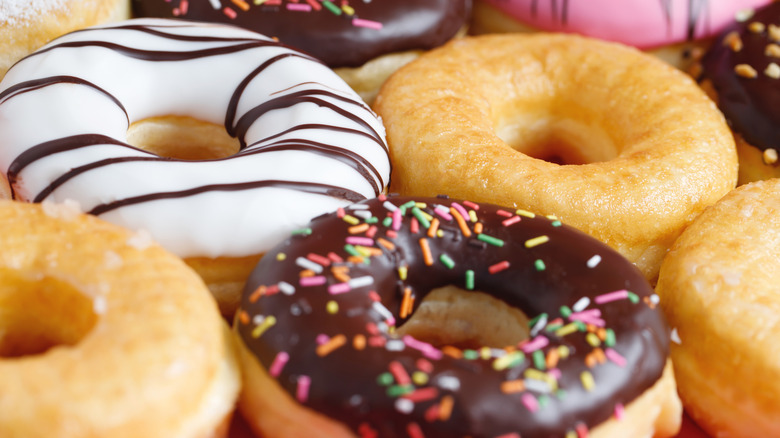
No matter where you're from, you probably believe your state is unique in some meaningful way — and it is! Every state in America has a little something special, a quirk or practice, that makes each state stand out from the rest of the country. Rhode Islanders love sipping on coffee milk, for example, while Illinoisans have a sweet spot for popcorn, their state snack. However, some states really stand out from the rest. Louisiana is one such place, home to several unique cultures from the French-by-way-of-Canada Cajuns to the French, West African, and Native American Creole culture. It stands to reason that Louisiana's state donut would be just as singular. In fact, Louisiana's state donut isn't a donut at all, but the quintessentially New Orleans-made beignet.
Both beignets and donuts are a type of fritter (beignet actually translates to fritter in French). However, they have their differences, primarily when it comes to how they're made. Beignets are distinctly pillowy while donuts tend to have more substantial texture, akin to a soft, yeasted roll or certain breads . Beignets are sweet as served traditionally, but this mostly comes from the heaping of powdered sugar under which they lay, like pillows dolloped with snow. Beignets are also soft and airy when they're fresh from the fryer and, unlike donuts, which tend to stay soft even after cooling, beignets tend to become slightly tough and chewy if left out for extended periods. They're also almost exclusively served hot.
A fritter bit of history
This history of the beignet starts with the Acadians. Originally hailing from France, these settlers lived in the Acadian region of Canada in the 1600s. In the 18th century, England took hold of the area and the Acadians were forced southward. Many Acadians settled in New Orleans and the surrounding areas. The Acadians first introduced a choux-based pastry to the area but, over time, Gulf Coast-based Acadians started to be known as Cajuns and the choux base shifted to yeast dough, which is now a default in the Big Easy.
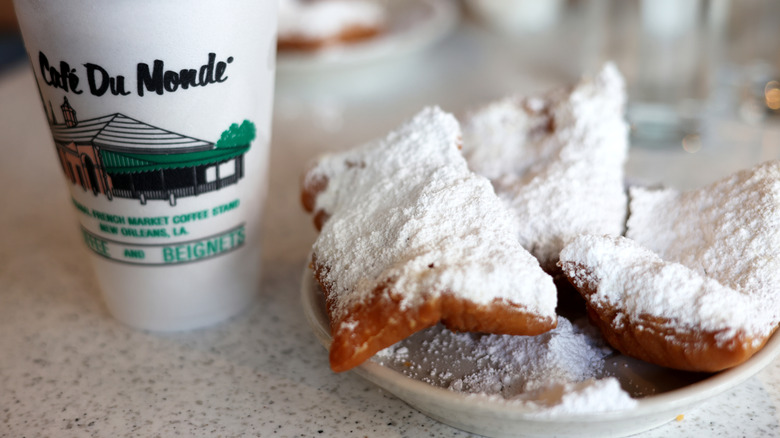
You can find beignets throughout Louisiana, but especially in New Orleans, which keeps history right at the tip of its fork. However, though the beignet has had a presence in Louisiana since the Acadians made their way to the state, beignets' status as a culinary icon wasn't cemented until after 1958 when the French Market decided to rerun the dish to its French roots by renaming its donuts to "beignets." Soon after, locations such as Café Du Monde followed suit, and this old-turned-new fritter took on a uniquely New Orleans reputation. In 1986, the state's governing body officially made the beignet its state donut as a way of saluting the fritter's impact on the state's culture. Of course, if you can't make it all the way to New Orleans for a bite of a famous Café Du Monde fritter, you can always make some at home using one easy and simple hack (chicory coffee not included).
A beignet apart
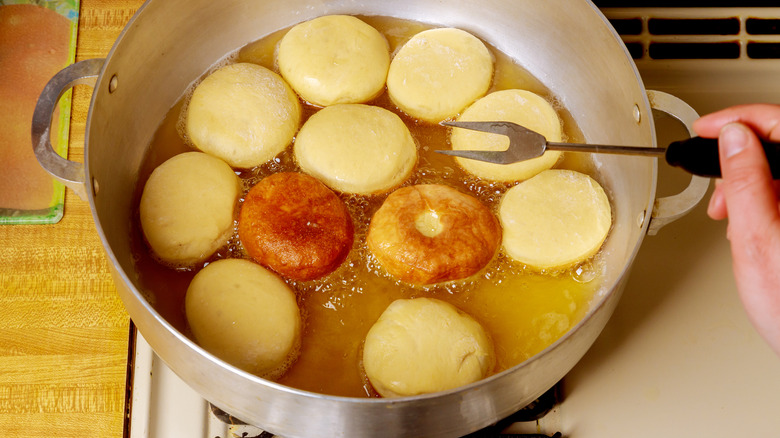
New Orleans beignets do stand apart from French beignets, which are made with choux dough and not yeasted. Though this is the default in France, beignets in New Orleans are often made with yeast, similar to a typical donut. However, donuts and beignets use different rising methods, which are beignets' biggest distinction from donuts.
Yeast donuts typically rise once, at room temperature, for a shorter period of time. This gives them a soft texture that keeps its integrity even after it cools. Beignets, on the other hand, rise in the refrigerator, often overnight. This slow, controlled rise gives the beignets a distinct, yeasty flavor and super fluffy texture. However, it also makes the pastry a bit chewy once cooled, which is probably why most beignets found in New Orleans are served fresh out of the fryer. Of course, some beignets are made out of choux. Though less prominent in New Orleans, they are just as tasty and produce a much lighter texture than the yeast variety — though they don't have that great yeasty flavor.