

How To Clean Blueberries The Right Way And Keep Them Mold-Free
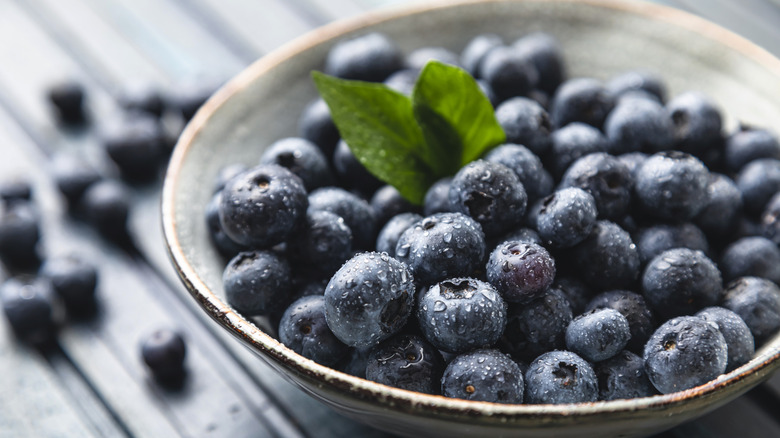
When you see blueberries on sale in the grocery store, it's impossible not to stock up so you can add a taste of summer to muffins, yogurt, pancakes, and more. That being said, it can be tough to keep a fridge full of blueberries fresh — mold tends to take over containers of blueberries quickly, rendering most of the container useless. Thankfully, you can take a few simple steps to help keep your blueberries mold-free for longer — and you likely already have everything you need in your pantry to keep mold at bay.
It's likely that you're already washing your blueberries before you eat them or toss them into a recipe (and that's a good thing), but taking a few extra steps can help your berries hold up over time. Washing your blueberries with baking soda or vinegar works to raise and lower the pH, respectively, creating an alkaline or acidic environment that isn't conducive to bacterial growth. If you go with the vinegar method, you'll want to mix about one part vinegar to three parts water in a bowl, add your berries, let them sit for at least 10 minutes, then rinse thoroughly. A vinegar/water soak also works well for cleaning strawberries, and it's the perfect deep-clean for raspberries, too. If you want to try the baking soda method, add about a teaspoon of baking soda to your produce in a 2-cup rinsing bowl, soak only up to 15 minutes, and rinse. Whatever method you choose, it's vital that you make sure your berries are totally dry to maximize your chances of stopping mold growth.
More tips to keep your blueberries fresh
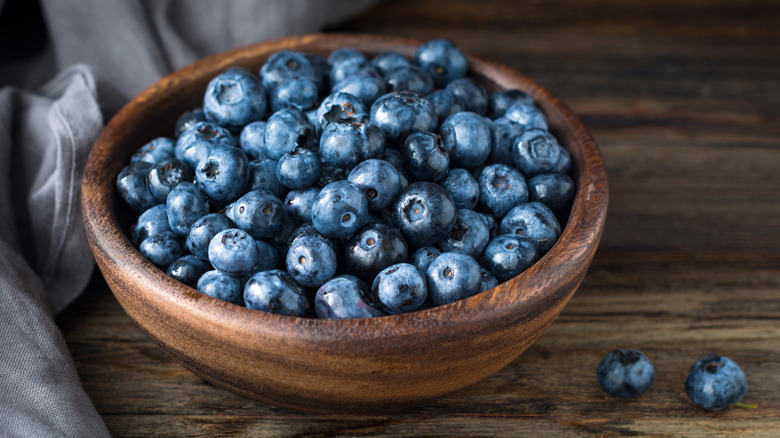
If you've washed your berries with vinegar or baking soda, you're on the right track, but you'll want to take a few more steps to ensure that your berries hold up until you've enjoyed every last one. Storing blueberries in a glass container can also help them stay fresh over time. Make sure you've thoroughly air-dried your berries, then place a folded paper towel in the bottom of a Mason jar. Add your berries, top with a lid, then place them in the fridge — some find that storing blueberries this way can help them last for weeks.
Be sure to keep your berries in the fridge until just before you're going to use them, as cool temperatures can help to prevent or slow mold growth. An important note: if you open a container of blueberries and find a moldy berry or two, you don't need to throw away the entire container. The USDA recommends that you throw away the berry (or berries) with visible mold, as well as any berries that were touching the mold. From there, you can clean the rest of the berries in the container and enjoy them worry-free.