

Where To Store Butter In Your Fridge For The Freshest Results
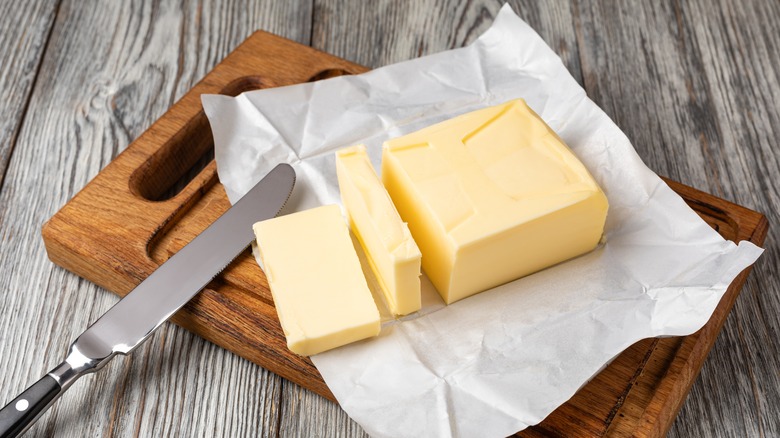
Refrigerators come with a cute little butter compartment that's designed to let your favorite salted or unsalted brand gaze out at the rest of the treats sitting in there. If you typically store your butter in this convenient area of your fridge, it's time to make a change — you might be unintentionally making your butter less-than-fresh. The built-in storage area isn't actually the best place for butter to stay just as delicious as the day you brought it home.
To keep your butter fresh for as long as possible and minimize the risk of spoilage, you'll want to keep it in the back of your refrigerator where it's chilly. The bottom shelves are typically the coldest, so you'll want to find a nice spot for your butter that's far from its standard storage spot. While this is naturally the coldest area of the fridge, it also helps to protect your butter from being hit with a blast of warm air every time you open the door. There are some other foods that you'll want to keep out of the door of your fridge to protect against spoilage as well, including milk, meats, cheeses, and eggs.
Other tips and tricks to keep butter fresh
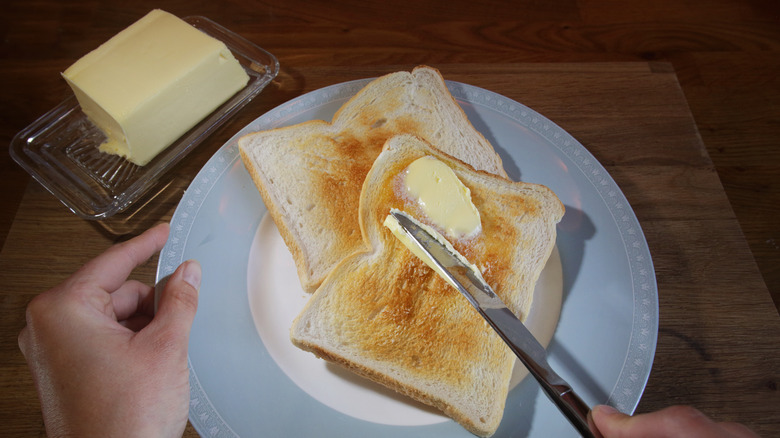
Prefer soft butter that's ready to spread on your favorite toast? We get it, and thankfully, the USDA has given the go-ahead when it comes to keeping butter on the counter — with a few rules you'll need to follow to ensure food safety. First, you'll need to store your butter in a covered container to ensure that it doesn't get hit with food, grease, or even dust. Be sure to use up butter that's been stored on the counter within a day or two to make sure it doesn't spoil. Need to soften it in a hurry? Microwave is the absolute worst way to soften butter, so try grating it instead. Making whipped butter with a bit of milk is also an easy way to get a spreadable consistency.
Homemade butter is also super easy to make with a stand mixer, though you'll want to make sure that you preserve it for as long as possible so you get to enjoy every delicious bite. There are a few precautions you'll want to take with homemade butter. After you've mixed your heavy cream and the butter solids have formed, be sure to thoroughly rinse it under cold water — it's an important step you should never skip when making butter. Remove as much buttermilk as possible to maximize the amount of time your homemade butter will stay fresh. Be sure to store it in an airtight container and then place that toward the back of your fridge.