

The Popular Icelandic Chocolate Filling That Weirdly Works
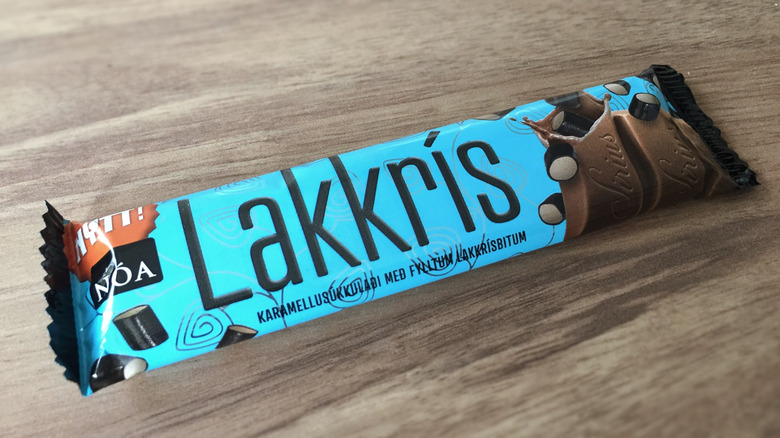
Iceland has a whole world of candy that can only be found there, and almost all of it involves black licorice. Not the strange, overly sweet variety many of us are familiar with, but the real deal: soft, earthy, herbaceous flavored candy made from licorice root (not to be confused with anise). It's an entirely different animal than the black jellybeans many of us tend to separate from the rest of our bounty and discard.
In Iceland, licorice comes in all forms (think rope, ice cream, hard candies, and gummies) but the most popular way to eat licorice by far is to drench it in chocolate. It's one of those partnerships that might not sound so great on paper, but there's something about the complex flavor profile of slightly bitter, herbal tones of the licorice paired with the creamy sweetness of milk chocolate that just works.
From the popular Draumur, a chocolate covered licorice straw, to the ubiquitous Þristur, a bar with a caramel and black licorice center wrapped in chocolate, these sweets can be found everywhere from remote gas stations to big grocery stores. A visit to the subarctic country would not be complete without sampling licorice chocolate bars, along with some of the other unique foods only Iceland offers.
How licorice became Iceland's unofficial favorite candy
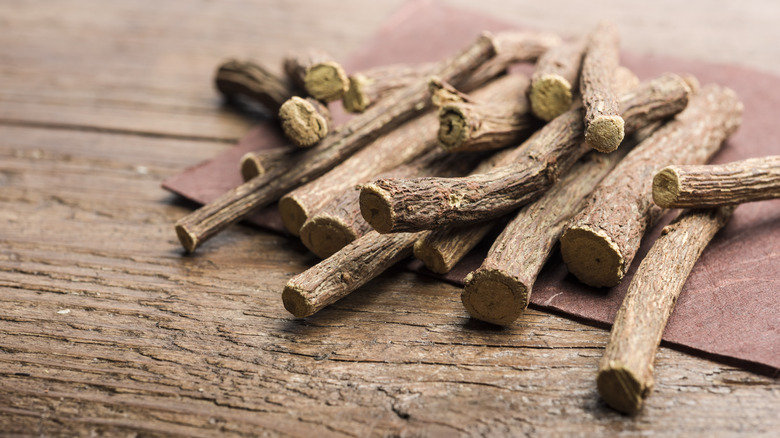
Licorice's popularity in Iceland dates back to the 20th century, when, for various reasons, including economic turmoil due to the Second World War, imported foreign goods were restricted in the country. Up until that point, Icelanders had developed a penchant for licorice, which was sold first in pharmacies for coughs and other respiratory ailments (common on the cold island), and then eventually in shops simply for the love of the flavor. So when it was no longer possible to import licorice, or any other kind of candy for that matter, a more local solution needed to be found.
The volcanic topography and harsh climate in Iceland meant that most crops couldn't survive. Licorice, luckily, was one of the exceptions. This is because the compound responsible for its sweetness, glycyrrhizin, is contained in the edible root, which was resilient enough to grow in the challenging environment. For this reason, candies that were made from licorice root were the only sweets Iceland had access to for a long time. By the time imported candies were finally allowed in again, in the 1980s, the country had developed a deep love affair with black licorice and the way it complemented chocolate. That's why, even today, the majority of candy bars you find in the shops in Iceland are locally made, with the nationally beloved combination of chocolate and licorice.