

The Unexpected Liquid That Perfectly Braises Your Proteins
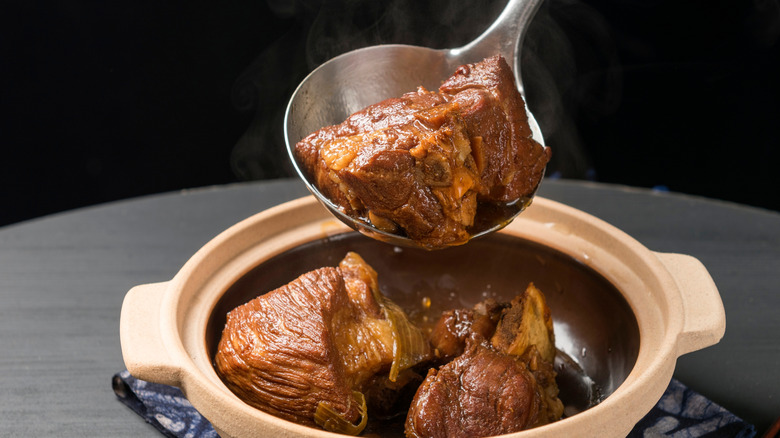
Braising gives proteins the best of two worlds: Flavor built from browning on high heat, and rich texture with even more flavor from the slow cook in braising liquid that follows. This two-step flavor building, combined with tenderising effects, is why braising works so well turning tough or otherwise mediocre cuts into succulent morsels.
Depending on the protein, one of two main methods of braising (short or long) is generally employed. Long braising, as the name suggests, is time consuming, but the meat's connective tissue breaks down. Meanwhile, flavors from the braising liquid seep into the meat, which is why choosing the right flavors for this liquid is crucial for making the long cook worthwhile. While you often see wine, beer, or vinegars used for braising, widen the scope to include other flavorful liquids — such as pickle juice.
"Pickle juice can be an effective braising liquid because it is already packed with flavor and salt," explains Tyler DuBois, co-founder of The Real Dill, in an exclusive with Chowhound. He recommends making braising liquid from a mixture of pickle juice and a flavorful base liquid, such as stock. "Pickle brine has such an intense flavor that it could lead to an oversalted dish when reduced in a braise. Mixing it with another liquid that isn't as strong helps prevent the pickle juice from overwhelming a dish," he explains.
Using pickle juice as a flavorful braising liquid

Compared to other braising liquids, the flavor of pickle juice is relatively intense. Therefore, the first step is to dilute it significantly with another flavored liquid. "The braising liquid is going to reduce and intensify, and pickle juice is already quite potent. You want the pickle flavor to be featured, but not totally dominate the flavor of whatever you are braising," advises Tyler DuBois.
The potent spicy, salty, and acidic notes found in pickle juice are best complemented by a diluting liquid that has more subtle flavors. DuBois recommends using light beer or chicken stock. "Adding some water can help highlight the braise without pickle juice overpowering the dish as well," he adds. Finally, to amp up the flavor, additional ingredients can be incorporated. DuBois uses fresh aromatics in the mixture, saying that onions and garlic pair particularly well with pickle juice.
Because the braising liquid doesn't rely solely on pickle juice for flavor, there are no hard and fast rules on what kind of pickle juice to use. Depending on how good your store-bought pickle is, you can decide how prominent you want to keep its juice's flavor in your cooking liquid. If needed, you can simply use a splash of pickle juice for some bright and briny acidity and a mild spice kick. If the pickle juice has more complex flavors that you'd like to incorporate in the dish, use a higher proportion of it. However, the flavors continue to intensify during the long cook, so dilute accordingly and keep the salt levels in check.
The best proteins and vegetables to braise and brine with pickle juice

Of the many unexpected flavor boosters hiding in your pantry, pickle juice is a particularly versatile one. You can elevate pasta salad with a dash of pickle juice, use it as a quick salad dressing, and even add a dash to cocktails. Since pickles generally pair well with relatively mild dishes, pickle juice braising liquid similarly complements meats that don't have very robust or deep flavor.
Tyler DuBois elaborates on this: "I think pork and chicken are the best options when it comes to cooking with pickle juice. Beef is not off the table, though — and a little pickle juice added to the braising liquid of oxtails is delicious. But, I would use it sparingly as the beef already has a strong flavor." If you plan on using pickle juice for braising beef, try it on inexpensive beef cuts that are great for braising, such as chuck or the neck. The braising liquid also works well with frequently braised vegetables such as cabbage, potatoes, leeks, and even just onions for a delicious, punchy side.
The generous saltiness of pickle juice also makes it a natural brining liquid. DuBois says that any meat that benefits from using it as a braising liquid can also be left to rest in pickle juice to tenderize and flavor. "Pork and chicken are natural fits for the tangy, acidic flavor of pickle juice. Brining these meats in pickle juice before grilling, roasting, or frying is another great way to utilize the juice left in the jar," he concludes.