

The Two US Presidents Who Were Once Peanut Farmers
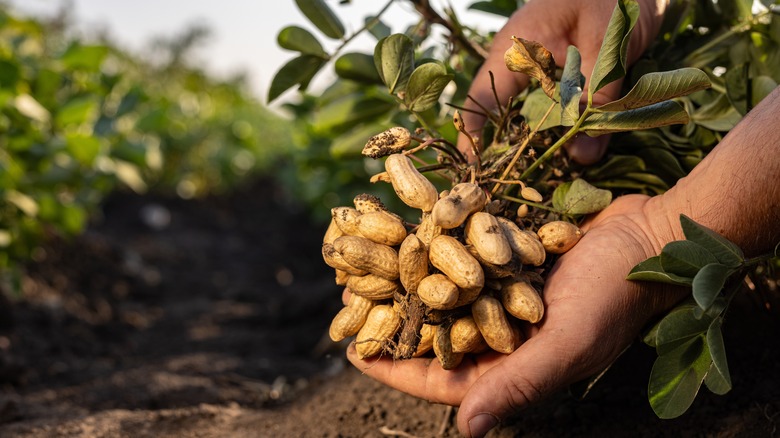
During his time in politics, former U.S. President Jimmy Carter was forever associated with his family's peanut farm in Plains, Georgia. Carter grew up on this 360-acre farm and took over its operation in 1953, just after his father died. During his presidential campaign, he used peanuts in most of his memorabilia, including mugs, bags of nuts that were passed around to voters, and even a giant peanut-shaped statue bearing Carter's iconic smile. (Which can still be found in Georgia today). Still, history buffs might know that Carter wasn't the first American president to grow these legumes. It was another individual, nearly 200 years earlier, who helped popularize the peanut.
While these nuts are native to South America, and were first cultivated in the U.S. by enslaved people from West Africa, Carter might have never been a peanut farmer if it were not for one of his predecessors: Thomas Jefferson. The third U.S. president is credited with helping spread the word about peanuts in the United States. While enslaved people mainly grew tobacco, and later wheat, on Jefferson's farm in Monticello, Virginia, a huge range of other agricultural products were also grown here. A dizzying array of crops, including 15 varieties of English peas (Thomas Jefferson's favorite vegetable), were planted. Among the various crops grown on Jefferson's farm was the peanut, making him the first peanut-farming president — but not the last.
Presidential peanut farmers nearly 200 years apart
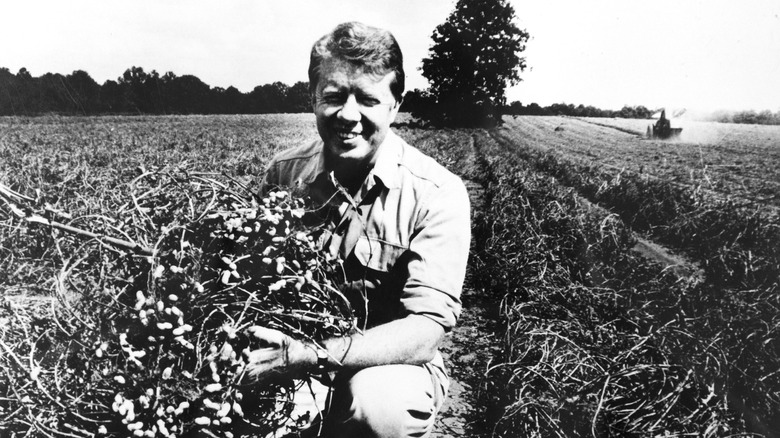
Throughout U.S. history, farming and the presidency went hand in hand. In fact, both George Washington and Thomas Jefferson considered themselves farmers as much as statesmen. A succession of other presidents also had farms, including John Adams and Andrew Jackson. Even so, peanuts weren't a big crop at the time.
While Jefferson helped the peanut gain a foothold in the country, others deserve credit, too. The enslaved people who came from West Africa got it all started, and agricultural scientist George Washington Carver's tireless work throughout the 20th century helped make this legume an important product, which later became the key ingredient in the historic peanut butter and jelly sandwich. It took Carver nearly 50 years to convince farmers to grow peanuts. While he didn't actually invent peanut butter, which is one peanut butter-related myth you should stop believing, he played an incredibly important part in the legume's ascent.
When Jimmy Carter was elected president and moved into the White House in 1976, he became the second presidential peanut farmer and built further on the legacy of this beloved legume. Not only was he the second peanut farmer to become president, he was also the last (so far, at least).