

The Biggest Difference Between Preparing Saltwater And Freshwater Fish
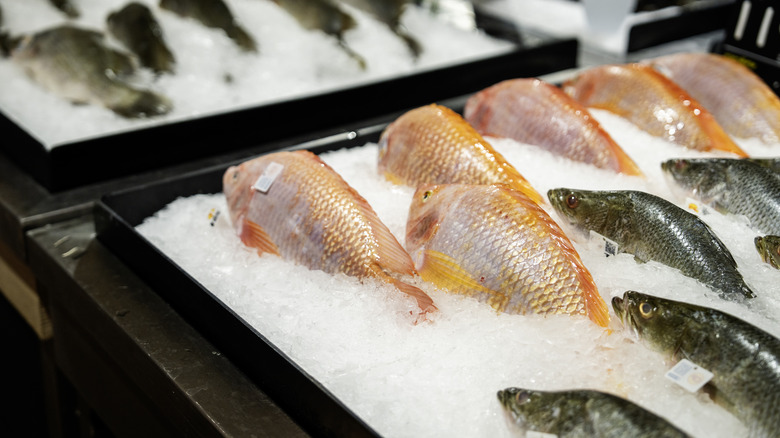
Grilling, frying, poaching, and baking — there are oodles of great ways to cook a fish, regardless of its aquatic provenance. While saltwater fish is a more common menu item than its freshwater counterpart, both varieties do have their place in the American diet. And whether you're grappling with mackerel (salt) or tilapia (fresh), you can use a range of cooking techniques rather successfully. However, you'll still want to consider their different textures to decide how you'll approach them, Lei Jiang, chef de cuisine at South Street Seaport restaurant The Fulton by Jean-Georges in NYC, tells Chowhound exclusively.
"Freshwater fish tends to be softer and more delicate, while saltwater fish is usually firmer and can stand up to more robust cooking methods," Jiang says. "The meat is softer, so handle it gently when cooking. You don't need special tools. What I use for saltwater fish, like a good fish spatula, works just as well for freshwater. Saltwater fish has a firmer texture, so it can handle higher heat. With salmon, for example, you can get a beautiful crust — almost like searing a steak or chicken," he notes. These differences can potentially be attributed to a combination of things, including fish musculature, fat content, and environmental conditions. Those same factors also affect the flavors that land on your plate.
Cooking saltwater and freshwater fish at home
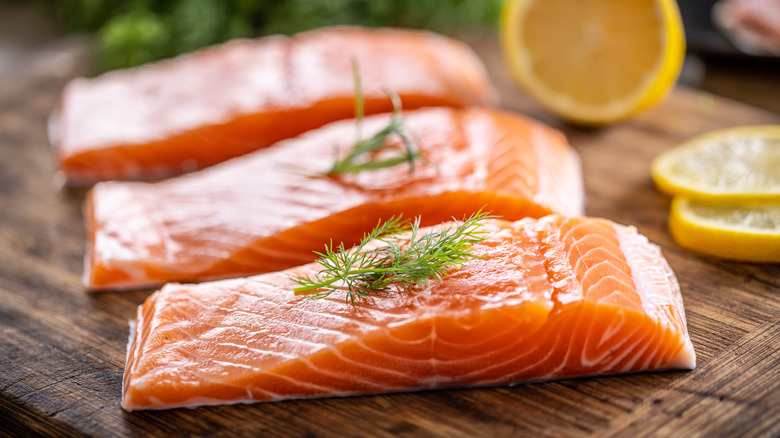
Anyone who has had a fish completely fall apart in the pan might have just been treating it too roughly for its composition. That popular, mild, and sometimes controversial tilapia, for example, is just too delicate to stand up to the roughness and ferocity of grill grates and live fire, so it should be better protected in something like a shallow butter bath in the oven.
Flavorful mackerel, which is rich, affordable, and sometimes overlooked at the seafood store, is one of those options, like chef Lei Jiang mentioned, that can actually stand up to the intensity of the grill, or to the stovetop in a blazing hot cast-iron pan. The lovely crust on a nice piece of saltwater salmon, which Jiang also shouted out, requires a higher fire than some fish can handle. A great pan-sear needs a turn through hot oil that some other species just wouldn't be able to withstand. At these temperatures, it's probably best to keep a food thermometer handy so you don't accidentally overcook the salmon and send it into dry, well-done territory.