

The Difference Between Margarine And Butter
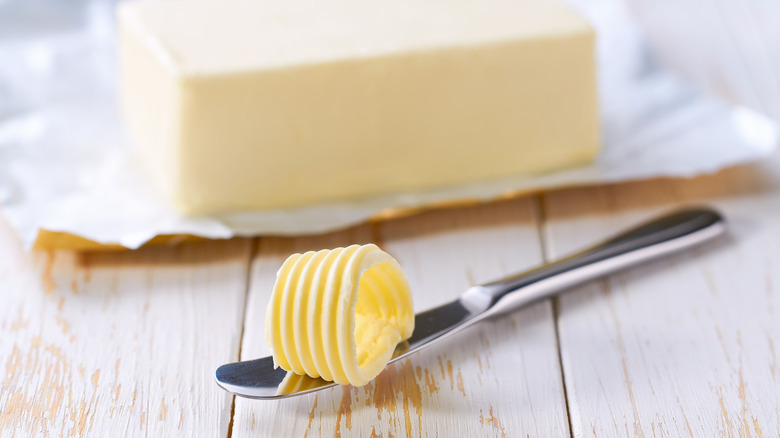
Dairy aisles can be a lot to navigate with their endless blocks and tubs of butters and spreads. There are dairy-based, plant-based, salted, and unsalted varieties, but what confuses some shoppers the most is deciding between butter and margarine. It's essential to understand the differences between them and what happens when you substitute margarine for butter (or vice versa).
Butter has been around for centuries, and it's made by simply churning cream or dairy milk. Butter is high in saturated fat, making it creamy, rich, and delicious. Margarine entered the scene around 125 years ago in France, first as an attempt to create a butter substitute during times of economic hardship. However, it became a retro food trend in the 1980s, leading the helm of a diet movement against saturated fats. Although it was initially made with animal fats,margarine is now largely a plant-based, low-fat alternative that lasts longer than butter.
Margarine comes in either blocks or tubs. Tub margarine is perfect for spreading on anything, as you would with whipped butter. Block margarine works well as a butter substitute when baking, but butter is generally the best choice due to its rich flavor and high fat content. Because margarine has less fat and more water, it can ruin baked goods by making cookies spread out too thin and stick to the baking sheet. From an aesthetic perspective, butter ranges in color from light to dark yellow, whereas margarine is white or dyed yellow to give it the appearance of butter.
Is butter or margarine healthier?
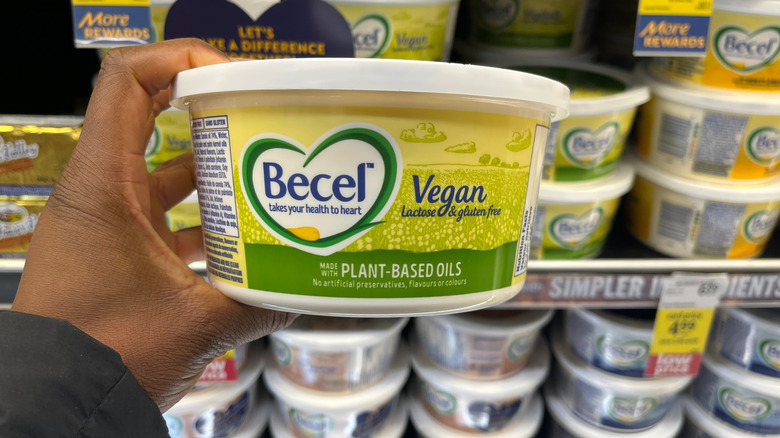
There remains some debate over which is the better choice between butter and margarine, and the answer mostly comes down to what your priorities are. If you are looking to cut down on saturated fats, then margarine is the better option. Since it contains vegetable oils rather than cream, it is considered a heart-healthy choice. Despite this designation, margarine unfairly gained a bad reputation for several reasons, one of which is the addition of yellow dye to mimic the color of butter, as well as the possible inclusion of trans fats.
In the past, the hydrogenation process of vegetable oils in margarine resulted in the production of trans fats, which have been linked to negative impacts on cholesterol levels and cardiovascular diseases. However, due to a rise in awareness around the health risks of trans fats, the FDA has since banned them in most foods, making margarines trans fat-free. The advantage of butter is that it's a whole, minimally processed food that you can find USDA-certified organic in stores. When it comes to cooking, butter has an irreplaceable creamy consistency and distinct flavor that margarine can't always beat. Regardless of which one you prefer, butter and margarine are versatile kitchen staples that belong in your refrigerator.