

How To Fix The Bitter Taste Of Collard Greens For Good
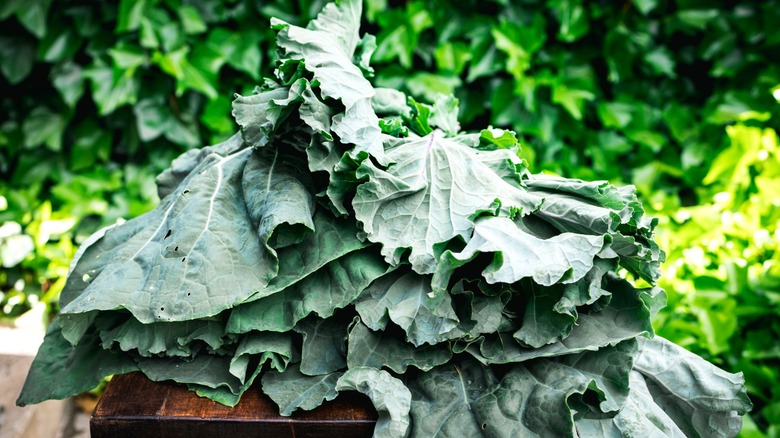
Fall is coming up fast, and that means it's almost collard green season again. The best greens grow in the cooler times of the year, which is why you'll often see them on the dinner table when trees start to go brown. If you're a fan of this veggie — a staple in Southern America's long history of soul food — you'll know that a lot of its more vibrant flavors are hidden behind layers of bitterness. Cutting out that bitterness is crucial to making a tasty bowl of collard greens, and it's a lot easier to do than you might think.
Chowhound asked Zingerman's Roadhouse head chef Bob Bennett for a couple of tips on how to eliminate the more bitter flavors in collard greens, and according to him, the key ingredient is time. "When cooking collard greens, around the 3 hour mark the greens will lose their bitterness," he wrote. Bennett also said that outside of taste, you'll know you've cooked them for long enough if you can smash the stems easily with a fork.
Collard greens get their bitterness from natural compounds called glucosinolates, which are also found in other leafy greens like kale and endive. These compounds start to break down when heated to 210 degrees Fahrenheit and above, with the effect becoming more pronounced over time. It's because of this reaction that your collard greens come out milder and slightly sweeter after a few hours in the slow cooker.
Other tips for cutting the bitterness of collard greens
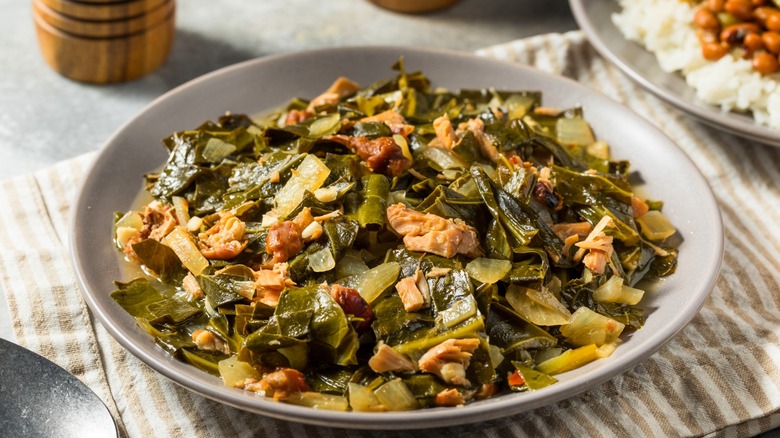
Aside from cooking them for long periods of time, Bob Bennett offered a couple of other tips for bringing out the best flavor in your collard greens. He explained that you can offset the bitterness by adding ingredients that help mellow their flavors, and by introducing a few seasonings into the dish.
In terms of ingredients, Bennett suggested using smoked meat products like bacon, ham hocks, and turkey necks. The fat, salt, smoke, and umami from these meats can all help add contrast to the bitterness of your greens, balancing out the flavor profile so that it's less prominent. It's a great way to use any leftover turkey you've stored up after Thanksgiving, and it also makes for a fantastic side if you're using those leftovers to make another classic dish.
For the seasonings, Bennett said that he likes to keep it simple: "I personally like to let the greens speak for themselves, but I think dried oregano and thyme add some good balance along with a little pepper vinegar." The earthy, herbal notes of the oregano and thyme can temper the bolder flavors of your collard greens, while the zing from the vinegar cuts through the bitter notes. Similarly, you can give sautéed greens a flavor boost with some spice, which should also mask the bitterness.