

Make French Toast Like A Pro With One Smart Bakery Bread Swap
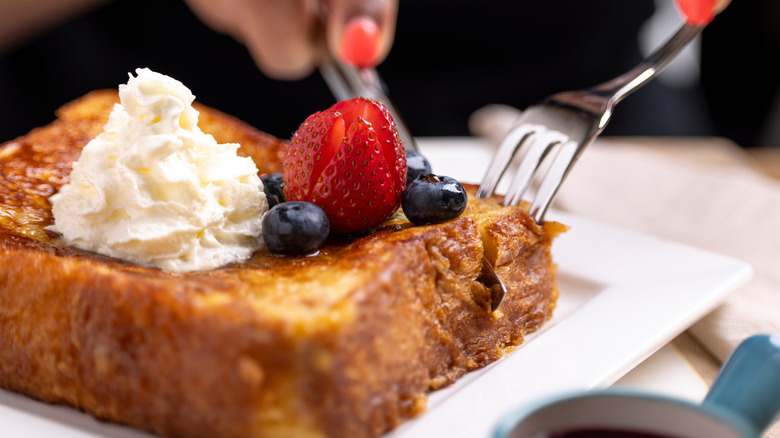
French toast has a way of tricking us into thinking it's a "restaurant-only" breakfast — golden, custardy slices stacked high, dusted with sugar, and dripping in syrup. Achieving that at home may seem unattainable, or at least incredibly time-consuming. But here's the truth: The difference between the slightly soggy stuff you make at home and the diner-worthy plate you order out often comes down to one simple choice. It's not the eggs, the milk, or even how long you soak each slice. It's the bread.
Most of us default to store-bought white breads because it's what's in the pantry. The problem? Pre-sliced loaves are usually too thin and too flimsy to stand up to a rich custard soak. They either collapse into mush or cook unevenly, leaving you with a sad mix of soggy centers and overdone edges. That's where a bakery loaf comes in.
When you buy an unsliced loaf from your local bakery (think challah, brioche, or even a sturdy sourdough), you get to control the thickness. Cut at least ¾-inch thick slices, and suddenly you've got a canvas primed for perfectly cooked French toast. Thick slices can soak up more custard without disintegrating, which means a creamy interior and golden, caramelized exterior once it hits the skillet. Basically, a simple bread swap unlocks the textural balance that restaurant French toast nails every time.
Flavor, value, and the perfect soak
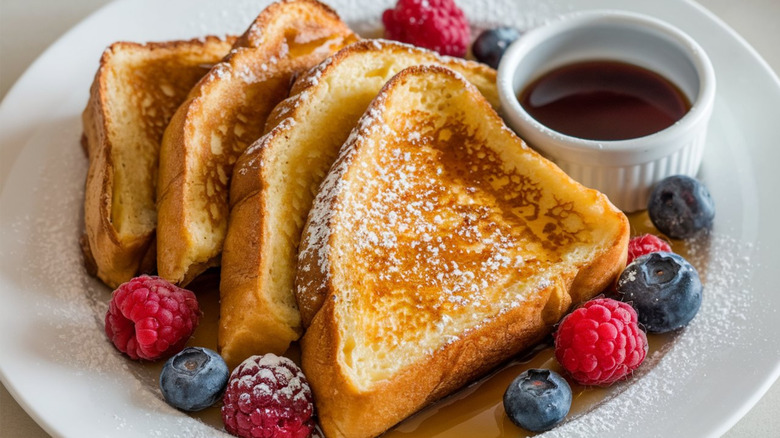
Another perk: Bakery loaves tend to have better flavor on their own. A buttery brioche or eggy challah brings richness to the dish before you have even dipped it in custard, while sourdough adds a tangy note that plays surprisingly well with store-bought maple syrup, especially if you know how to pick out the best version of the sweet topping. And because these loaves are baked fresh, the slightly sturdier crumb holds up to frying without falling apart.
Here's the kicker, though. While bakery bread may look like a splurge, it is actually cheaper than brunch out. A single loaf can yield eight to 10 thick slices, enough to feed a small crowd or give you a week's worth of fancy breakfasts. Compare that to ordering French toast at a café, where one plate might cost the same for just two slices. It's a small upgrade that pays off in both flavor and savings.
Pro tip: If you want diner-style results, don't reach for the freshest loaf. Day-old bakery bread is actually perfect. It is just dry enough to absorb more custard without getting soggy. Slice it thick, let it soak for a minute or two per side, and fry it up in a mix of butter and a touch of oil (to prevent burning). The result? Golden, custardy French toast that tastes like it came from your favorite brunch spot.
So, the next time you feel like upgrading your French toast to be as delicious as possible, skip the flimsy sandwich bread. Head to your local bakery, grab a loaf, and slice it thick. One smart swap, and suddenly you are cooking like a pro — no reservations required.