

How Kroger Came To Dominate America's Sushi Supply
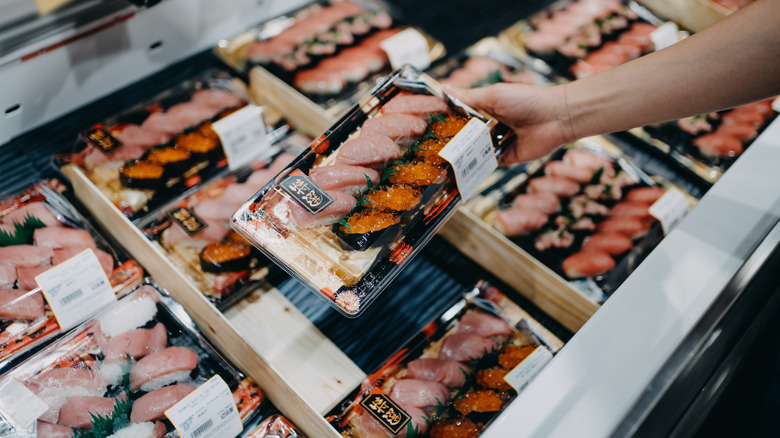
When compared to restaurant sushi, grocery store sushi has a generally negative sentiment around it. Most of the time, it's not entirely fresh and made just moments ago; it might've been shipped to the store instead of made in-house, and it tastes different than restaurant sushi since sushi rice gets crunchy when it sits in the fridge. But, for some, grocery store sushi is a delightful saving grace when a quick, tasty meal can be snagged.
You'd probably think that since grocery store sushi can be so hit and miss, it'd remain a niche food item. But, according to The Wall Street Journal, Kroger is now the top seller of sushi in the United States with over 40 million pieces of sushi sold each year. It seems like consumers have finally accepted sushi as a mainstream food option. With Kroger leading the way and serving up decidedly above-average rolls (it employs sushi chefs who make the products fresh every day), the chance you get a truly awful tray of grab-and-go sushi at the chain seems to be significantly diminished. In fact, the floor has seemingly been raised to the point where a quick sushi dinner after an evening stocking up on groceries is not only convenient, but also delicious and enjoyable.
Sushi is booming
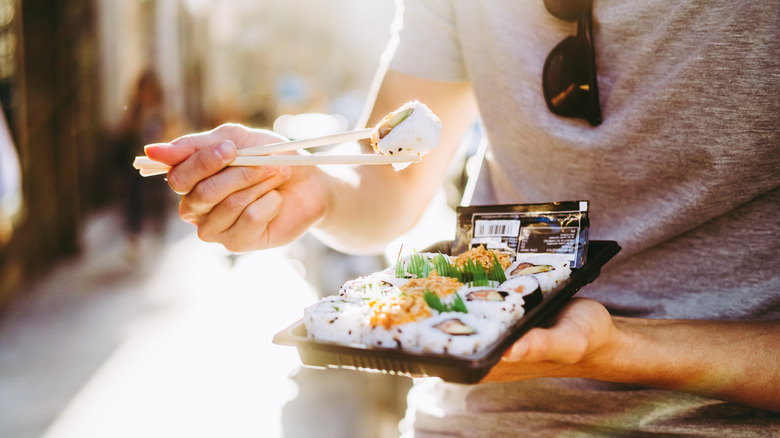
These massive sushi sales aren't just a Kroger thing. Data shows that grocery store sushi is no longer niche; it's widely accepted, and sales are skyrocketing. Sushi sold at grocery retailers in the United States has increased more than 50% over the past year. The sushi popularity boom doesn't stop at the grocery checkout either — sushi restaurants are also seeing increased business. Market analysts, such as Technavio, forecast a 3.5% annual compound growth in sushi sales through 2029, which would result in an increase of $3.92 billion spent on the Japanese cuisine.
With increased demand in both stores and restaurants, there's also the unfortunate fact that prices will likely go up. With tariffs, levies, and increased costs to ship fresh fish through supply chains, consumers might end up bearing the costs. There's also the consideration that a tray of sushi you can quickly grab (sometimes on sale) from the grocer is still cheaper than a fast food order.