

Why Chicago Style Hot Dogs Are Always Served On A Poppyseed Bun
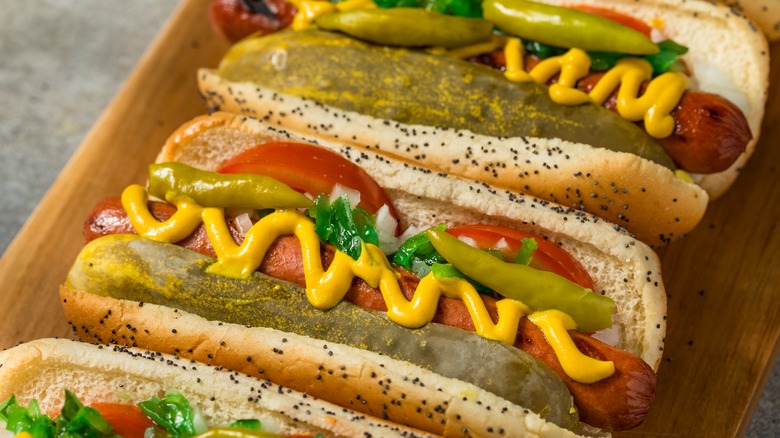
When it comes to regional food regions in the United States, Chicago is a hub for deeply loved foods. And few foods are as fiercely protected in the Windy City as the Chicago-style hot dog. The all-beef frank gets generously dressed with yellow mustard, neon-green relish, onions, tomatoes, spicy sport peppers, a pickle spear, and a dash of celery salt, all packed into a bun. With all the razzle and dazzle of the toppings, the bun is often overlooked. That said, it is technically a special bun, as it comes studded with poppy seeds — but why?
With foods that have a longstanding history, the reasons and origins of why they look the way they do can easily get lost through the years. If you go to any classic Chicago hot dog spot, like Anthony Bourdain's favorite Jimmy Red Hots, you'll get served a poppyseed bun — but if you ask why, you probably won't get a clear answer. Taste is a possible theory; poppy seeds, after all, are a key component of the favorite muffin flavor. The tiny seeds are found on the exterior of everything bagels, and add a slight nuttiness and earthiness to baked goods. Although the seeds are much smaller than, say, sesame or sunflower, they can still provide a crunch.
However, in the bun, the seeds don't contribute much in terms of taste or texture when it comes to the Chicago hot dog. There aren't enough of them to change the flavor profile of the hot dog, which is already bursting with strong, tangy, and savory toppings. Most people eating a Chicago dog wouldn't notice if the bun were plain. So while flavor and texture are often floated as a reason, it doesn't quite hold up under closer inspection.
Poppy seeds have a historical importance and add a visual element
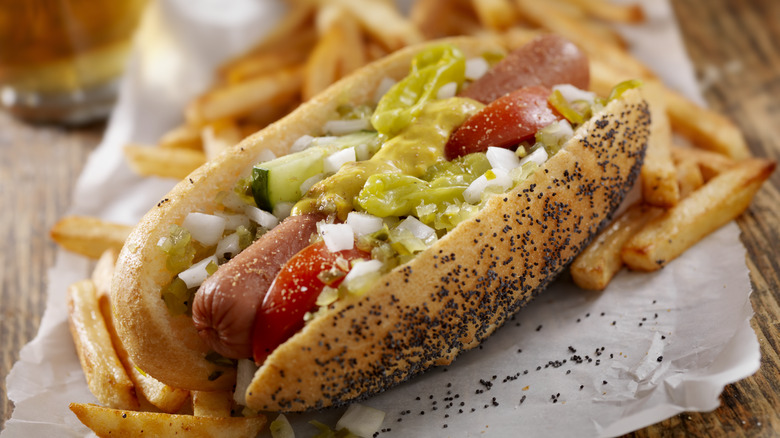
A more plausible explanation ties the tradition to Chicago's Jewish baking community. This also aligns with the creation of the Chicago hot dog itself, which is connected to the creation of the kosher frank by Jews in the 1900s. In the early and mid-20th century, poppy seeds were already a familiar topping on bagels, challah, and rye bread, and bakers may have carried the same aesthetic over to hot dog buns. It's also suggested that Sam Rosen, a Polish immigrant from Germany, may have been the first to sprinkle poppy seeds onto buns in his bakery.
Just as sesame seeds came to signify a more premium hamburger bun, poppy seeds also lend an elevated look to an otherwise plain hot dog roll. This small touch may have helped Chicago hot dogs stand out as distinctive from an earlier version called the "Depression Dog," which came with fewer vegetable toppings and a plain bun.
Once the poppy seed bun became the default, tradition solidified. Even if this seemingly small twist may seem arbitrary, it has snowballed into one of the identity markers of the Chicago hot dog. The seeds may not add much taste, but they add character — and now there's no turning back to a plain bun.