

Why Is Bologna So Cheap?

Whether you prefer sweet, speckled Lebanon bologna, light pink American bologna, or ring bologna, you might be curious about what's actually in the cured, processed meat that's beloved on hoagies and charcuterie boards. While bologna, like Spam, has a reputation as a mystery meat, the fact it's made up of a variety of components actually contributes to why it's so cheap. Different bologna brands offer different price points, but, in most cases, the reason for the low price is simple: You're getting seasoned, processed, packaged animal products left over from creating other food products.
When you purchase bologna, you're not purchasing a cut of meat from a single animal like you do when buying steak or chicken breast. Instead, you're getting leftover animal products that are finely ground. Typically, organ meats, trimmings left over from processing, and other byproducts are included in bologna recipes. Often, these products aren't just from multiple animals of the same species — they're from multiple species of animals. Oscar Mayer bologna, for instance, includes chicken, pork, and beef. Boar's Head offers a few different bologna products, including some made solely with beef, as well as others made with both pork and beef. Since processors are able to make good use of whatever they have left from creating other meat products, bologna tends to be an inexpensive meat option.
What to look for in high-quality bologna
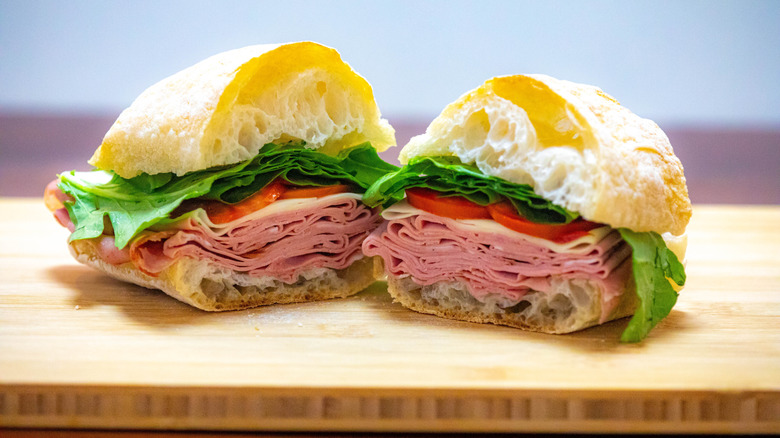
If you're a fan of bologna, simply understanding what to look for at the grocery store can help you avoid low-quality offerings. If you're choosing a bologna for sandwiches at your deli, stick with a well-known brand such as Boar's Head, or choose a brand from a reputable local company (small-batch bologna can be especially delicious). Additionally, salt levels can be super-high in bologna. If you're trying to watch your salt intake, be sure to take a look at the sodium content on your bologna options. You might find that you get all the flavor (and less salt) from a brand that uses a high-quality, low-sodium seasoning blend.
Like most items at the grocery store, you get what you pay for when it comes to bologna. While the meat does tend to be cheaper than other options, you may want to stay away from the lowest-priced items — they're more likely to include lower-quality ingredients or fillers. Look at ingredient labels; if mechanically separated meat is listed as an ingredient, it's likely a lower-quality product. When producers use mechanical separation, you're likely getting more byproducts (such as bone and gristle) in your bologna than when producers use other separation methods.