

Only Pair Carbonara With This Type Of Pasta, Or Risk A Saucy Mess
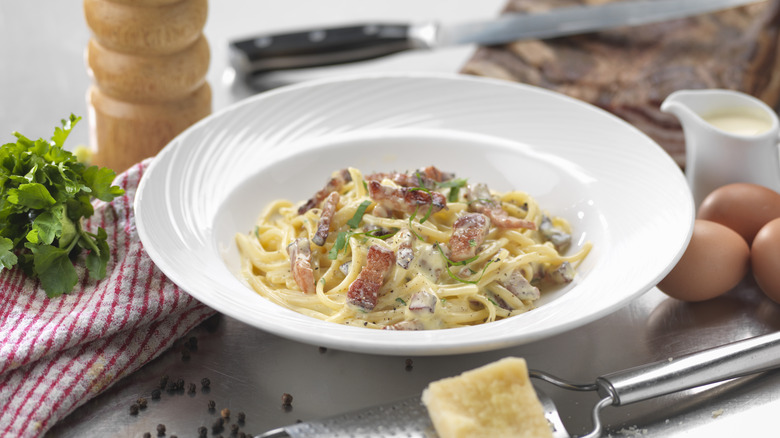
Traditional carbonara is an adored but uncomplicated blend of four ingredients: eggs, Pecorino Romano cheese, black pepper, and guanciale, which is cured pork jowl. When made correctly, the sauce is rich and creamy, savory and salty. Such a simple dish allows every component a moment in the spotlight, which means that every component must be chosen with care — even the essential fifth ingredient. The pasta that carries your carbonara matters just as much as the sauce itself, and Luca Corazzina, the chef de cuisine at Olio e Più, says that fresh pasta is better.
Although fresh pasta isn't always the right choice for pasta dishes, Corazzina prefers fresh pasta for carbonara. "It's slightly porous," he told Chowhound, "and typically absorbs sauce better and offers a richer texture." This more delicate, soft consistency pairs well with the creamy lavishness of carbonara.
Dried pasta, on the other hand, is generally a better pairing for heavier, heartier sauces that need its firm, al dente texture. If dried is all you've got on hand for carbonara, you can certainly use it, but Corazzina says you'll be missing out on something special. "You can use dried pasta, but it just won't have the same luxurious texture and mouthfeel," he warns. "Dried pasta usually has a firmer bite, which can provide a nice textural contrast. Personally, for me there's nothing like fresh pasta!"
Give your carbonara a fresh start and get its pasta in shape
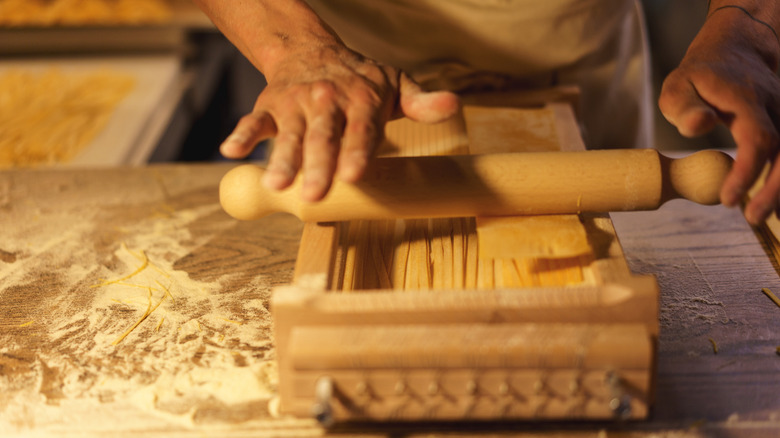
Whether you're making fresh pasta dough at home or picking up the store-bought kind, a few choices remain. Carbonara is commonly paired with spaghetti, but chef Luca Corazzina loves using chitarra and bucatini. Both are long pastas, like spaghetti, but chitarra is made on a stringed wooden frame, which gives it a square shape and rough texture. Bucatini is round like spaghetti but thicker, and it has a hole in the middle. "Both have a nice bite and the right surface to catch the glossy carbonara sauce," he says. "I avoid short noodles like penne or rigatoni, which don't capture the silky sauce in the same way."
Chitarra and bucatini are typically made with eggs, as opposed to the pastas that are only semolina flour and water, and egg pastas need some special consideration and gentle handling. "While I don't change my core recipe, I do pay closer attention to sauce consistency," Corazzina advises. "It shouldn't be too loose. It should be glossy [and cling] to the pasta." You'll also have to pay close attention to your timing, because fresh pasta cooks in less than five minutes. Corazzina suggests having all ingredients prepped so you can mix your sauce while your pasta is still hot.
Carbonara isn't the only classic Italian pasta sauce that works well with fresh pasta. Its delicate, subtle flavor will pair with almost anything. "I love working with creamy sauces or seafood-based preparations," he says, "because they also benefit from fresh pasta's soft bite and ability to absorb flavor without losing structure."