

Avoid Buying That Salmon At The Grocery Store Unless It Looks Like This
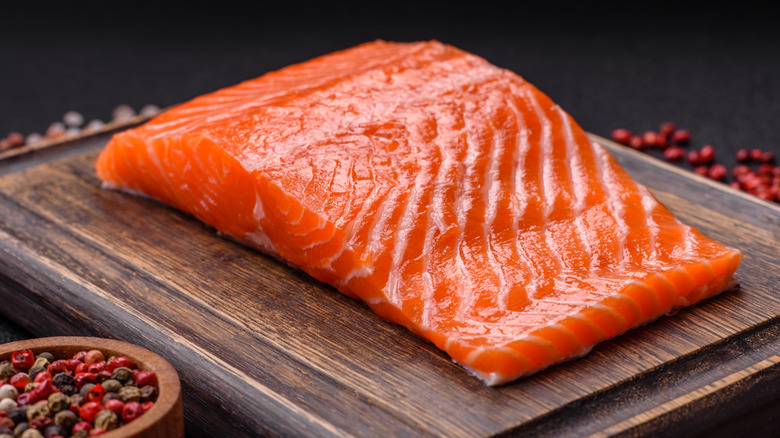
Whether you fire up the grill or you prefer yours marinated and oven-baked, salmon is a healthy, flavorful, convenient go-to dinner item for many. Understanding what to look for when you're choosing salmon fillets at the grocery store can help you create fantastic lunches, dinners, and even breakfasts. Dora Swan and Peter Kenyon, co-proprietors of Fin — Your Fishmonger in Guilderland, New York, spoke exclusively with Chowhound to share what you should look for when shopping for salmon at the market.
Color should be your first consideration when finding a great cut of salmon: "Good quality fresh salmon fillets should have a bright color [and] be moist and shiny. Wild salmon will often look more vivid than farmed salmon," say Swan and Kenyon. Different types of salmon also offer different colors, and understanding what to look for can help you find the freshest cuts. For example, sockeye salmon tend to be a deep red color while king and steelhead salmon tend to be more pink. You also need to decide whether you want a farmed or wild-caught variety of salmon (both can be a delicious option). "There are many varieties of responsibly farmed salmon that folks should be aware of and enjoying when it's not wild salmon season," say Swan and Kenyon.
Why buying a whole salmon makes more sense than fillets
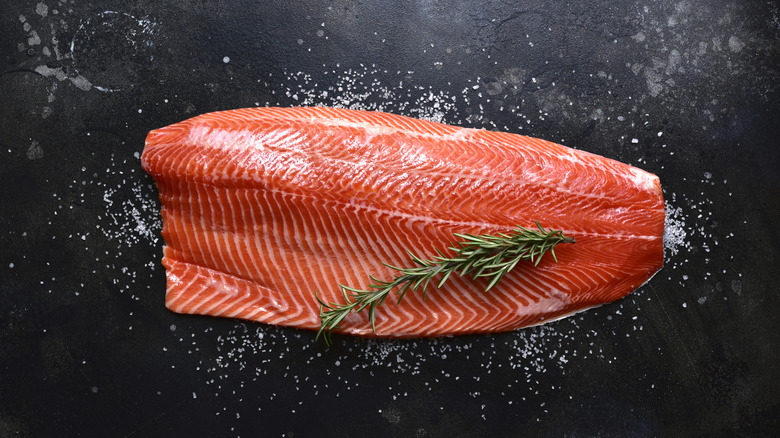
In addition to considering color and whether you'd prefer farm-raised or wild-caught salmon, you also need to decide whether you want an entire salmon or pre-cut fillets. Dora Swan and Peter Kenyon say that buying a whole salmon makes more sense: "Buying whole salmon is more beneficial than buying by the fillet simply because it will last longer since it hasn't been handled as much and hasn't had exposure to the air." Purchase about 2 pounds of whole fish per person; you remove bones and other elements, so this doesn't mean you're expecting each person to eat 2 pounds of fish.
When you're going through the process of breaking down a whole salmon, you can nearly put the entire fish to good use. Swan and Kenyon recommend grilling, broiling, or baking the salmon collar (the area around the salmon's neck) since it's just as delicious to eat as a fillet. You can save the fish's organs and bury them in your garden since they add nutrients to the soil. Finally, you can use the remaining parts of the fish to create a flavorful base for future dishes. "Fish heads, spines, and fins can be used to season stocks, soups, and stews," say Swan and Kenyon. "Freezing fish stock is a great way to always have some on hand for making bouillabaisse or paella, for preparing rice and ramen dishes, or for a simple salmon risotto."