

This Collectible Old School Dishware Should Be On Your Radar When Thrifting
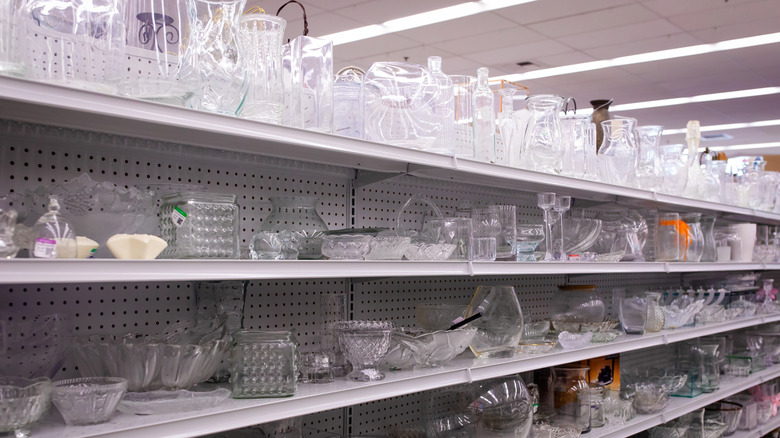
Every seasoned thrift store shopper knows about the thrill of the hunt, especially when you're shopping for dishes and kitchenware. At first glance, an aisle of cluttered shelves filled with chipped China and mass-produced vases can look like so much junk, but when you come across a piece of uranium glass, an older Weck Jar, or some vintage Pyrex, it feels like striking gold. If you're out on the thrift hunt for hidden gems, there's one somewhat under-the-radar name you should keep an eye out for: MacKenzie-Childs.
Known for its bold patterns and playful painted designs, vintage MacKenzie-Childs glassware and pottery is having a bit of a moment thanks to a renewed interest in maximalism. For people who know that more is more, you can't go wrong with a set of wine glasses with the very collectible Courtly Check pattern, and a flowery, hand-painted teapot is the perfect accent to any shabby chic kitchen. But just like every vintage trend that passes through the thrift cycle, it's always important to know which pieces are collectable before you buy. Let's take a look at the details of the iconic brand that launched in 1983 and what to look for if you come across a piece out in the wild.
Looking for MacKenzie-Childs dishware in the wild
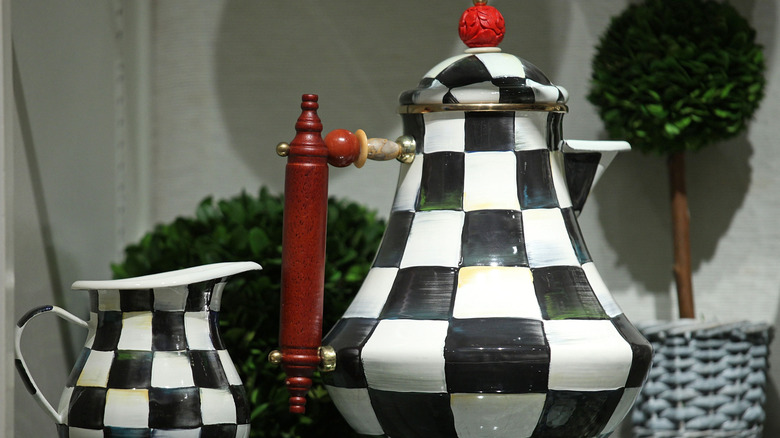
If you're not sure what a MacKenzie-Childs piece looks like when you're out in the thrift stores, chances are you'll notice the whimsical design before you actually know what you're looking at. Courtly Check pieces feature a court jester-like black-and-white pattern and often have colorful embellishments like handles and finials. Floral designs look like classic cottage-core pieces that have been a little more exaggerated, and are sometimes combined with the classic check pattern or a checkered pattern of another color.
If you see a colorful piece on a thrift store shelf that stands out, the first thing to do is flip it over and look for the artist's mark or a stamp. Since the brand has been around for quite some time, there are a lot of very convincing dupes out there. The real pieces, however, will have either a handwritten signature, stamp, or initials from the artist, as they were hand painted. Many vintage pieces are also dated and have Aurora, New York clearly listed. Newer pieces will simply say "MacKenzie-Childs," while older pieces may say "MacKenzie-Childs Ltd." or feature older company logos.
Older pieces are more valuable
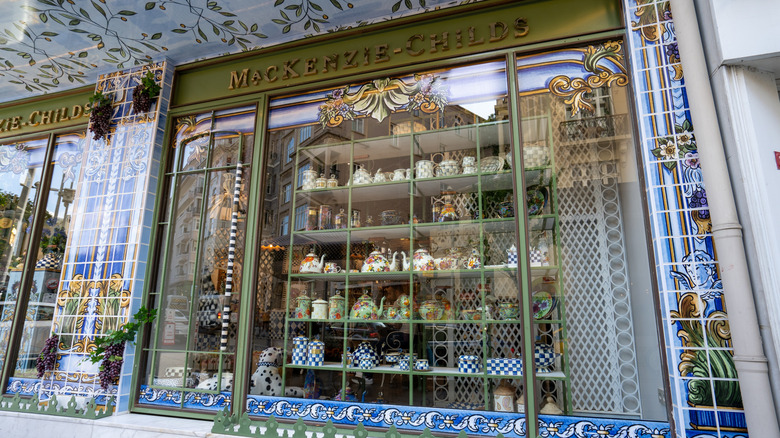
Thrifting MacKenzie-Childs pottery and glassware takes a little bit more know-how than one might think. The brand, which was started in the Finger Lakes region of New York State by artist Victoria MacKenzie-Childs and her husband Richard in 1983, was originally a bit of a mom-and-pop story. What started out as a local brand later grew into a multi-million dollar business, but unfortunately fell on hard times in 2000. It was at that point that the original founders sold the company and their rights to the trademark. The company is still very much in business to this day, and maintains a flagship operation in Aurora, New York, but some pieces are now made in China and other overseas locations. So while MacKenzie-Childs still makes new pottery and glassware, the pieces that tend to be the most collectable are those that are retired, many of which predate the change in company ownership.
Of course if none of that collecting information matters to you, and you thrift just for your own home, when you come across a pretty piece of MacKenzie-Childs on your next trip to Goodwill, it's still a good buy as long as it's in good shape. Something as simple as a recipe box can cost more than $100 new, for instance, and there's nothing better than getting a deal on something designer when you're shopping secondhand.