

This Childhood Classic Is An Old School Sandwich With A Complicated Origin Story
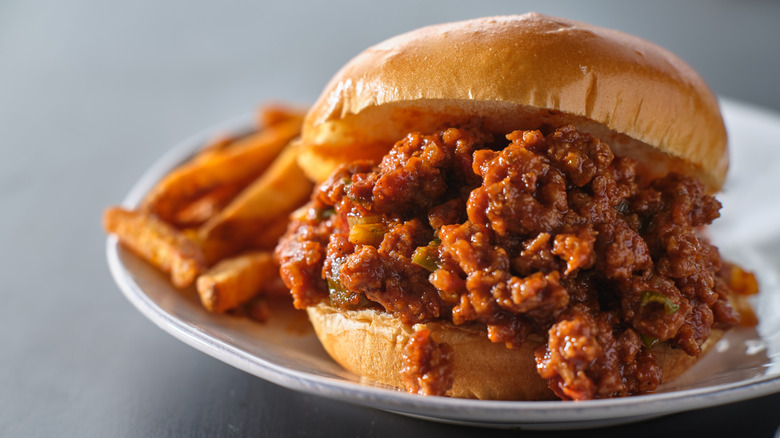
Though the Sloppy Joe sandwich is considered as American as a cheeseburger and fries, or as common as a peanut butter and jelly sandwich, this meal comes with a messy history. It's primarily a loose meat concoction, composed of ground beef and tomato sauce. Many recipes often include veggies like onions and bell peppers, all cooked down on the stove and served on a bun. Over the years, many interpretations have come about, including a vegetarian version. Like many American comfort classics, there's a chance that the dishes we know today can be traced to other origins. The Sloppy Joe has been considered to be from two places: Havana, Cuba, and the Midwest.
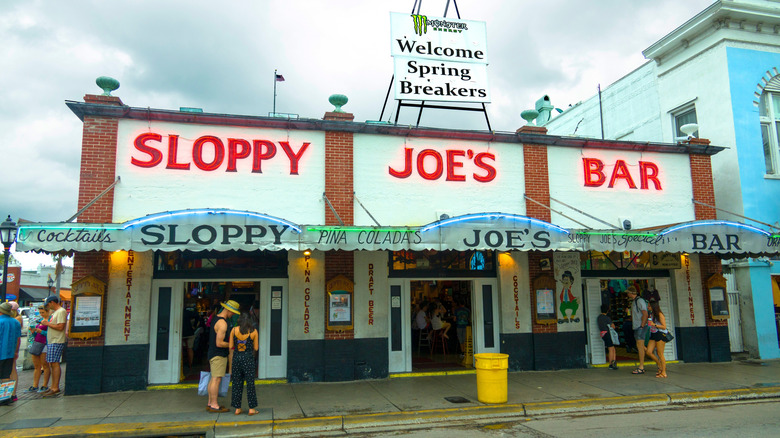
According to some historical accounts, the Sloppy Joe traces all the way back to 1910s Cuba. The original "Sloppy Joe" bar in Havana served the eponymous sandwich with ropa vieja, a Cuban-style shredded beef instead of ground beef. Surprisingly, it's been said that Ernest Hemingway, who routinely visited Jose Garcia Rios' Havana-based restaurant, returned to the United States and encouraged one of his Key West haunts to get in on the action. As it turns out, he was friends with the owner, Joe Russell. Which explains why you can find a separate Sloppy Joe's in Florida, independent of the Havana restaurant. Regardless of origin, many people have a fond childhood memory of this messy beef-based favorite — they may just have different beliefs on where it was first created.
The Sloppy Joe also has origins in the Midwest
Other historical accounts contest that the Sloppy Joe hails from Sioux City, Iowa, alongside another iconic Iowan sandwich. The culinary tale goes that a chef named Joe decided to incorporate tomato sauce into ground beef, and threw it into a hamburger bun to be enjoyed. This dish was apparently crafted in the 1930s, and has withstood the test of time. This dish was served at Ye Olde Tavern Inn. As time went on, the easy-eats recipe found its way into American cookbooks and could be bought as jarred sauces that were pre-made to simplify it even more, further cementing this dish's staying power in our hearts and stomachs.
This sandwich grew in popularity in the United States as a result of efforts to stretch budgets amidst the woes of The Great Depression pre-World War II (which is similarly the case with the lesser-known Depression-era porcupine meatballs). When it came to stretching a buck, this sandwich's sauce base allowed for filler contents to be easily incorporated — all without diluting the original flavor or texture of the dish. Despite the fact that these varied perspectives will continue to prevail, it's clear that there are many ways to appreciate different interpretations of this dish and it's histories.