

The Hidden Problem With Whiskey Stones You'll Probably Notice Too Late
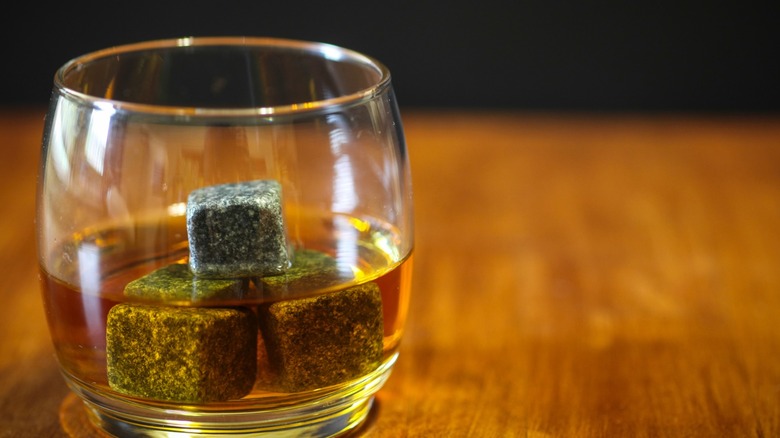
From Father's Day gifts to accenting well-stocked home bars, whiskey stones (also known as "whisky stones" or soapstones) have been trendy since their introduction in the late 2000s. There's also a solid chance they've been gathering dust ever since you first got them. But, if you do happen to use them regularly — or you're considering them as a gift for a whiskey fan — you may want to think otherwise. Truth is, they come with downsides that might not be apparent at first. Sure, your dad may love his whiskey stone gift set now, but he won't love it when they ruin his favorite sipping glass. That's right, ruin.
The main issue with whiskey stones is they can chip or scratch the glasses they're used in (they are stones, after all). Made from soapstone, whiskey stones are beloved for being nonporous and, therefore, unlikely to absorb odors and bacteria. This also means they're harder than ice and can cause damage when repeatedly swirled around, as is common practice among whiskey sippers. Many enthusiasts of the stuff only have a select few glasses at home, or maybe even just one proper glass to drink whiskey, so scratching one up isn't exactly an option. While many whiskey stone sets have rounded corners to help prevent this, they can still get worn into sharper, riskier edges with repeated use.
Other downsides of whiskey stones to consider
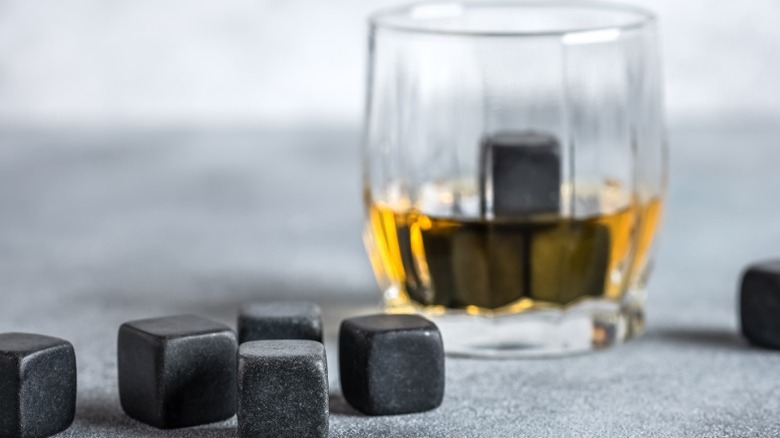
Even if you have the most durable whiskey glasses in the world (or, gasp, you're sipping whiskey cocktails out of plastic cups), there are other reasons you may not want to use them. To start, you have to remember to chill them first before every use. This means making sure they're clean and then chilled in a clean receptacle in the freezer for at least a couple hours. While many people have ice makers or are just accustomed to refilling an ice tray, it can be easy to forget to do this with a few stones you're only going to use once in a while.
Additionally, the whole point of whiskey stones is to cool your drink without diluting it. However, some users of them also report that they take longer to chill drinks than ice and may not chill them as effectively. Besides, many whiskey lovers enjoy experiencing not just the chill, but the taste changes in whiskey over time as ice melts and mixes in with it. Sure, it's not the way to go for everyone, but it's often considered part of the tasting experience nonetheless. Finally, it's not just your glasses you should worry about damaging with them. Whiskey stones can also easily slip back straight into your teeth. At the end of the day, is avoiding ice in your drink worth the risk of chipped tooth enamel?
Smart alternatives to whiskey stones that don't damage glassware
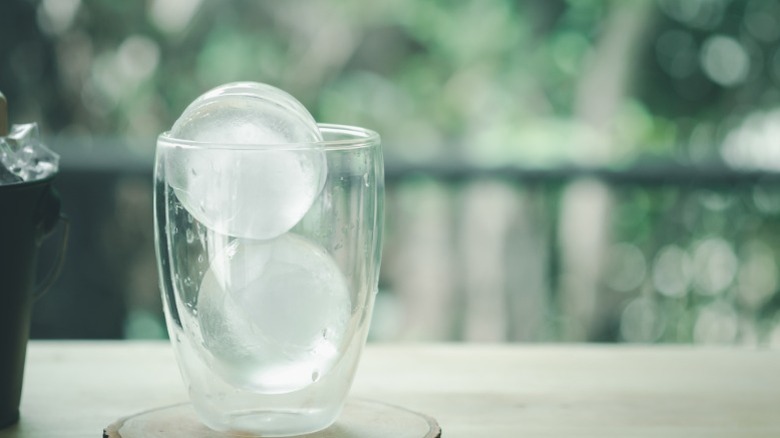
Ultimately, the choice is yours whether or not to use whiskey stones, but there are alternatives to regular old ice cubes if you still want to be fancy without the risks. To start, try ice spheres, which can easily be made at home with freezer molds just like regular ice cubes. While they're still going to melt eventually, ice spheres are great in cocktails and whiskey pours because their size and shape actually makes them melt more slowly and evenly.
Feeling really fancy or have some guests you wish to impress? Consider freezing berries, lemon wedges, cherries, orange slices, or another fruit of your choice to add into your whiskey. This alters the flavor, but considering these are also common ingredients used in classic whiskey cocktails such as old fashioneds and whiskey smashes, the flavors aren't necessarily out of place. Last but not least, the best alternative may be adding nothing at all. Instead, some connoisseurs prefer chilling the glass itself in the freezer. This can help preserve the whiskey's integrity, without the unnecessary risks of whiskey stones or dilution from other cold alternatives.