

The Safest Way To Prevent Listeria In Cantaloupes
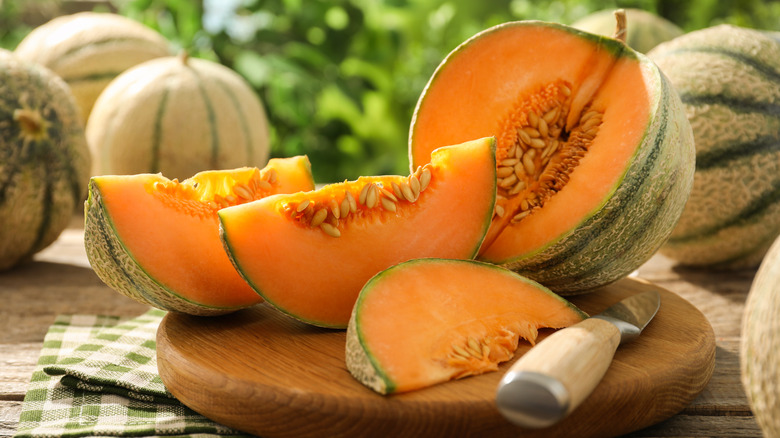
Honestly, what's a better way to survive a hot, draining day than slicing up a wedge of cantaloupe and sinking your teeth into that sweet, juicy goodness? Whether tossed into a fresh, vibrant salad, oven-roasted for an extra boost of sweetness, or baked into a delicious cantaloupe bread topped with a praline glaze, these pale orange, aromatic melons are pretty hard to resist. What's more, if you're after a salty bite, savory seasonings are your ticket to extra-flavorful cantaloupe. The only tricky part about this delicious fruit is that it can be a breeding ground for Listeria monocytogenes.
This disease-causing bacterium is no joke; it can lead to high fever, intense headaches, and, in extreme cases, even convulsions. No wonder there have been so many frozen food Listeria recalls recently. Naturally, one of the most important things to do when eating cantaloupe is to make sure it's properly sanitized before consumption. But how do you actually sanitize it properly? That's where hot water sanitizing comes in. The best part about this sanitizing method is that it's incredibly simple. Moreover, there's absolutely no need for harsh chemicals that could potentially cause even more damage. All you need to do is give your fruit a simple five-minute hot water bath at 180 degrees Fahrenheit to effectively sanitize it, then it's safe and ready to enjoy.
A quick dip in hot water can effectively wash away Listeria
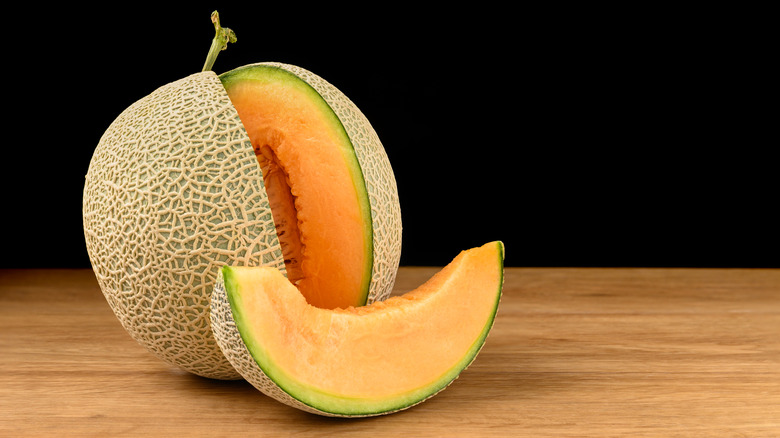
Cantaloupes are naturally low in acidity (their pH ranges from 6.13 to 6.58). This creates an environment where bacteria can thrive because the lack of high acidity means there's nothing to disrupt or damage their cell membranes. In addition, storing cantaloupes in the fridge for an extended period also makes them more susceptible to Listeria growth. Soaking them in hot water is one of the most effective ways to eliminate these unwanted germs.
When it comes to the process, the first step is to scrub the outer surface of the cantaloupe under running water for about a minute to help remove the bacteria present on the surface. Once that's done, you can move on to the soaking part. After five minutes, remove the fruit and use a clean knife to slice it up, even if at first it smells like blanched vegetables. There's no need to worry; the smell fades quickly and, if we're completely honest, it's a small price to pay for knowing your fruit is clean and safe to eat. Once the cantaloupe is cut into your preferred shape, there's nothing left to do but sit back and enjoy. That is, of course, if you followed the instructions on how to choose the tastiest cantaloupe at the store.