

How Long To Cook A Spiral Ham For The Best Caramelized Finish
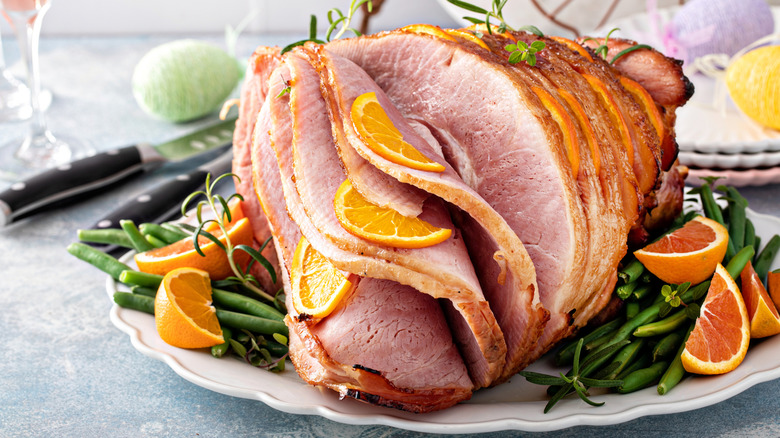
A spiral ham is super-impressive, both in presentation and taste. When you take the time to prepare a spiral ham for a gathering (or, let's be real, for a random weeknight when you feel like being fancy), make sure it tastes as good as it looks before it hits the table. It can be difficult to figure out exactly how long you should cook a spiral ham to bring out all of its natural flavors without making the edges tough, so Chowhound spoke to Chris Mattera, North County Smokehouse culinary innovator, to learn the best way to cook a spiral ham.
Low and slow is key when it comes to bringing out the flavor of a spiral ham, says Mattera: "Spiral hams are typically fully cooked by the producer, so all that is required is a gentle reheating. I like to say that you should cook our products the same way we make them: Slowly and carefully." Mattera recommends "a deep roasting pan with about ½ cup of water in the bottom, and covering the ham with foil before placing it in a 325 degree [Fahrenheit] oven for 12 minutes per [pound]." This stops your ham from drying out. "Think of it as the ham relaxing in a sauna," Mattera says.
Avoid basting and marinades to create a delicious spiral ham
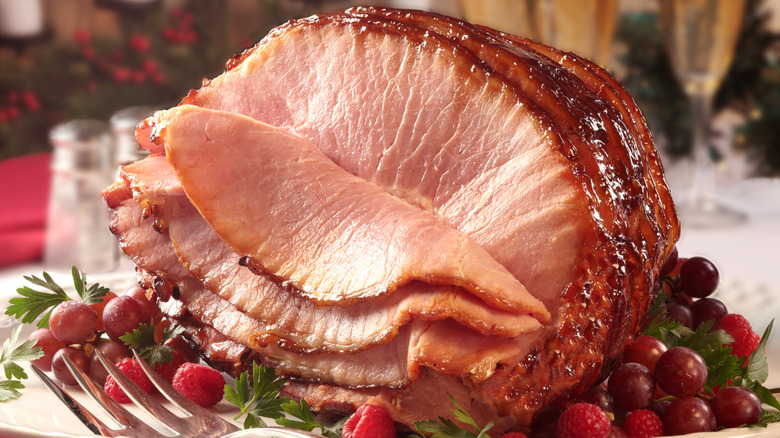
While you may be tempted to baste your spiral ham to stop it from drying out, Chris Mattera says that basting can actually have the opposite effect. Mattera says that, due to the way salt tends to move through food, the liquid at the bottom of the pan actually has less salt than the ham; using it to baste the ham could contribute to it drying out. "This is especially true for spiral hams, the slices of which present a larger surface area for the liquid to draw salt from," Mattern says. "Heat it gently, then glaze it well, and it will be delicious."
You can also forget about using a marinade: Among other tips to know when cooking ham, most have already been brined, making a marinade unnecessary. Keeping your oven set to a low temperature, creating a humid environment, and keeping foil over the pan (it's a huge mistake to uncover it while baking) are all you need to create a steamy space for your ham to stay moist as it cooks.
How glazing can enhance the flavor of spiral ham
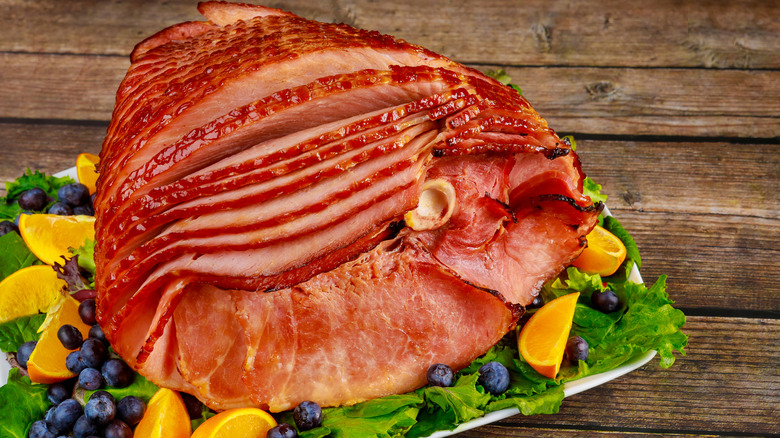
If you're adding glaze to your ham, keep a few things in mind to ensure it creates a delicious flavor and develops a caramelized, sugary crust that works well with the saltiness of the ham. The moisture-rich environment that's essential to creating delicious ham can work against a good honey mustard glaze, for example, so Chris Mattera says it's important to give your ham some time without a foil covering — after the ham is thoroughly heated — to let the glaze caramelize. "You can even pat it dry with a paper towel to ensure maximum glaze adhesion," recommends Mattera.
Temperature is also a key consideration. "We need the glaze that we apply to the outside of the ham to caramelize without overheating and drying out the meat," says Mattera. "Caramelization of sucrose (white sugar) begins at 320 [degrees Fahrenheit], but happens faster at higher temperatures. So, we want to heat the outside of the ham under relatively high heat for as little time as possible to caramelize the sugar in the glaze without overheating the meat." Mattera recommends removing the ham from the oven, changing the oven temperature to 400 degrees Fahrenheit, taking off the foil, and brushing or pouring on glaze as soon as the ham is heated through. When the oven hits 400 degrees Fahrenheit, pop the ham back in until the glaze begins to bubble, then let it rest for a few minutes before serving.