

Why Fancy Steakhouses Turn Their Noses Up At Sirloin Steak
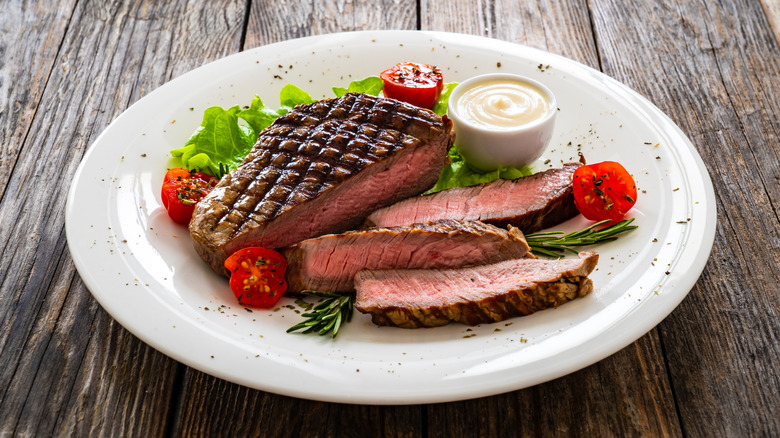
If you've ever dined at an upscale steakhouse, you've likely seen strip steak, ribeye, and filet mignon on the menu. But what might be missing from your favorite pricey steakhouse menu is the sirloin, a cut of steak that some chefs don't like to serve. It tends to be the most affordable steak on casual restaurant menus — it's the best-selling cut at Texas Roadhouse due to its lower cost.
Pat LaFrieda, whose restaurant Pat LaFrieda Meat Co. will be serving food during the 2025 US Open, explained to Chowhound why the sirloin gets such a bad rap. "Sirloin sometimes gets knocked as 'less tender' than ribeye or filet," says LaFrieda — the namesake of Pat LaFrieda Meat Purveyors, a meat supplier — admitting that there's truth to that claim. "It has more connective tissue and less marbling." However, LaFrieda notes that the steak isn't as bad as it seems when it's done the right way: "Sirloin has excellent beefy flavor and, when cooked right, can be very rewarding." Thankfully, LaFrieda gave us some exclusive tips to master cooking this common steak cut in order to turn it into the best version of itself.
Things to remember when cooking sirloin
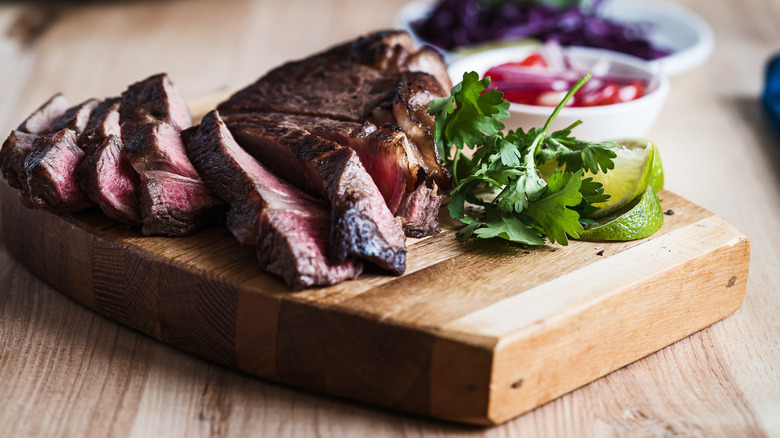
A properly cooked sirloin starts with the right cut of meat. Pat LaFrieda suggests purchasing top round instead of bottom round, saying the former is better quality, so you'll get better flavor and texture overall. While sirloin isn't known for its marbling, you should still know what marbling is and how to spot it: the white-colored fat that runs throughout the meat. Choose a sirloin with as much of that white fat as possible; more fat leads to more flavor and a more tender steak. LaFrieda also advises looking for a cut with a bright cherry-red color.
To keep sirloin as tender as possible, don't cook it too much. It can easily get tough, so LaFrieda recommends cooking it no hotter than to medium, or to an internal temperature of 130 to 135 degrees Fahrenheit. "Beyond that, it toughens," he says. Sear the steak to get a nice crust on the outside, then slice it against the grain to cut down on that toughness as much as possible. Be sure to let the steak rest before slicing it, too, so the juices can redistribute to allow for juicy flavor in every bite.