

The Simple Trick To The Best Chicken Marinade Every Time

Everyone should have a good marinade recipe that works well on a variety of poultry cuts. Chicken breasts should be the testing ground for any marinade since the meat is mild and, if cooked carelessly, can be rather unforgiving. Use the right marinade and cook it well, however, and you are rewarded with a succulent piece that's flavorsome enough to eat on its own and versatile enough to add to salads, bakes, or any dish that's missing protein.
Contrary to what many believe, marinades aren't actually absorbed into meat. Instead, they predominantly flavor the surface of meat that's in contact with the liquid. This is why marinades usually contain potent flavors (and why it's a good idea to baste meat as it cooks). While marinades are a wide spectrum, ranging from easy two-ingredient chicken marinades for weeknight dinners to complex liquids layered with flavoring ingredients, they all come down to a basic balance of flavors: Savory, sweet, and sour (with a hit of spice and aromatics depending on the palate and dish). Out of these tasting notes, sour (or acidity) often gets eclipsed in importance by other flavors. It is, however, the most decisive ingredient of a marinade.
Not only does acidity add crucial flavor notes, it helps tenderise meat by breaking it down and makes it feel juicier by increasing your salivation. Choose your marinade's acidic component wisely; it can have a drastic effect on how well your chicken turns out. Popular options for infusing acidity into a marinade are lemon juice, vinegar (such as rice, balsamic, or apple cider), yogurt, and even orange juice. The one you pick should complement the marinade's other components. Be careful about how long it rests, though; leaving meat in an acidic marinade for too long can make it mushy.
The best marinade ingredient for infusing acidity into chicken
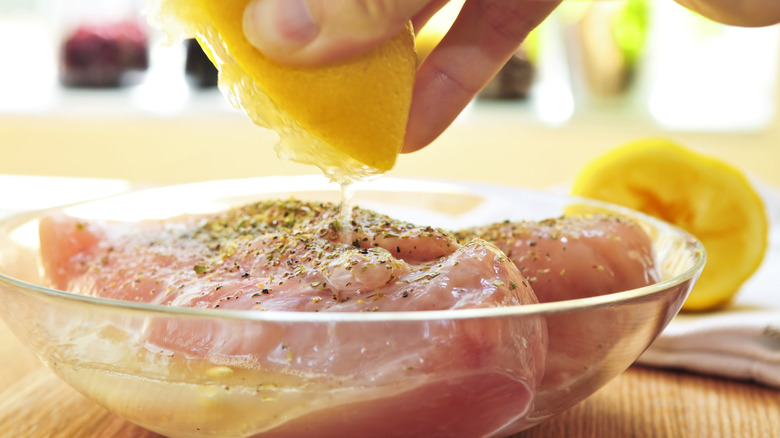
The first step to finding the right acidic component for your marinade is gauging how it pairs with the basting liquid's flavor profile. A simple marinade with garlic and herbs works best with lemon juice, but a dash of apple cider vinegar or red wine vinegar can add more complexity (and save you effort if you planned on squeezing the lemon juice fresh). Rice wine vinegar combines well with teriyaki or Asian-style marinades, as does mirin, a sweet Japanese wine often used in cooking. Meanwhile, balsamic vinegar adds a deeper, more continental flavor.
Yogurt is an oft-overlooked hidden gem when it comes to marinade components. The creamy tanginess pairs well with most flavors, especially if you plan on going heavy on spices. Even just garlic and herbs pair deliciously with yogurt in a marinade. Furthermore, the lactic acid in yogurt is gentler on meat than many other acidity-infusing options, letting you marinate longer without risking a mushy texture.
In general, acid in marinades starts breaking down protein as soon as it comes in contact with meat. In the first few hours, this works to tenderize meat. However, anything over 12 hours and the texture can go from enhanced to degraded. From drying out to becoming overly mushy, a marinade's acidic component can have various effects on meat depending on how long it's left marinating. In fact, while quick sears of steaks in acidic marinades are fine, rethink cooking acidic foods in cast iron pans; they corrode the pan and give the dish a metallic taste.
Sweet and savory marinade powerhouses to balance acidity
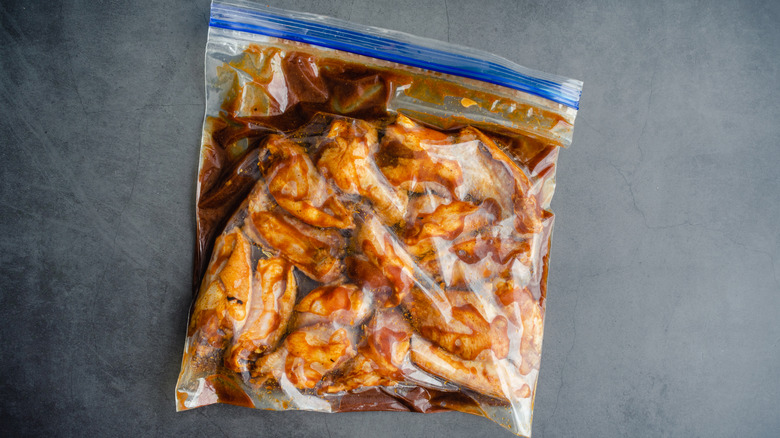
Since acidic ingredients tend to have more potent tasting notes than others, it's important to use other ingredients that can hold up to strong acidic flavors. The first and most important flavor to balance sourness or acidity is sweetness. While some acidic ingredients are also sweet, such as orange juice or mirin, most aren't, so it's almost always a good idea to infuse sweetness into your marinade. Remember that chicken, especially chicken breast, has a very mild flavor, so all the flavor notes must come from the marinade and seasoning.
Brown sugar is a delicious, versatile option that adds an earthy sweetness and also helps with browning. Honey is another popular marinade ingredient, bringing a characteristic taste that works particularly well with Asian-inspired dishes, such as honey soy marinated baked chicken thighs. In a pinch, maple and agave syrup also work. For a boost of savory and umami notes to balance the acidity and sweetness, look no further than soy and Worcestershire sauces. The former leans more toward umami while the latter has a spicy complexity that elevates most marinades and easily holds up to strong flavors without overwhelming them. In case you were wondering, all of these flavor powerhouses pair well with yogurt in marinades.