

What's That White Stuff On Sour Candy? Here's The Real Answer
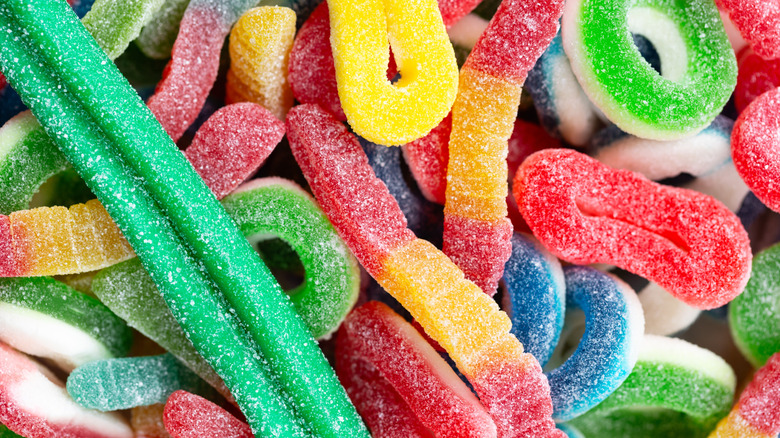
There are a few key elements of the perfect movie theater trip, and they pretty much all center around food: a bucket of buttery popcorn, a massive slushy, and a bag of super-sour candy. Whether you're a true sour candy devotee or a casual Sour Patch Kids aficionado, there's a certain kind of fun to be found in the overpowering sensation of something sour hitting your tongue. But have you ever wondered how that flavor is formed artificially, as opposed to the natural sourness found in lemons and limes? And what is that white stuff that makes the candy so pungent?
Turns out, artificial sourness takes a page from the book of classic sour fruits with a process called "sour sanding," which combines sugar and citric acid (and occasionally malic or tartaric acid). Citric acid is a compound naturally found in all of your favorite mouth-puckeringly sour fruits, but can also be mass-produced for use in coating Sour Punch straws or Sour Patch Kids. Malic acid is also naturally occurring, typically found in green apples, and is sometimes included to up the intensity of a candy's tart flavor. Meanwhile, sugar creates that fun powdered texture that is 100% guaranteed to get all over your fingers, balances out the sour acid, and makes sure the candy is sufficiently sweet.
How does sour sanding work?
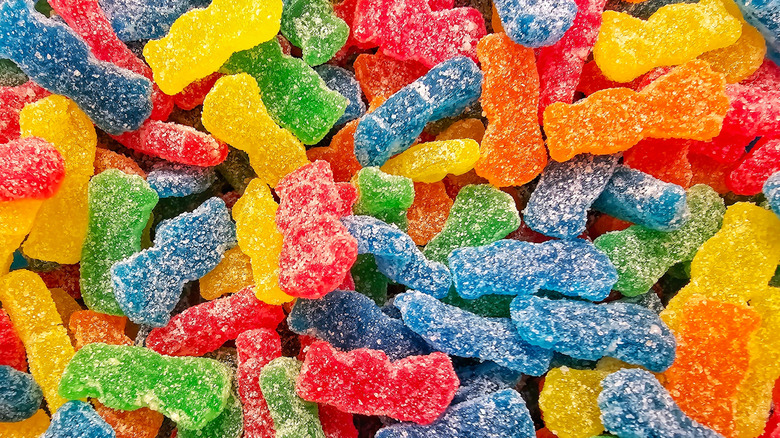
Sour candy has been around for quite some time, but sour sanding wasn't always the method of choice. Instead, sour fruit juice, vinegar, and tartaric acid were used to flavor sugary, puckering treats. Even today, plenty iconic sour candies don't use sour sanding, from certain sour gummies to sour Mike and Ike's. Instead, these employ sour acid extracts and concentrates mixed into each bite. Sour sanding is just a way to add a second level of acidic goodness. But why does coating candy in a mixture of sugar and acid make candy taste sour?
Essentially, that sour flavor is the result of acids (such as citric and malic) dissolving in saliva on your tongue. When they dissolve, they split into hydrogen ions and the rest of the acid molecule. Turns out, much as your taste buds are created to recognize sugar molecules as sweet, they recognize solo hydrogen ions, the byproduct of acids, as sour. Apart from adding complex flavors to food, this may have once been a warning signal telling us that fruit was unripe and not ready to be eaten. To be fair, sour candy still carries some risk with it — some extreme sour candy can be dangerous to consume, and any kind of candy is a risk to your dental hygiene. But in today's world, the shocking extremity of sour candy might just be part of the fun.