

How To Spot A Double-Yolk Egg Before You Crack It Open
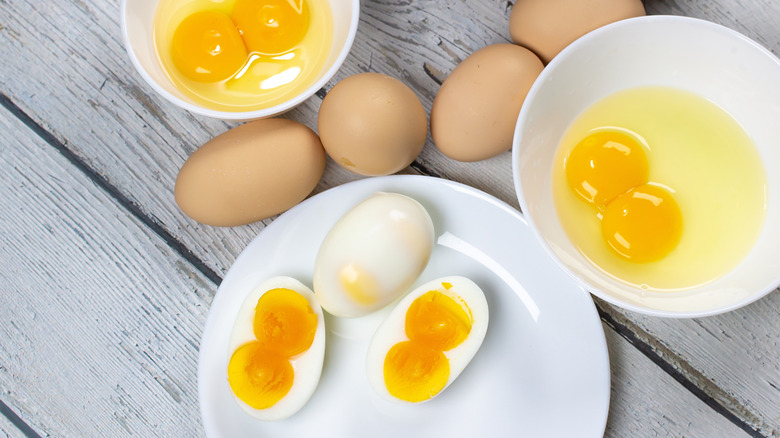
Cracking open an egg to find two yolks can be a happy surprise, like finding a four leaf clover; but unlike a four leaf clover, it's not so easy to tell if you've struck luck just by looking at the eggs in your carton. It's not impossible though, and with a little patience and practice, it's fairly easy to identify the doubler yolkers before they have been cracked.
Some of the best ways to know if you have a double yolk is to start by practicing weighing eggs in your hands to know how much a regular egg weighs versus one with two yolks. If you find an egg that seems heavier than the rest, you can try a method called candling; just hold the egg up to a bright lightbulb and look through the shell to see if there are two yolks hiding out inside. If you want to increase your chances of finding a double yolk egg, make sure to opt for jumbo or farm-fresh eggs.
Where do double yolks come from?
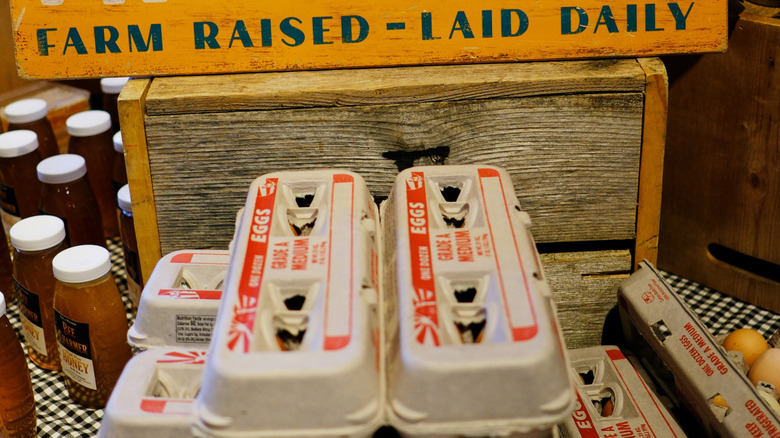
Double yolks are statistically rare, with just one in 1,000 eggs holding a lucky double yolk. They usually come from young hens who randomly release two yolks instead of one as a result of a still-developing reproductive system. If you get your eggs from a farm where they have several young hens laying eggs at the same time, there's a greater chance of finding multiple double yolkers in one carton of eggs. Although the majority of double yolk eggs come from young hens, they can also come from mature hens, because of hormonal fluctuations that occur before they stop laying eggs altogether. There are also some breeds, like the Buff Orpington, that are more prone to producing double yolk eggs. Some companies exclusively use these hens so that they can sell cartons of eggs that are all double yolks.
The occurrence of two yolks is perfectly normal and does not affect the safety of your eggs in any way. You can think of it as eating one large egg, perfect for throwing into an omelette for making scrambled eggs. It's probably best to not use the lucky eggs for baking though, where whites and yolks often need to be meticulously measured alongside other ingredients.