

Why 1950s Cookbooks Were So Jell-O Heavy
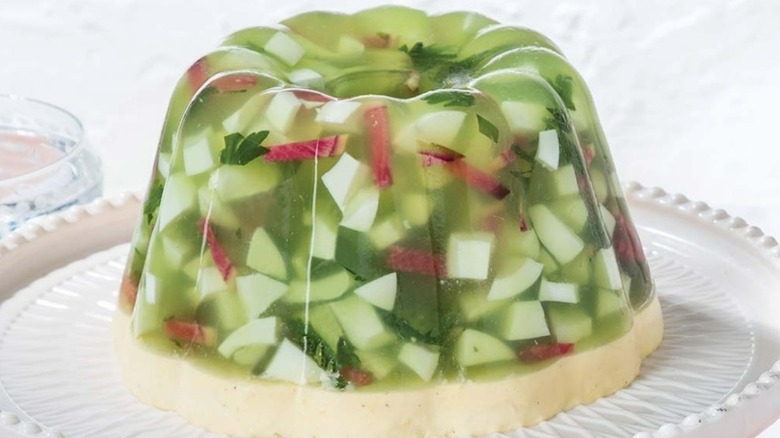
Whether you're a vintage cookbook enthusiast or you just find yourself in a rabbit hole of food-related social media from time to time, it's likely that you've seen some of the gelatin-heavy recipes that were uber-popular with home chefs and professional culinary artists alike during the '50s and '60s. Meat, fruit, hot dogs, and more were placed carefully into gelatin molds, topped with Jell-O, and set inside the fridge to chill to semi-solid perfection. Clearly, the Jell-O trend has not withstood the test of time — and many are left wondering why exactly gelatin was such a common addition to non-dessert dishes. There are a ton of theories about its popularity.
To understand why Jell-O was such a hit in so many mid-century recipes, it's important to understand the history of gelatin itself. Once upon a time — think way back to the 15th century — gelatin was a food fit for the royals. It was super time-consuming to create gelatin from animal bones, so having it on the dinner table was a sign of having the luxury of time — and, usually, staff. Powdered gelatin came onto the market in the mid-1800s, and the Jell-O brand hit supermarket shelves around the turn of the century. The wars and difficult economic times of the next several decades left housewives looking for meal solutions that were efficient and inexpensive, while still offering a touch of elegance. Jell-O-based dishes provided a solution: They weren't straight from a box, but they were super-quick and easy to make. Jell-O molds also became increasingly popular, helping home chefs create an impressive display.
Why Jell-O made sense for 1950s households
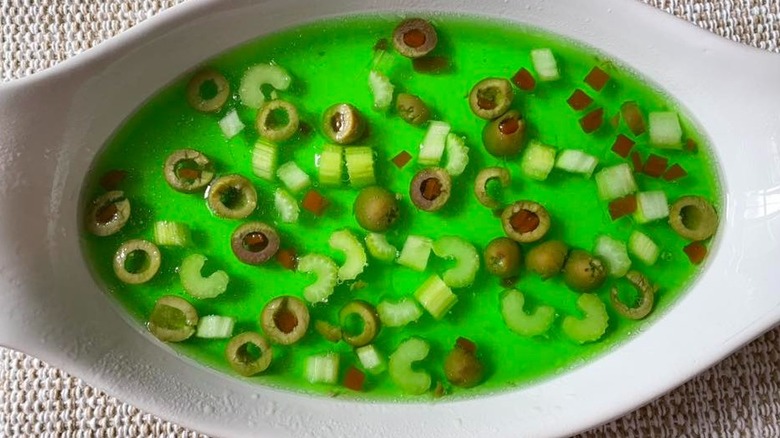
During the 1950s baby boom, post-war families were excited about the future. Many people had extra money for the first time, but didn't want to rely too heavily on convenience foods — even though they were becoming more and more readily available at the grocery store. Gelatin dishes also offered a bit of welcome whimsy after the super-tough 1940s — seeing food surprisingly suspended in a shaped, sparkly mold of Jell-O provided a touch of fun alongside dinner.
While many of the recipes would go untouched at a dinner party today (Jell-O salad made with pickles and olives, anyone?), they became increasingly popular at home dinner parties and community gatherings alike. Some of the most popular Jell-O salad recipes included tomato sauce and tuna, coleslaw and pineapple suspended in a pan of lime Jell-O (it was called Perfection Salad — seriously), and even Molded Chef's Salad, which included peppers, onions, cheese, ham, and vinegar, all blended with lemon or lime Jell-O and chilled until solid.