

The Step You Must Not Skip To Achieve Seriously Crispy Baked Eggplant
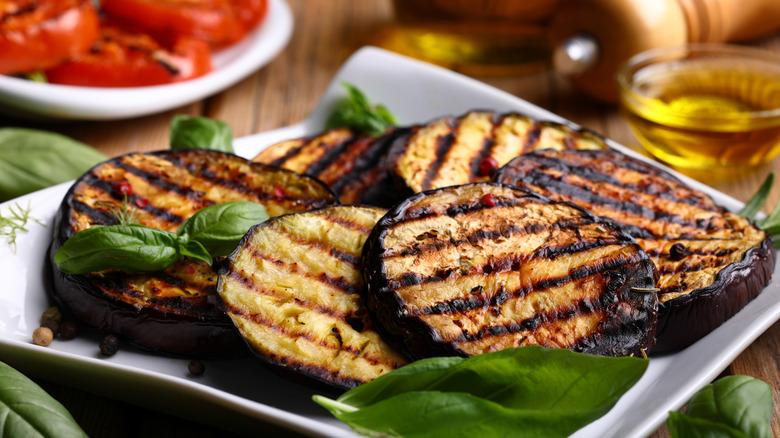
Eggplant may be one of the most divisive veggies out there — but not necessarily due to its flavor. Unlike other nightshades, such as tomatoes and bell peppers, eggplant is fairly bland, really only coming into its own after grilling, roasting, or being blended into baba ganoush (served at room temperature, of course). Instead, eggplant is more likely to be criticized for its texture. Sponge-like and moisture-rich when raw, this is a surefire recipe for producing a pile of eggplant mush once it's heated.
Though moisture in our food is just as important as drinking water to keep us hydrated, this high water content is likely why your eggplant parmesan keeps turning out soggy. Heat causes the moisture to evaporate, which creates steam that causes this veggie to fall apart. While this is ideal if you're blending it into a delicious Mediterranean dip or enjoying it as part of a rich stew, it's less than appetizing if you're trying to make crispy eggplant fritters or eggplant "sandwich bread" that actually holds up.
Fortunately, the solution to this common problem is as simple as can be: salt. Slicing and salting your eggplant about 20 minutes before you cook it helps draw out excess moisture, leaving behind denser, chewier texture that roasts and crisps up beautifully, even after being thoroughly coated in batter for frying, or smothered in marinara sauce and mozzarella cheese. For best results, lay your eggplant slices on a clean tea towel or layer of paper towels before salting them.
Taking this trick to the next level
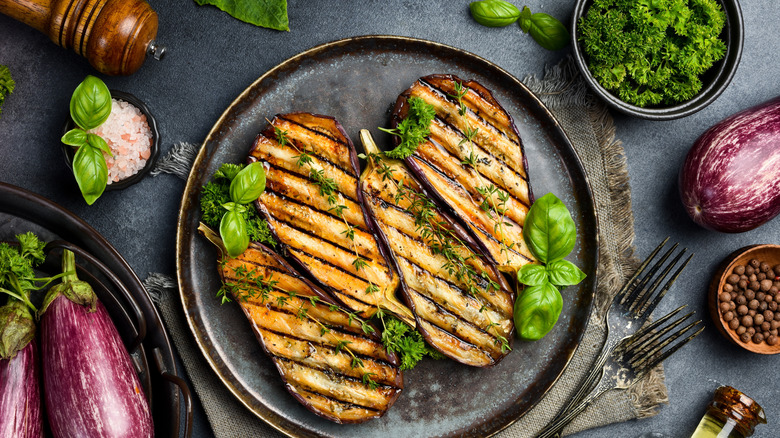
This little piece of culinary magic works best if your eggplant is fresh and ripe. This may sound like a given, but sometimes it's hard to determine whether the selection at the grocery store is at peak freshness or not. If not, your eggplant may turn out mushy whether you salt it or not, as it becomes softer the closer it comes to spoiling. Ripe eggplants (and many other types of produce) feel heavy in the hand when ripe, indicating they've developed fully inside.
They also have a deep, dark, consistent color and taut skin free of brown spots. The stem should also be brightly colored and firm with no discoloration. Additionally, if you slice your eggplant open to reveal brown flesh instead of creamy white, don't panic; this may just indicate oxidation, and not spoilage. As long as there are no other indications that your eggplant is starting to go bad, it should be safe to eat.
Once you're ready to salt and slice your eggplant, placing the slices on an absorbent surface, as mentioned, is essential. Salted eggplant slices on a nonporous plate or cutting board would just end up surrounded by a pool of water, which may reabsorb and make your eggplant soggy. Layering towels underneath wicks this water away from the slices to prevent this. Additionally, you should pat off any moisture beading up on top of the slices before mankind any attempts to either bread or roast them.