

Effortlessly Add More Flair And Flavor To Your Steak With This Unexpected Marinade
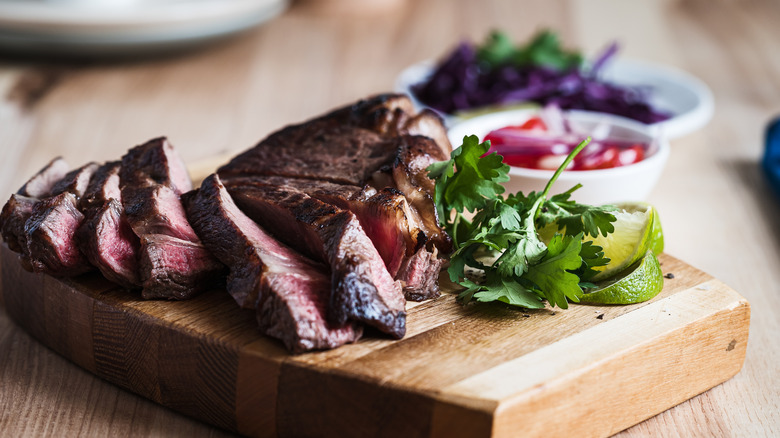
Though cuts like filet mignon, strip steak, and ribeye need little more than a kiss of heat and a sprinkle of good salt and freshly cracked pepper, not all cuts of beef are created equal. Less expensive cuts like top round, sirloin, skirt, and flank steaks need a little more TLC to keep them tender and flavorful — but that doesn't mean you should skip them. With the application of a good marinade containing the right ratio of acid and fat, these cuts of beef not only become edible, but so juicy and delicious you may begin to prefer them over the fancier options.
Marinades tenderize steak and improve its flavor with a clever combination of an acid (like vinegar) with a fat like (olive oil), along with other seasonings such as minced garlic, fresh herbs, and freshly crushed spices. The acid gently tenderizes the meat while the fat adds lush moisture while simultaneously carrying flavors from the seasonings into the steak. The flavors intensify with the application of heat from the grill or cast iron skillet, producing a meaty main dish you'll crave over and over again, especially if you choose a naturally intense, flavorful marinade like salsa.
The natural acids in ingredients like tomatoes, chilis, and lime juice not only tenderize steak beautifully, but they also act as a natural counterpoint to beef's deep, rich flavor. It's worth noting, however, that most salsa recipes will need a little bit of modification to increase moisture content and prevent them from drying out your steak.
From salsa to steak marinade in just one step
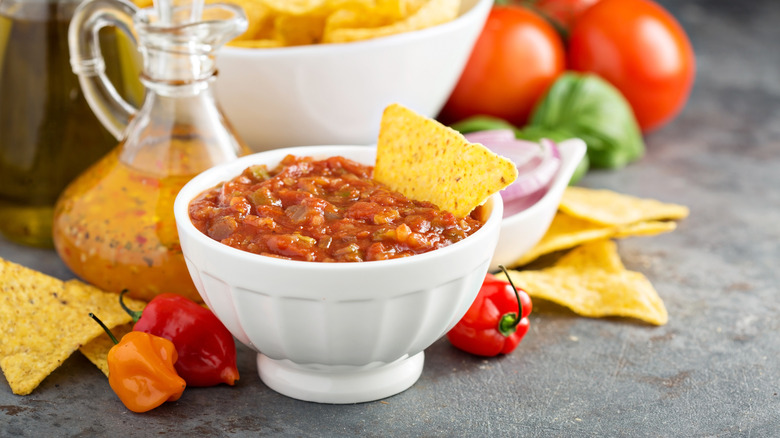
Though salsas often have plenty of acidic spiciness to begin tenderizing your meat, the best marinades require both acid and fat to work correctly. Since most salsas are sorely lacking in fat, simply dunking your steak in them exposes the meat to a lot of acid, which can create a dry, stringy cut of beef if it's left too long. Luckily, the solution to this issue is fairly easy — you'll just need to add some fat to your jarred or homemade salsa to turn it into a true marinade.
Since the classic ratio is about 3 parts fat to 1 part acid, you'll want to choose a fairly neutral-tasting oil to avoid diluting the flavors in your homemade restaurant-worthy salsa too much. Avocado, canola, and safflower oils are great for this, as they all have a subtle, nearly flavorless nutty undertone. They also have pretty high smoke points, so they're perfect for searing without scorching your freshly tenderized meat.
Ensuring your salsa has a nice, strong flavor to begin with also helps keep the oil from watering things down. A homemade version made of beautifully smoked jalapeños and tomatoes offers a grilled flavor without needing to step outside, while a version infused with your favorite barbecue rub will bloom when added to fat, actually intensifying the flavors. Since steak is a pretty hearty protein, you can marinade it for several hours without worrying about it becoming mushy.