

Meet The Japanese Mold That Some Chefs Use To Age Steaks
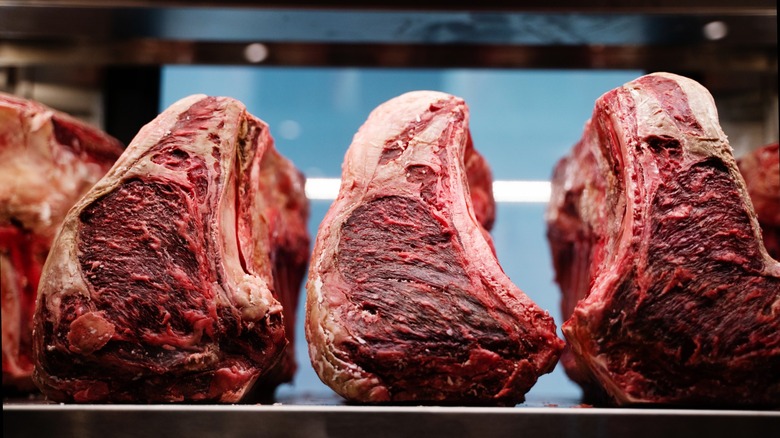
Dry-aging is one of the main reasons restaurant steaks always taste better than homecooked. The process tenderizes the beef, concentrates its flavor, and adds a distinct funkiness that gives its flavor profile more nuance and complexity. If you've got the means, it's definitely worth dry-aging your steaks at home — just be prepared for a lot of waiting to get your steaks to that sweet spot.
There are several signs that tell you when dry-aged beef is ready, but the most important of all is time. It takes a minimum of two weeks for the process to start tenderizing the beef; to develop a blue cheese-like funkiness in the meat, you have to wait around 45 days. If you'd rather take a shortcut, there are several ways you can attempt to mimic the flavor of dry-aged steaks in much less time; one of the best involves koji, a white, powdery mold that grows on rice.
Koji is a crucial ingredient in Japanese cuisine used to ferment miso, sake, and soy sauce (it can also make an umami-packed whisky). When ground into a fine powder and rubbed onto a steak, it can replicate most of the effects of a 45-day dry-age in just 48 hours. That includes some of the tenderization, the umami boost, and even a little bit of funk. It's why some chefs use it to "speed-age" beef.
How koji ages steaks
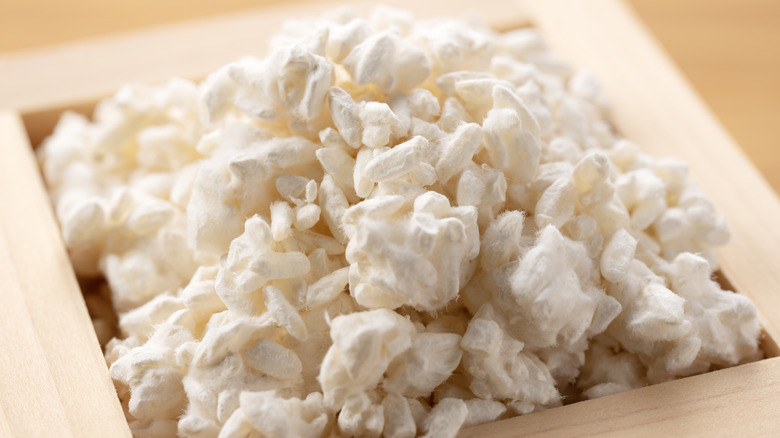
Koji, known scientifically as Aspergillus oryzae, produces proteolytic enzymes that break down the protein structures in meat to tenderize your steak. The process also lets the meat develop stronger umami and nutty flavors through the component amino acids that the proteins break down into. This effectively gives beef's natural aging a kickstart, trimming down what would've taken weeks to just a couple of days.
As koji's enzymatic processes take place, the meat's own enzymes further break down its proteins while expelling excess moisture. While this might sound like it's making your steak less juicy, it's actually a major reason why dry-aged steaks taste beefier than normal — drying the steak out in this way helps concentrate its flavors. The enzymatic breakdown in the steak makes sure the beef stays juicy enough throughout the process (and tenderizes it even more).
However, while koji can help mimic some of the effects of dry-aging, some of the more pronounced changes in dry-aged beef still need to happen naturally over time. Some cooks who have tried koji-aging say their two-day aged steaks aren't quite as tender as 45-day dry-aged beef, and that the resulting funk isn't as strong. Still, the results come pretty close. If it takes less than 5% of the time than traditional dry-aging, koji-aging is most certainly worth a try.
How to koji-age your steaks at home
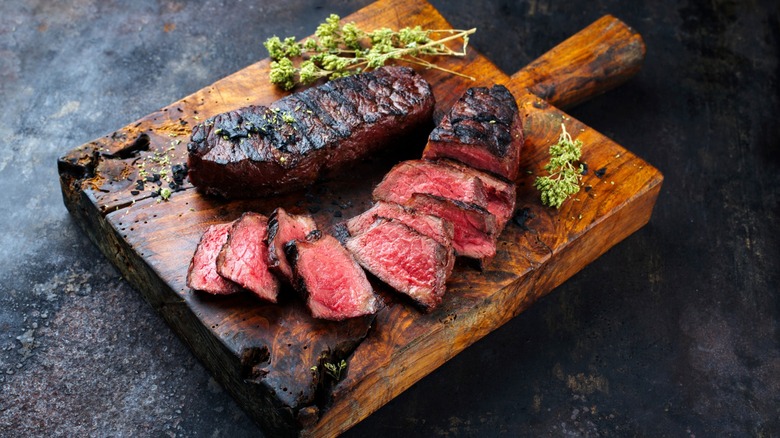
One technique for speed-aging steaks with koji involves pulverizing store-bought koji into a fine powder using your blender, coating your steak on all sides with a generous amount of the koji powder, and leaving it uncovered on a wire rack inside your fridge for up to two days. The timing here is particularly important because letting the koji stay on too long can actually toughen up the steak. Some folks who have tested the method with a three-day aging window noted that their steaks ended up somewhat firmer or developed a hard crust that needed to be trimmed off.
Once these two days are done, rinse off the koji and cook the steak as you normally would. You might notice that caramelization on the surface happens faster, which may be due to leftover starches being converted into sugars during the aging process. If you want to amp up the dry-aged flavor a little more, try seasoning your steak with shio koji, a salt-and-koji blend that helps you avoid one of the biggest mistakes people make with Kobe beef.