

How Long Are Your Frozen Jimmy Dean's Breakfast Sandwiches Good For?
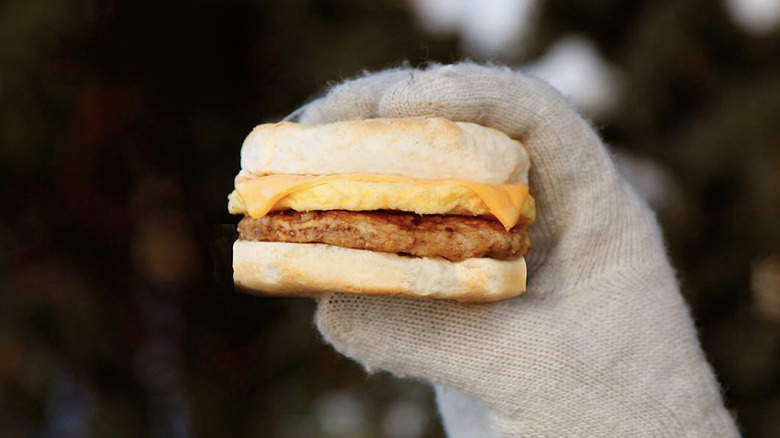
When you're looking for an early-morning meal that keeps you full, making breakfast from scratch isn't always feasible. Grabbing a frozen breakfast sandwich, such as Jimmy Dean's, means you can heat breakfast in the air fryer or microwave (though it can get a little messy while cooking) and have a meal ready in minutes. But keep in mind that those frozen breakfast sandwiches won't stay their best quality forever.
From the time a Jimmy Dean breakfast sandwich is produced, it has a shelf life of either 210 days or 365 days, depending on the sandwich type. The Jimmy Dean Butcher Wrapped Sausage, Egg and Cheese Muffin, for example, keeps for 365 days, while the Sausage, Egg, and Cheese English Muffin only keeps for 210. Of course, this shelf life is based on the sandwich remaining frozen at all times. If you have a Jimmy Dean sandwich in the fridge, expect that it won't stay good for more than a few days. The sandwiches likely stay at peak quality for so long due to preservatives. The ingredients list includes potassium sorbate, a chemical additive, and sorbic acid, a naturally-occurring compound, as additional preservatives, which are designed to extend a food's shelf life.
Frozen foods never actually expire
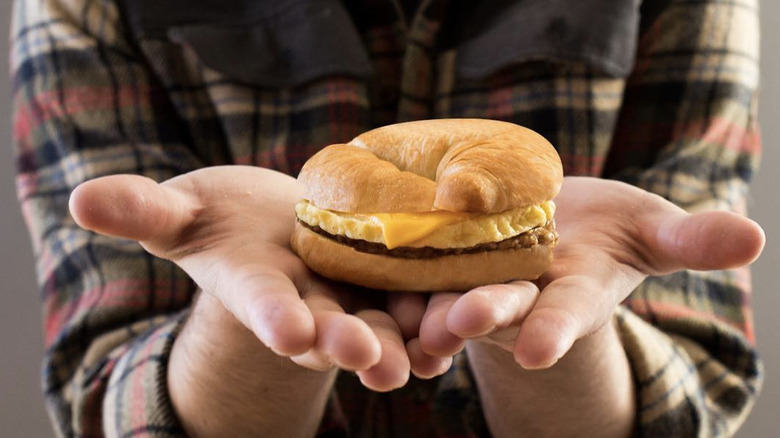
The good news is that if you find a Jimmy Dean breakfast sandwich in the back of your freezer and have no idea when it was purchased or when its best-by date is, you won't actually cause harm by eating it. For all intents and purposes, frozen foods don't expire. However, freezer burn will set in after enough time has passed. This occurs because of exposure to air, and foods with high moisture content are more susceptible. Signs of freezer burn include discoloration and ice crystals.
In addition to these visual cues, the sandwich might not taste or feel exactly how it's supposed to. But if you're desperate for a quick breakfast and want to avoid food waste, then you're welcome to eat it, as long as it was stored at a constant temperature of 0 degrees Fahrenheit, which is the norm for most household freezers. Freezing at this temperature ensures that any bacteria, yeasts, and molds become inactive, preventing them from multiplying and causing harm, per the USDA. However, once the sandwiches thaw, those microbes become active and can again proliferate, meaning the sandwiches should be handled the same way you would handle anything perishable.