

The Common Culprits Behind Soggy Pie Dough
We may receive a commission on purchases made from links.
You've got it in your head to make a pie, and you want to get the perfect pie crust. You've already done some digging and figured out the best flour to use for your pie dough, and you've even practiced some lesser-known rules for mastering pie crust — but it still turns out to be a soggy and disappointing mess. This is incredibly frustrating, but soggy pie dough doesn't have to be a mystery. In fact, Chowhound spoke with bona fide baking expert Jerrelle Guy and narrowed it down to a few factors that could be keeping you from the pie of your dreams.
Guy is the author of "Black Girl Baking," a James Beard Award-nominated cookbook, and is also the creator of The Dinner Ritual, a newsletter exploring the intersection of cooking and spirituality. It's safe to say she knows her way around a pie crust, and when asked how to prevent that unsatisfying soggy dough, she says that it is paramount to "make sure you keep all your ingredients cold and chill the dough before baking." Continuing, she notes that "extra-juicy fillings can also contribute to a soggy crust," before providing a solution: "add a little cornstarch or flour to the filling before baking to soak up the excess liquid." With this in mind, you can get a step ahead of your pie and make sure your filling doesn't betray all your hard work.
Make sure to use the right amount of water
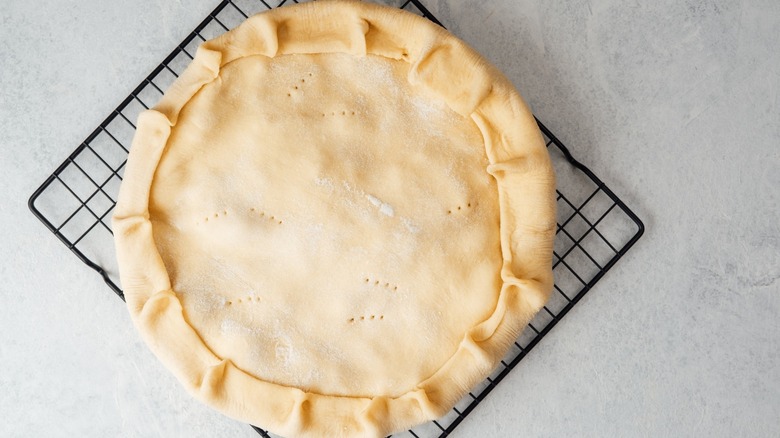
Before you go running off with the answer to all your soggy pie dough problems, it's worth keeping in mind that you might be over-watering your dough mixture from the very outset, before any filling has graced it. It can sometimes be tough to find that sweet spot between too dry and too wet. Luckily, though, Jerrelle Guy spoke about exactly this issue and provided some insight into how to combat it.
"Too much water makes it tough and soggy, and too little will make it crumbly," she states. To temper this problem, she says to "add ⅔ of the water called for in the recipe, and then add in a tablespoon more at a time just until the dough holds together in a clump when you compress it in your palm."
Using a simple pinch test can also help you determine whether your dough needs more water with the same logic as Guy's compress test — that is, if it clumps together rather easily, you're on the right track! "It shouldn't crumble apart or feel sticky — that's the texture you're looking for," says Guy, and with some careful measurements, that perfect dough can go from the page to your plate without a worry.