

Why Pepsi Blue Vanished Completely From The US
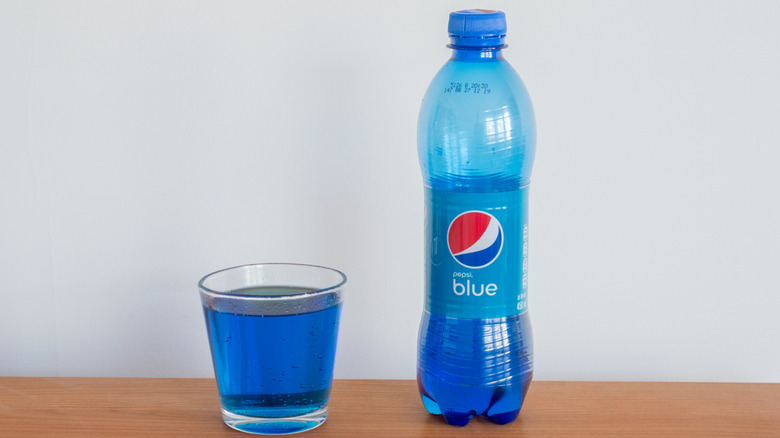
Back in 2002, Pepsi Blue burst onto the beverage market in the United States: Billed as having a "berry cola fusion" flavor, it had a vibrant blue color, matching no actual berries. The idea was to push a product that would appeal to teens (apparently based on the belief that teens like bright colors, since Pepsi had recently had success with a bright red version of Mountain Dew), while also competing with Coca-Cola's novel releases at the time, like Vanilla Coke.
Pepsi spent months creating a recipe for the soda, testing out a variety of different berries. The ultimate recipe was never made public, but allegedly consisted of a mix of berry flavors. Depending on who you ask, the taste was like blueberry, raspberry, or cotton candy, although detractors found it too artificial, even likening the flavor to crayons. Pepsi went hard on marketing this new creation, with no expense spared garnering celebrities like Britney Spears to appear in commercials.
While Pepsi Blue drew some solid buzz early on, and arguably caught on fairly well among teenagers, it never captured a big enough audience — for example, in 2002, Pepsi Blue sales were around one-sixth that of Vanilla Coke's. Pepsi executives themselves admitted that they had perhaps targeted teens too hard at the expense of other demographics. In fact, the idea for it to be berry-flavored reportedly came from teens that the company surveyed.
The other problems with Pepsi Blue, and its comeback
Some of the marketing for Pepsi Blue also didn't help: Pepsi was focused on "underground marketing" for the new soda, and to that end, tried to surreptitiously push the drink through posts on online forums. Savvy readers clocked the attempt to pass advertising off as organic online commentary, and the term "Pepsi Blue" briefly caught on as a synonym for attempts to market products in this inauthentic way. Some potential customers may have been put off by the use of Blue 1 food coloring in the drink, which had been banned in Europe due to health concerns but remained legal in the United States (although as of 2025, a ban on it and other vivid food colorings is pending).
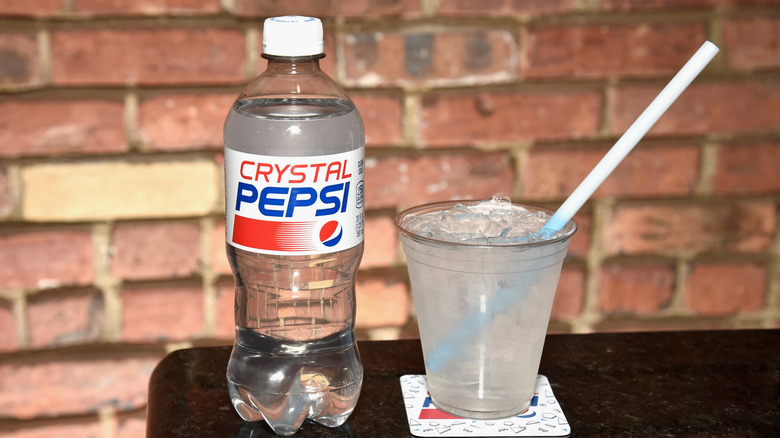
Pepsi Blue was (metaphorically) canned in 2004, joining a long list of discontinued Pepsi drinks, although it did remain available in some overseas markets like Indonesia. But it didn't stay dead in the U.S: In 2021, Pepsi tried to tap into nostalgia as it brought the drink back, although it was planned as a limited-time-only release, not a permanent return. It's hardly the first time Pepsi has done this: Another key example is Crystal Pepsi, a clear drink that had basically the same flavor as Pepsi. It launched in the early '90s but was widely regarded as a huge failure — but as with Pepsi Blue, it didn't stop PepsiCo trying to bring it back temporarily in the 2020s.