

What's That White Stringy Thing In Your Egg (And Is It Safe To Eat)?
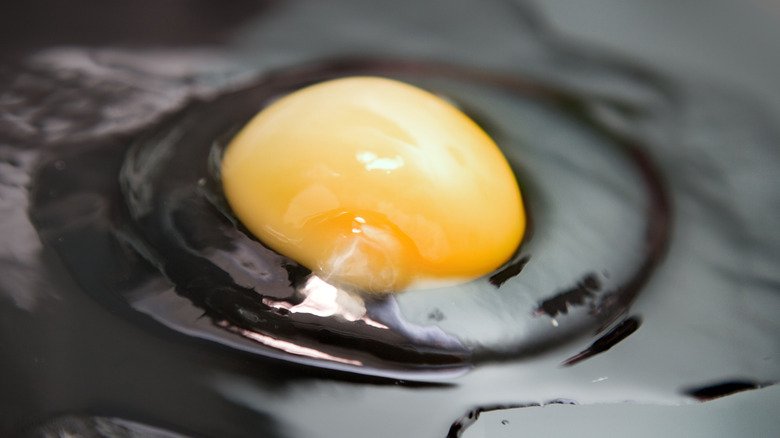
When you crack open an egg and see a white, rope-like strand coming off the yolk into the white, don't stress. This is a natural part of the egg. This string is called the chalaza (pronounced kuh-LAY-zuh). Each egg has two of them, one at each end of the yolk. There are a few misconceptions about the chalaza: That it's the sign of a fertilized egg, that it's an umbilical cord, or that it's an embryo, and these are all false. Rather, the chalazae is a type of protein that's twisted up like a rope. It basically acts as an anchor for the egg yolk, keeping the yolk floating in the center of the egg and suspended within the white, preventing it from hitting the shell or moving around too much, and potentially being damaged.
Nutritionally, the chalaza is simply protein, indistinguishable in composition from the rest of the egg white, so it's totally safe to eat. (Raw eggs can have a risk of salmonella, which is why food safety guidelines recommend you cook them, but the presence of a chalaza has nothing to do with this.) When you cook an egg, the chalaza generally won't even be visible, as the egg whites turn from clear to white, masking it completely, although there's a chance you can detect it while chewing, as it may have a slightly springy texture.
Why the chalaza is good, actually (although you may want to remove it sometimes)
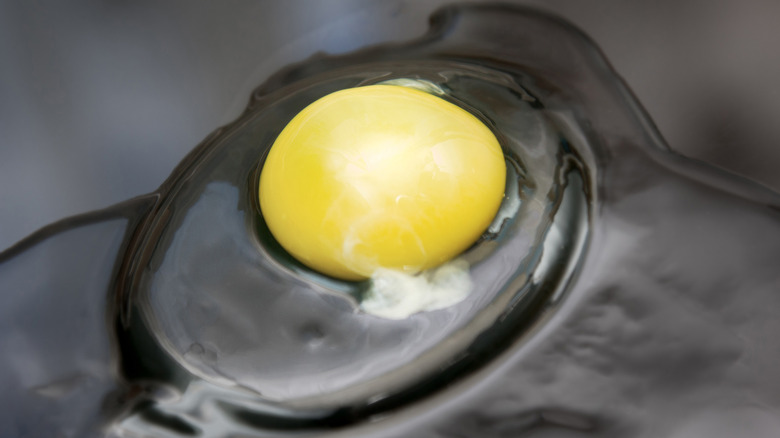
Although the stringy chalaza floating in a raw egg white might not look the most appetizing, a prominent chalaza is actually a good thing. According to the American Egg Board's egg grading system, clearly visible chalazae (that's the plural of chalaza) are markers of a grade AA or A egg; if it's not so visible or imperceptible, that's one sign of a lesser, grade B egg. A strong chalaza is also a sign that the egg was laid by a younger hen, as old hens tend to lay eggs with weak chalazae. A lack of a chalaza can also be one of the signs of an old egg, as chalazae deteriorate over time when eggs are kept in storage. (If you're using prepackaged liquid eggs, this doesn't apply, as the chalazae are typically removed.)
Since the chalaza is made of protein (a nutritional element that's having a big moment right now), it's arguably better for you to just leave it there. However, if you're making dishes that require a perfectly smooth texture, like a creamy, eggy custard or a crème brûlée, you may want to remove the chalaza as it can add that slight springy texture. To do this, you can pluck it out with a fork (depending on your dexterity, this may involve some degree of fishing around in the egg white). Alternatively, you can use a strainer to get it out.