

How To Prune Tomato Plants For Bigger, Healthier Fruit
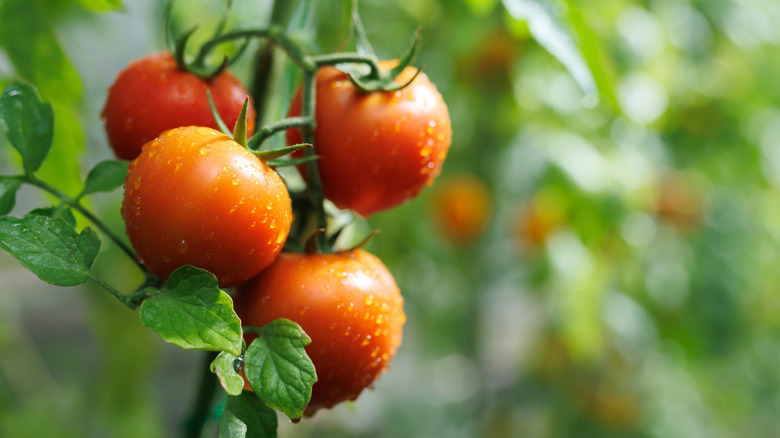
Few things are as rewarding as starting your own veggie garden, especially considering it gives you access to fresh produce, which can really elevate your cooking to the next level. Vegetables like tomatoes are especially worth growing at home, as homegrown tomatoes can be incredibly juicy and delicious. Plus, you don't necessarily need to have a green thumb to learn to garden, and there are also great tomato varieties for beginners to get your foot in the door and start bulking up your gardening skills.
Even though tomatoes can be beginner friendly, the one hiccup that many gardeners encounter is tomatoes not growing as big. While it can definitely be frustrating trying to find ways to get tomatoes to grow bigger, there's actually a pretty simple solution to the problem: pruning your tomato plant when it starts to flower. Pruning a plant may sound counterintuitive, but it is a common gardening tip that's known to help make cucumbers grow faster and to make parsley bushier. Essentially, pruning the plants helps air circulate around the plant, making it easier for it to receive sunlight that encourages growth. By performing this maintenance, the plant can also better direct its energy toward growing bigger, juicier tomatoes — instead of spreading itself thin across side shoots, old leaves, excess fruit, and more.
To prune tomato plants specifically, simply remove any side shoots that appear below the lowest flowers on the plant on a weekly basis. We recommend using pruning shears for this, and cutting as close to the stem as possible to make it more effective.
Additional tomato pruning tips and tricks
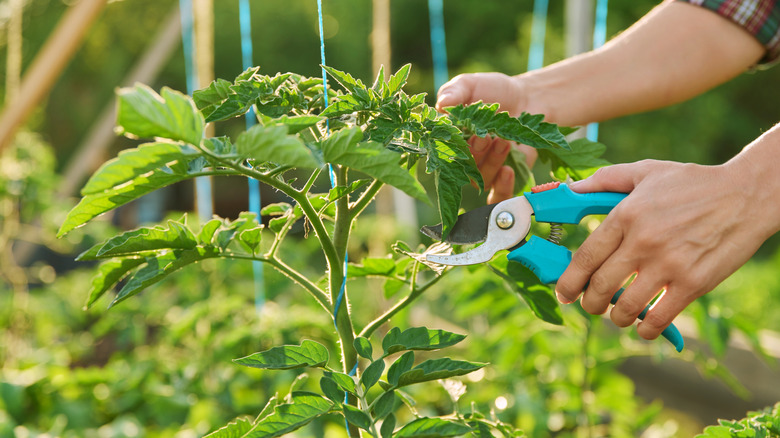
You can further supplement the growth of your tomatoes by also pruning older leaves. These older leaves aren't as effective when photosynthesizing, which means they aren't contributing as much to the plant's growth. Additionally, removing these old leaves further encourages good air circulation and allows other younger leaves to have better access to sunlight.
Similarly, you should also remove lower leaves and branches to improve airflow. Generally speaking, leaves on the lowest 6 inches of the plant are good to remove, as well as any leaves that are touching the soil, since they're more likely to develop diseases or fungal infections from excess moisture. If you notice any leaves or branches with damage or disease, such as yellow leaves or branches with bugs on them, be sure to remove them too for the betterment of the plant's health.
Last but not least, you can also remove the lowest rung of tomato fruits on the plant. Even though many beginner gardeners hesitate to do this — as it appears, at first glance, that you are just removing fruit for no reason — the truth is that the plant actually struggles to grow these lower-bearing fruits. Ultimately, removing them encourages better growth in the long run. Whatever you do, remember that it all comes back to efficient use of energy. With these problem areas and excess leaves removed, the plant can now direct its energy to growing bigger fruit instead.