

Avoid Using This Common Way To Heat Milk That Tragically Backfires
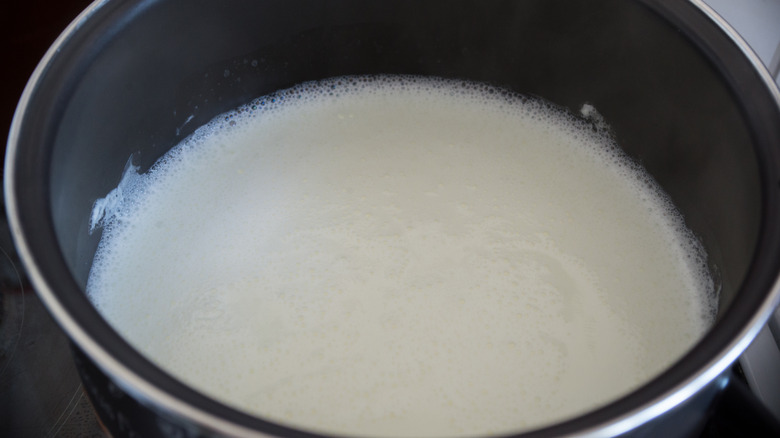
When it's late at night and you want to try your hand at making a cup of restaurant-quality hot chocolate, your electric kettle is sitting there like the quickest path to bliss. You pour in the milk, press the button, and wait for that comforting hiss of heat. But what you get instead is a kitchen crime scene: a scorched smell in the air, a sticky residue coating the inside, and a kettle cleanup job that makes you question every life choice.
Electric kettles are designed for one thing: boiling water. Water boils evenly, evaporates cleanly, and leaves your appliance fresh for the next use. Milk, on the other hand, is a different beast. Its proteins and sugars behave badly under the fast, intense heating of a kettle. Instead of quietly warming, the milk foams and froths up violently, bubbling over the spout and burning against the heating element. That scorched layer clings to the kettle like it's auditioning for a permanent role.
And once that burnt-milk smell hits your nose, it's game over for your evening. You will spend more time scrubbing than sipping, and the damage to your kettle might be irreversible. Even manufacturers caution against it, not just because it ruins flavor, but because it can shorten your appliance's life dramatically.
The science behind heating milk in your electric kettle
Milk is a delicate balance of water, fat, proteins, and lactose, and when you subject that mix to the rapid, uneven heat of an electric kettle, it reacts in all the wrong ways. As milk heats, its proteins begin to coagulate and cling to the bottom surface. The sugars caramelize almost instantly on the super-hot heating plate, leaving brown patches that fuse into the metal. Those stubborn spots are more than ugly; they trap flavors and can make your next cup of tea taste faintly like burnt custard.
Then there's milk's foaming problem (the one that helps you make flawless latte art). Unlike water, milk's fats and proteins allow it to form a skin of denatured protein as it heats. This skin acts like a lid, locking in steam that builds pressure underneath. Before you know it, the foam lifts, steam escapes with force, and you are wiping sticky milk from your countertop, kettle base, and possibly your walls.
Even worse, milk doesn't just boil over. It leaves behind residue in the kettle's spout and vents, places that are nearly impossible to clean completely. That hidden buildup becomes a breeding ground for bacteria if left unchecked. Over time, it can cause the heating mechanism to fail. So the next time you want to heat up milk quickly, forgo your kettle and use your microwave to easily scald it without making a mess.