

No Torch For Crème Brûlée? Get That Caramelized Crust With A Genius Spoon Hack
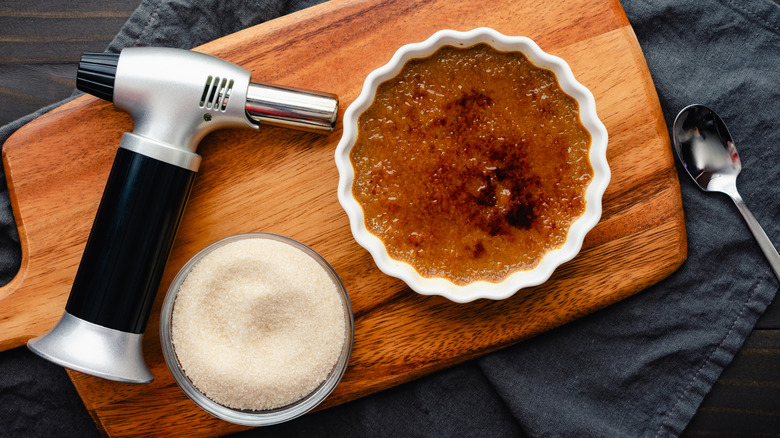
The characteristic appearance of a classic crème brûlée is a brittle and glassy sugar crust that you break through with a spoon. Traditionally, you would use a kitchen torch to get the sugar just right. But what if you didn't have a torch on hand? You would be stuck without a brittle crust on your dessert. This is where a brilliant spoon hack comes into play.
Instead of a torch, heat up a metal spoon and then use it to melt and caramelize the sugar on top. This is a brilliant hack as it takes no additional gadgets, beyond the spoon, to get the job done. When done correctly, it will yield a topping that is worthy of a fancy restaurant. The method works because sugar is caramelized at 320 to 350 degrees Fahrenheit, and the gentle press of the spoon onto the sugar instantly transfers that heat, melting the sugar into a smooth amber shell.
It's quick, controlled, and surprisingly satisfying to watch the sugar change before your eyes. The best part is you don't need to move the dessert under a broiler and risk overheating the custard underneath. However, be sure to use a spoon made of a heat-conducting metal, such as stainless steel, which will absorb and hold enough heat to caramelize the sugar in contact with it.
Using a spoon to caramelize your crème brûlée crust

When using a spoon to get that caramelized crème brûlée crust, always remember that the metal needs to stay extremely hot. That is, you don't want it to cool down before it touches the sugar. So if you have more than one dessert, tackle one at a time. Heat your spoon over a gas flame or press it right onto the coil of an electric stove, then, when it's sufficiently heated, press it onto the sugar, working in small sections until the entire surface is evenly brown.
You can add some drama to your caramelization by sprinkling on a little more sugar halfway and giving it a second pass. Just be careful about scorching the sugar unevenly. Since the spoon only has a small surface area, you should slightly overlap your presses to avoid leaving pale spots.
If you want a thinner crust, barely touch the surface of the sugar and use a shorter press time. You can have some fun with flavors while you're at it by mixing in a little cinnamon, nutmeg, or even espresso powder. For an elevated dessert, add corn to your crème brûlée or throw in some bourbon for a boozy kick. These are just a few fun, hands-on methods of putting your spin on the classic dessert.