

Pasta Is A Restaurant's Sneaky Menu Weapon But Not For The Reason You Think
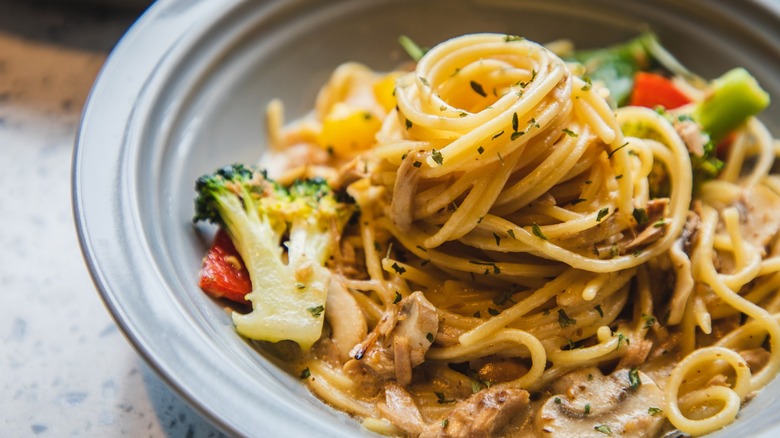
It's hard to go wrong with pasta. It can be as simple as boiling some spaghetti and pouring jarred tomato sauce over it, or you can make everything from scratch and turn it into a stunning dinner. Picky eaters and gourmets alike can appreciate it, and this is part of why pasta makes an appearance at many restaurants, even when it doesn't fit the rest of the menu. If you're wondering why sports bars are serving fettuccine Alfredo alongside wings and burgers, it's not just because it's delicious — serving pasta dishes is often an economic decision.
A package of pasta from the grocery store often costs less than $2, feeding eight people as a side dish or four people as a main course. You can even throw in homemade tomato sauce or use a quality store-bought brand for multiple guests without breaking the $20 mark. Restaurants are aware of this affordability, and some take advantage of it by charging more than $17 for the same dish — not including the upcharge for protein. Time, labor, and other factors go into this pricing, so it can be difficult to tell if you're being ripped off or paying a fair price.
The profitability of pasta
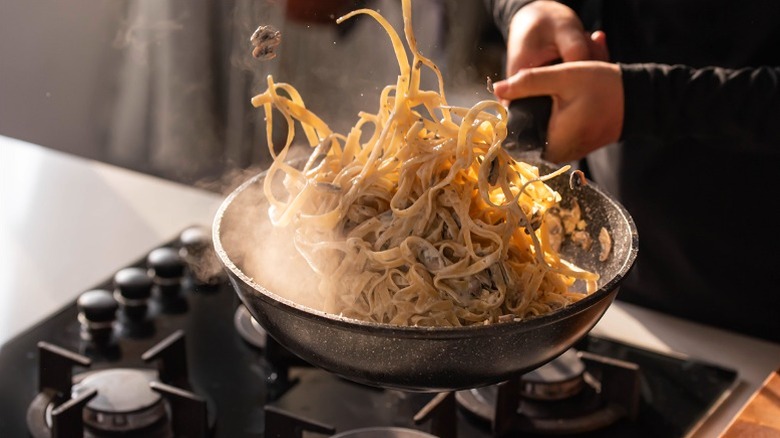
Unless you're dining at a higher-end establishment or somewhere that specializes in pasta dishes, there's a good chance you're not being served pasta made from scratch. It takes time and finesse to master making pasta by hand, so most restaurants use dry pasta because it's affordable and easier to prepare. Dry pasta is relatively light to transport and order in bulk, and it has a longer shelf life. Leftover meat and vegetables can also be cooked and served with pasta as a weekly "special" to reduce kitchen waste. Pasta really does give restaurants the most bang for their buck.
Dry pasta doesn't always indicate lower-quality dishes, either. Many artisanal brands sell prestige pasta in dried form so people around the world can enjoy the taste. Some restaurants may use these respected suppliers, while others opt for the least expensive option. Most places put more effort into the sauce and toppings than into the pasta itself, delivering an impressive meal while cutting costs on the pasta.
To decide whether to skip the pasta at a restaurant, consider its place on the menu and what comes with it. Is the pricey dish just plain spaghetti and marinara, or are meatballs and garlic bread part of the equation? Are the portions large enough to take home leftovers? A lot goes into menu pricing, but keep these tips in mind the next time you're thinking about ordering pasta. In many cases, these dishes are rarely worth the expense for the customer.