

The Food-Safe Way To Clean Rusted Mason Jar Lids
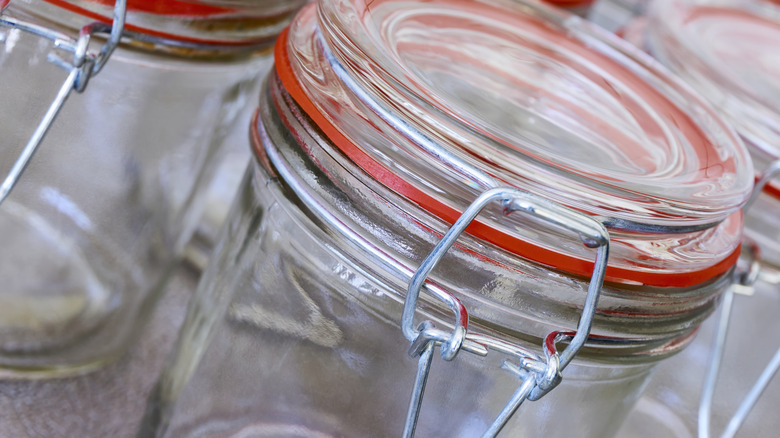
Rusted Mason jar lids are one of the biggest inconveniences associated with these must-have canning vessels and beloved kitchen tools — the unofficial container of overnight oats –- and we never want to ruin them or risk the safety of our food due to cleaning. When Mary Bryant Shrader — creator of the Mary's Nest YouTube channel and author of "The Modern Pioneer Cookbook" and "The Modern Pioneer Pantry" — spoke exclusively with Chowhound, we just had to ask about the best way to deal with rusty Mason jar lids. As Shrader explained, a little surface rust isn't the end of the world, but how you clean it is important.
Light rust can be rubbed away with a simple paste of baking soda and water, she told us. Simply use a soft cloth and gently work the mixture over the rusty area until it has faded (and the key word here is "gentle"; if you scrub too hard, you risk scratching the metal or damaging the lid's sealing compound). Then, once it's clean, rinse the lid well and let it air dry completely before you use it, as any lingering dampness can bring the rust back.
However, if the rust doesn't budge after a light cleaning, it's best to stop using it as a food container altogether. Shrader suggests that rusty jars can be repurposed as storage for non-food items — think craft projects, cleaning supplies, or for use in the garden. After all, there's no reason to get rid of an otherwise useful jar.
Washing, storing, and using Mason jar lids
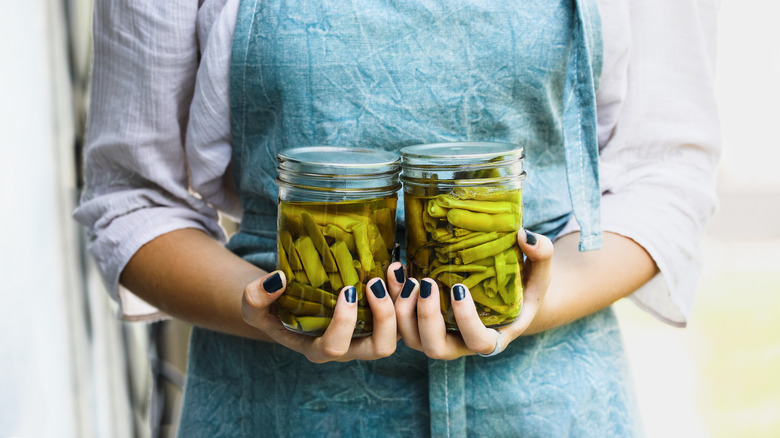
Mary Bryant Shrader emphasizes that, while canning lids are single-use for actual canning (that is, discard them once they've done their job), when it comes to simple food storage, you can use the lids as many times as you like, just as long as they're not rusted. The main culprit behind rust is moisture, so Shrader's method for washing both storage lids and canning bands (which are always reusable) is the same: wash them in warm, soapy water and allow them to completely air dry before putting them away.
To keep them away from any moisture, store your lids and bands in a dry place rather than a damp cupboard or next to the sink. You can even store Mason jars in your kitchen utensil drawer if you're short on pantry space, which will keep them both easily accessible and much more dry.
While Mason jars are often associated with dry goods or leftovers, they can do much, much more. One clever idea is the genius way Martha Stewart uses Mason jars — pack an entire meal into one. A good Mason jar makes any meal portable and stackable, and you can also then use a single lid for the whole dish, keeping extra lids clean and rust-free until you need them again.