

Should You Light Kitchen Artwork The Same Way You Do In The Rest Of Your Home?
We may receive a commission on purchases made from links.
When designing the cooking space, we tend to focus on the finer details: the hardware on the kitchen drawers, the ample storage, and the appliances we use for all our culinary experiments. With so much to consider, it's easy to slap on a fluorescent overhead light and call it a day; as long as you can see everything clearly, it should be okay, right? Not quite, especially if you're lighting artwork in your kitchen. For advice on doing this lighting right, Chowhound sought the expertise of Cara Woodhouse, author of "It's a Mood: Your home. Your vibe." and collaborator with Monogram.
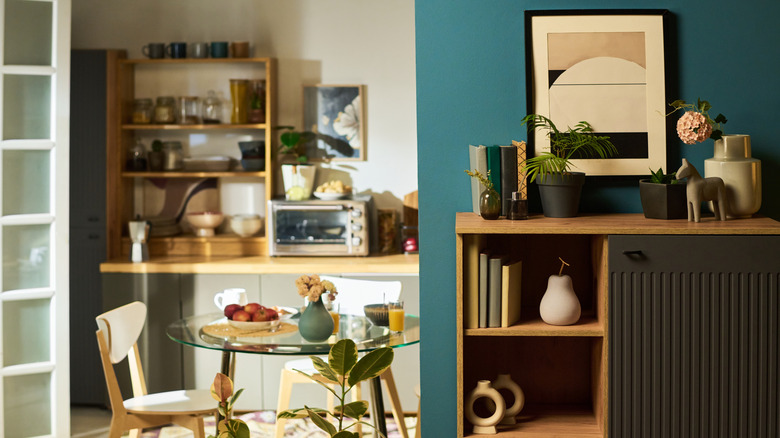
According to Woodhouse, you shouldn't light kitchen artwork the same way you do in the rest of your home. "Lighting kitchen and dining room artwork should feel intentional, but never overpowering," she tells us. "In the kitchen, I love using recessed adjustable spotlights or integrated picture lights that softly highlight art without creating harsh shadows." She elaborates on the value of this lighting setup, pointing out that it's both practical and showcases the stunning artwork. Since it's a kitchen upgrade that requires no renovation, you can also easily apply it to your space without fuss.
Woodhouse tells us that she takes a slightly different approach to the dining area. Compared to the kitchen, where both aesthetics and practicality need to be considered, the dining area welcomes creative and expressive touches with elegant sconces, soft uplights, and even integrated lighting around the artwork on a gallery wall. "These spaces allow for more mood and ambiance, whereas the kitchen needs to balance beauty and utility," Woodhouse says.
Take lighting tips from museums, too

If we were to take tips from museums, lighting enhances the art and improves the viewer's experience. While your kitchen is far from being a museum, it doesn't hurt to give your artworks extra love, too, especially if they're pieces that you're particularly proud of and want to show off to your visitors. In addition to utilizing Cara Woodhouse's tips, you can transform the area around your artwork with layered lighting, low-effort kitchen lighting that can add instant elegance to the space — and then some. A lack of lighting makes artworks look flat and sometimes even lifeless, so if you want to enjoy them in their full glory, you might want to try this trend, which involves using various light sources in a room.
Lighting is also a crucial step to ensure the preservation of the pieces, so steer clear of using infrared radiation or ultraviolet radiation, as the heat could damage them. The best approach is to use different types of LED lights that are brighter than the room's ambient light. You can also show off your artistic eye by getting creative with your kitchen's other lighting fixtures.