

Stop Focusing Your Wine Pairings On Protein: Why We Want To End This Drinking Rule Forever
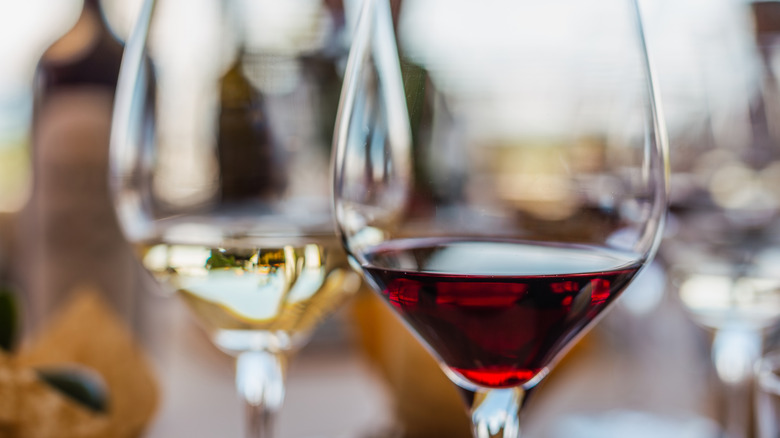
For as exciting, enriching, sumptuous, and satisfying as they can be, some culinary pursuits sure seem to come with a lot of constraints. We don't mean objective guidelines like the ideal temperatures for rare, medium, and well-done steaks, but rather misguided notions about what does or does not go with this or that. Wine seems to attract more than its fair share of scolds and amateur experts eager to look askance when a red wine is served with branzino or sea bass, or a white is poured alongside a chateaubriand or a filet mignon. But some of the best restaurants in the world flout those old-fashioned color codes in their curated pairings, and you should feel empowered to do so, too.
This is not to say that a crisp, cold Sancerre isn't exquisite with oysters, or that a Barolo isn't marvelous with a ribeye; those will always be happy matches. But supposed opposites can attract just as well. The reason many people think red wine and seafood are verboten, for example, is because of the wine's tannins. This natural grape byproduct that typically has a heavier presence in red wines can evoke an unpleasant aftertaste when mixed with fish. But a low tannin red like a Gamay won't have that issue. It's also said that white wine is too dainty for beefier meals, but this might just be the best case for a boldly oaky Chardonnay.
Spin the color wheel and mix food and drink hues on your own
There are few flavor combinations as deliciously luxurious as a few slices of rich, seared Wagyu and an effervescent glass of champagne, whether you're paying a premium at a restaurant or sizzling the simple dish at home. While the cut's silken marbling is supposedly tops with those tannic reds, the frenetic bubbles, instead, enliven the whole experience. The fat of the meat and the acid of the champagne also work in harmony to position each quality in their best light. The same principles, of course, can apply to more everyday items by simply selecting a similarly higher-acidity white wine, or even one with more tannins, when indulging in almost any kind of steak.
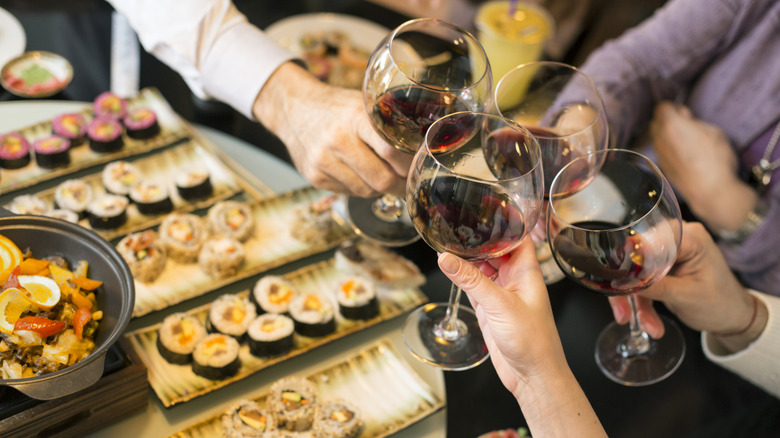
Your next rosy salmon fillet will also be lovely with a light, low-tannin pick like a pinot noir. A similar pour is also a nice compliment for your buttery fatty tuna. And, while this might be more of a personal preference, we love to bask in majesty of a seafood tower at a marble bar or crack crabs on a wooden picnic table alongside a bottle of chilled Beaujolais. These are all just guidelines with some scientific backing, after all. You can still just drink what you like; that's what rule-breaking is all about.