

To Guarantee A Perfect Cruise Ship Experience, Here's What To Do At The Buffet
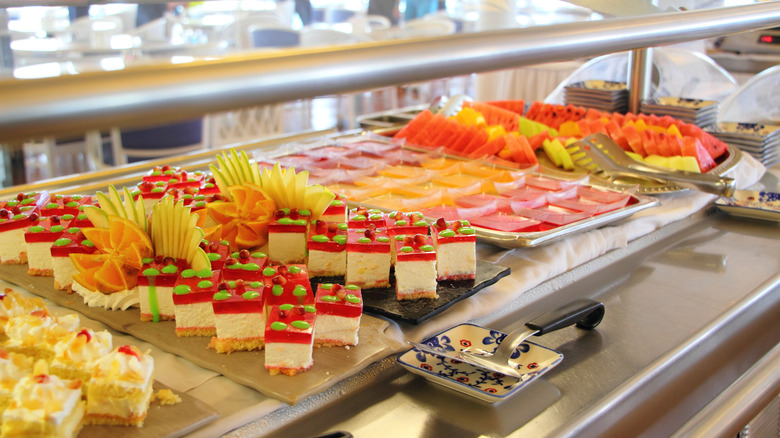
The cruise buffet can be the best — or the absolute worst — feature on the ship. With its all you-can-eat spread from around the world for at least three meals a day (remember the chocolate buffet?), it's a foodie's paradise. But if you don't know how to navigate the cruise buffet the right way, the lavish display of hot food, ice cream, and made-to-order stations could ruin your perfect cruise ship vacation. While cruise buffets offer a smorgasbord of food options, they're also higher-risk spots for catching a cold, food poisoning, or another illness. But you don't have to avoid the buffet altogether to minimize your risk of getting sick on vacation. There's a strategy to using the cruise ship buffet — one that involves timing your visits and using a little food safety know-how.
For tips on how to watch for red flags at a cruise ship buffet, Chowhound turned to Campbell Mitchell, founder of Quest4Food, which sells food safety management systems worldwide. He explained the buffet on a cruise isn't that much different than any other buffet, except it's on a ship with thousands of passengers in enclosed spaces. "The confined environment of a ship can amplify the spread of illness — particularly Norovirus, which is highly contagious and commonly associated with cruise-related outbreaks," he said. "It's not necessary to avoid cruise buffets entirely, but a cautious approach is wise. Buffets can be perfectly safe if well-managed, with good hygiene protocols and active staff monitoring."
How to make the cruise ship buffet the highlight of your perfect vacation
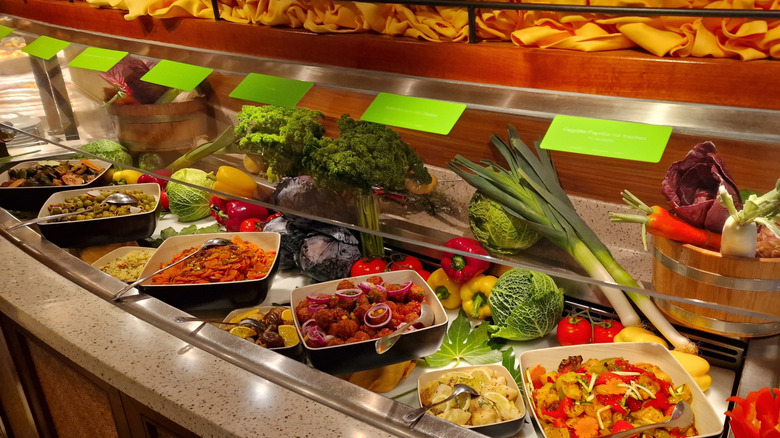
Sharp hygiene practices are the first key to a perfect cruise ship experience. Wash your hands and whip out the hand sanitizer a little more often, especially when mingling in shared spaces with large groups. "Avoid using your hands to touch any shared surfaces like tongs or ladles; use a napkin or sleeve as a barrier if necessary," Campbell Mitchell told Chowhound.
If possible, avoid the buffet altogether for the first 24 hours of the cruise — right after all of the passengers and their germs have arrived — and during other high-traffic windows of time. And once you get to the buffet, take a look around. Assess the options and their condition. When you can, opt for made-to-order stations to get the freshest options and avoid certain foods, such as sushi. "Are cold foods kept chilled over ice or in refrigerated units? Are hot foods steaming or labeled with time controls? Avoid dishes that look like they've been sitting for a while — congealed sauces, dried edges, or lukewarm proteins are warning signs," advised Mitchell. "Choose freshly prepared items when available, and opt for staff-served stations if offered."
Whether you choose partake in a cruise buffet comes down to personal preference. The risks are always present, so it's a matter of deciding if they're worth it. "Ultimately, the decision should be based on your personal risk tolerance and health status. Individuals with weakened immune systems, pregnant women, or older adults should be especially mindful," he added. "In well-run cruise lines with strict food safety protocols, the risk is minimized but not eliminated."