

You Might Want To Avoid Some Types Of Whole Wheat Bread — Here's Why
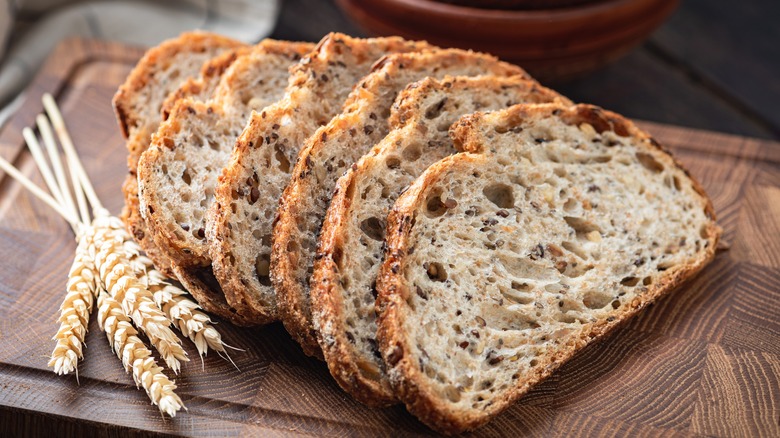
Choosing healthier options isn't always easy. Certainly, there's always a place for delicious comfort food, but when one wants to adjust their diet — whether it's for personal or medical reasons — things can get tricky. One small but impactful switch anyone can make to better their health is swapping white bread for wheat bread. However, even this becomes difficult as food labels aren't always well-regulated. Even bread brands can mislead consumers, making shoppers think they made the right move when they should have picked up 100% whole wheat bread instead.
Unfortunately, not all breads are baked equally, and wheat bread isn't any different in this regard. Unless it says "100% whole wheat," consumers aren't getting the maximum nutrition that they could be. Without those two key words, wheat bread is still of the refined variety, the process of which removes the germ and bran that provides the higher levels of fiber, vitamins, and minerals. While most wheat bread is still a better choice than white, as it's easier to digest and has more nutritional benefits, 100% whole wheat bread can also assist with weight management, improved digestion, and antioxidants that help protect against heart disease and diabetes.
How to look beyond the label

There are many red flags on food labels to be aware of. While bread can be organic, not everyone has a clear understanding of what "organic" means. It's more of an indicator of how the product's ingredients are produced and grown, not that it's necessarily the healthier choice. Additionally, while multigrain bread is a good alternative to white bread and has plenty of nutritional benefits, it can still be misleading. Sure, multiple grains were used to make the bread, but that doesn't guarantee that it's the best or entirely free of refined grains.
There are plenty of brands offering 100% whole wheat bread, but some will still make choices without the consumer in mind. Nature's Own 100% Whole Wheat Bread may be a great choice, with a lower calorie count per slice and no artificial preservatives, but it's also smaller in size than many of its competitors. This may lead someone to consume more to feel satisfied, resulting in a rise in both carbs and calories, which could end up in backfiring their goals. When choosing the right loaf of whole wheat bread, it's important to consider not only the serving size and nutritional information, but also the ingredients. Some companies will add high-fructose corn syrup to sweeten the bread's flavor, as well as artificial preservatives, which can have adverse effects on consumers. Here, the best course of action is to lean towards one with fewer ingredients and nutrition that's agreeable with the individual's dietary needs.