

You Probably Aren't Storing Your Grits In The Freezer, But You Should Be
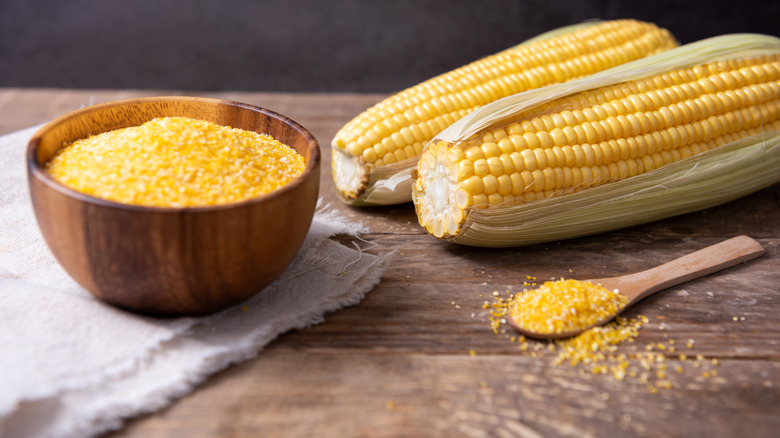
Anyone who's ever enjoyed traditional Southern-style American cuisine knows about grits. Made from coarsely ground dried corn, it's one of those hearty staple foods present in almost every home in the South. Though it likely originally graced plates throughout the region as a survival food, it's become so iconic that everyone has their own set of tips and tricks for making the best grits. If you'd like to try some of these tips yourself, grits are available in grocery stores throughout all regions of the United States today, usually in bags nestled next to cornmeal and polenta.
While these other corn-based foods are fairly shelf stable (cornmeal can last up to 12 months in your pantry), grits contain the germ from the corn, which contains fat that can go rancid if stored improperly. This spoilage not only ruins the flavor of the grits but may make you sick if you eat them. The best way to prevent this is to store your grits in the freezer — especially stone-ground varieties, as they're less processed than other types of grits. Even packages labeled "shelf stable" should be placed in the freezer after about six months.
Unlike most pantries, your freezer offers a cold, dark, dry environment with a consistent temperature that will help keep your grits fresh and tasting great. You can also cook them right from the freezer, so don't worry about thaw times when putting together a ceramic dish full of creamy and delicious baked grits, or measuring them out during meal prepping.
Storage tips for fresh-tasting frozen grits

While tossing your opened bag of grits in the freezer is better than sticking it in your cabinet, leaving them in the original paper packaging is asking for trouble. Even if folded over and taped closed, paper is permeable, meaning odors and moisture can easily transfer through it and ruin the grits' flavor or cause freezer burn. To prevent this, decant your grits into a clean, dry, airtight container made of plastic or glass. These nonporous materials will help protect the granules from contamination by strong smells, and reduce the chances of freezer burn or clumping due to moisture.
Even if you make a point to purchase grits labeled "shelf stable," it's important to understand they'll still go stale faster than other types of ground corn. It's okay to keep them in your pantry if you use them regularly to prep Mason jar grits for fast and delicious make-ahead breakfasts, or love a creamy dish of them alongside shrimp or crawfish. However, if you don't use them up within about 90 days after they're opened, it's best to dump the rest into one of those glass mason jars and stick it in the freezer.
As mentioned, you can treat frozen grits the same as you would from the pantry, as they thaw quickly once they're simmering away in milk or stock. You might need just a few more minutes to soften them properly, but grits are supposed to be cooked slowly and with love.